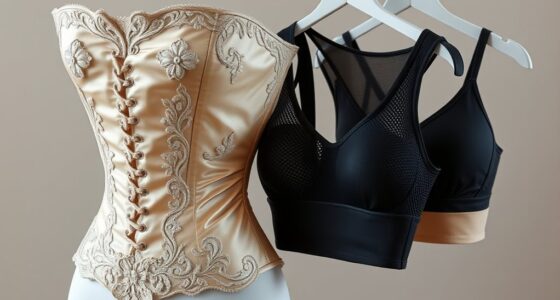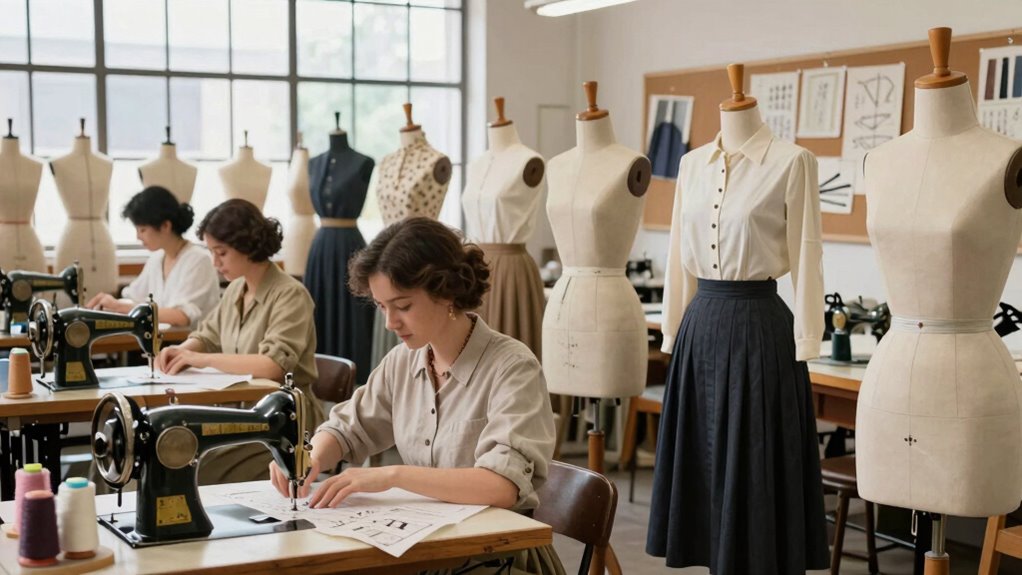

Ready-to-wear emerged from innovations in textiles and mass production during the late 19th and early 20th centuries, making clothing more durable, affordable, and accessible. It shifted fashion from exclusive, bespoke pieces to ready-made garments that anyone could buy quickly and easily. This transformation expanded fashion’s reach beyond the wealthy, allowing you to explore diverse styles and express your personality daily. If you want to understand how these changes shaped modern fashion, there’s more to uncover ahead.

Get beauty and skincare favorites delivered free — and shop member deals
- Fast, free delivery on millions of items
- Access to Prime Big Deal Days deals on October 6–7
- Prime Video, Amazon Music and more included
Key Takeaways
- Ready-to-wear emerged from textile innovations that enabled mass production of affordable, durable clothing.
- It shifted fashion from bespoke tailoring to standardized sizes, making style accessible to broader audiences.
- Industrialization and department stores accelerated distribution, democratizing fashion beyond the wealthy.
- Mass production reduced costs and wait times, allowing consumers to quickly access diverse, trendy garments.
- This transformation turned clothing into a daily necessity, fundamentally changing personal expression and industry dynamics.
Have you ever wondered where the concept of ready-to-wear clothing first took shape? It’s a story rooted in the evolution of fashion, driven by innovation and the desire to make clothing more accessible. Before ready-to-wear, fashion was mostly bespoke—tailored to individual clients, which meant long wait times and high costs. This approach limited who could wear stylish garments and kept fashion exclusive to the wealthy. But as fashion innovation advanced, particularly with the textile evolution in the late 19th and early 20th centuries, a new approach emerged. Fabrics became more durable, affordable, and easier to produce, laying the groundwork for mass production. These technological advancements made it possible to create standardized sizes and patterns, which in turn allowed manufacturers to produce large quantities of clothing efficiently.
This shift marked a significant turning point. Instead of waiting for a tailor to craft a custom piece, consumers could now buy ready-made garments from stores. This was revolutionary because it democratized fashion, making stylish clothing available to the middle class and beyond. The rise of department stores and the proliferation of textile mills further fueled this change, allowing for faster production and wider distribution. As textile evolution continued, fabrics like polyester and other synthetic fibers made clothing even more affordable and versatile. This new landscape meant that fashion no longer had to be a luxury but could now be an everyday expression of personal style. Additionally, the industrialization of clothing manufacturing played a crucial role in expanding access to fashion for a broader audience.
The impact of ready-to-wear stretched beyond just affordability. It reshaped the entire fashion industry. Designers began to see mass production as a way to reach broader audiences, and brands started to develop collections that could be quickly replicated and sold worldwide. This not only sped up the cycle of trends but also created a more dynamic and competitive market. You, as a consumer, now had access to a vast array of styles, sizes, and price points, empowering you to choose clothing that suited your lifestyle and personality without the wait or expense of custom-made pieces. Additionally, the development of various brewing methods influenced the fashion industry by inspiring innovative textile treatments and finishes used in clothing manufacturing. The importance of textile evolution in this process cannot be overstated, as it was fundamental in enabling the production of a wide range of affordable, accessible garments. Furthermore, the integration of mass production techniques significantly increased the speed at which new styles could reach consumers.
In essence, the origins of ready-to-wear mark a pivotal moment in fashion history. It’s where fashion innovation and textile evolution combined to break barriers, transforming clothing from a luxury into a staple of everyday life. This shift didn’t just change how clothes are made; it fundamentally altered how you interact with fashion—making it more accessible, diverse, and reflective of your individual identity.
ready-to-wear clothing for women
As an affiliate, we earn on qualifying purchases.
As an affiliate, we earn on qualifying purchases.
Frequently Asked Questions
How Did Mass Production Impact Clothing Quality During Early Ready-To-Wear Development?
Mass production during early ready-to-wear development often led to a decline in clothing quality. You might notice fabrics becoming less durable because manufacturers prioritized speed over fabric durability, adhering to lower manufacturing standards to meet demand. This shift meant that garments were produced quickly and cheaply, often sacrificing long-term quality, which affected their durability and overall craftsmanship. As a result, clothing became more accessible but less enduring.
Which Designers Initially Pioneered the Ready-To-Wear Movement in the Fashion Industry?
You should know that designers like Coco Chanel and Elsa Schiaparelli initially pioneered the ready-to-wear movement, sparking a fashion industry revolution. They embraced designer collaborations to make stylish, affordable clothing accessible to more people. These efforts shifted the industry, moving away from exclusive haute couture and creating a new focus on mass production, which changed how fashion was designed, produced, and consumed worldwide.
How Did Cultural Shifts Influence the Acceptance of Ready-To-Wear Clothing?
Cultural shifts act like a gust of wind, propelling fashion towards democratization. You see, as society embraced more egalitarian ideals, acceptance of ready-to-wear clothing grew, breaking down barriers of class and exclusivity. People no longer wanted to be confined by bespoke garments; instead, they sought affordable, stylish options for everyday life. This cultural acceptance fueled a revolution, turning fashion into a shared language accessible to all, not just the elite.
What Technological Innovations Facilitated the Rise of Ready-To-Wear Manufacturing?
You see, fabric innovation and automation advancements played vital roles in the rise of ready-to-wear manufacturing. Fabric innovations like synthetic fibers made clothing more affordable and versatile, while automation advancements, such as sewing machines and production lines, increased efficiency and consistency. These technological breakthroughs allowed manufacturers to produce large quantities quickly, making fashionable clothing accessible to the masses and transforming the fashion industry forever.
How Did Ready-To-Wear Affect Traditional Bespoke Tailoring Practices?
Oh, how the mighty bespoke tailors tremble! Ready-to-wear pushes aside their artistry, sacrificing customization options for mass appeal. You now find less exclusivity, as garments are churned out on a conveyor belt rather than crafted with care. While the traditional practices valued uniqueness, the modern consumer prefers affordability and convenience, making bespoke tailoring seem like an ancient relic. Ready-to-wear, after all, democratizes fashion — at the cost of personal touch.
As an affiliate, we earn on qualifying purchases.
Conclusion
Now that you understand the origins of ready-to-wear, picture yourself shopping for that perfect jacket. Imagine walking into a store and finding stylish, affordable options instantly available—no custom waits needed. This shift democratized fashion, making it accessible to everyone. Just like how Zara revolutionized fast fashion today, the ready-to-wear movement transformed your wardrobe from exclusive to everyday essential. It’s a game-changer that continues to shape how you dress now.
As an affiliate, we earn on qualifying purchases.
As an affiliate, we earn on qualifying purchases.
Halloween Picks
halloween
As an affiliate, we earn on qualifying purchases.