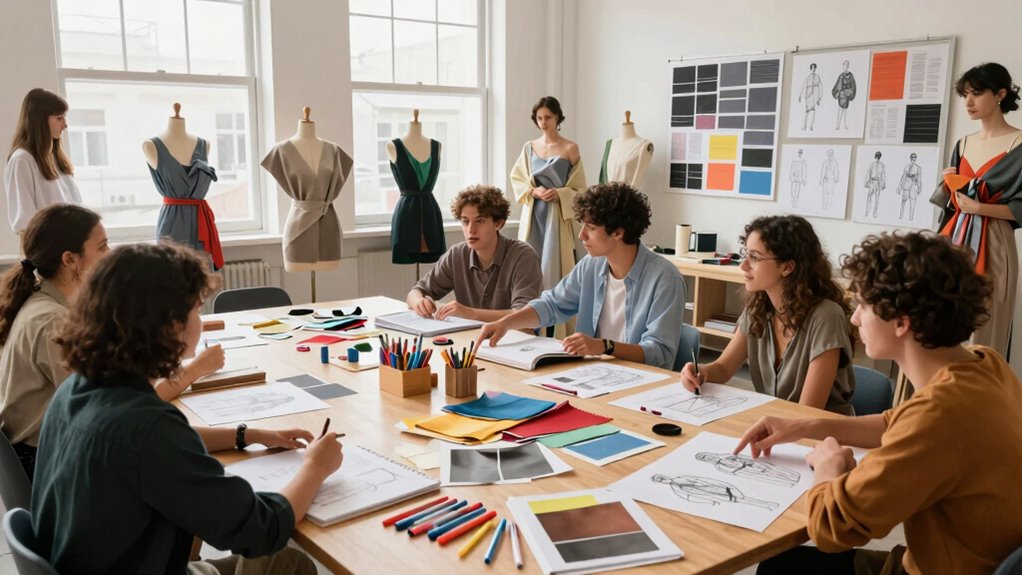

Fashion schools teach design thinking by focusing on innovation, sustainability, and cultural awareness. You’ll explore diverse consumer needs and learn to prototype, test, and refine your ideas quickly. Emphasis is placed on understanding societal influences and ethical practices to create responsible designs. Schools also foster critical thinking and collaboration, preparing you for a constantly evolving industry. If you keep exploring, you’ll uncover how these approaches shape the future of fashion and your role within it.

Get beauty and skincare favorites delivered free with Prime
- Fast, free delivery on millions of items
- Prime Video, Amazon Music and more included
- Member-only deals all year
Key Takeaways
- Incorporate interdisciplinary projects that encourage problem-solving, creativity, and innovation in real-world fashion contexts.
- Emphasize empathy and user-centered design through research and understanding diverse consumer needs.
- Use rapid prototyping and iterative testing to refine designs based on feedback and sustainability principles.
- Integrate cultural awareness and ethical considerations to promote inclusive and responsible fashion solutions.
- Foster collaboration across disciplines to develop holistic, socially conscious, and environmentally sustainable designs.
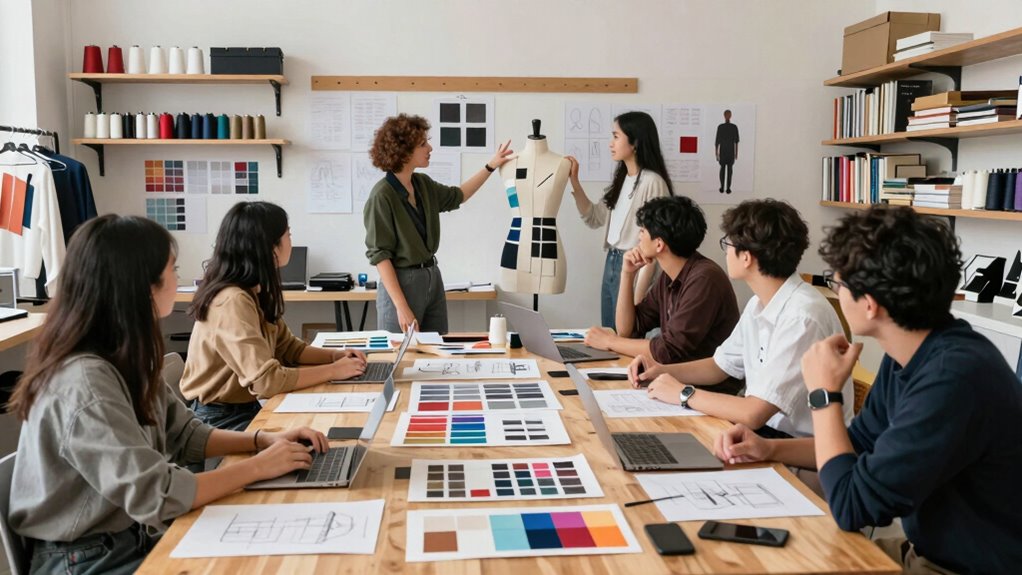
Have you ever wondered how fashion schools are evolving to keep pace with a rapidly changing industry? Today, they’re not just focused on teaching you how to sketch or sew; they’re embracing design thinking as a core part of their curriculum. This approach encourages you to develop a mindset that’s flexible, innovative, and problem-solving. At its heart, design thinking pushes you to understand the needs of diverse consumers and consider broader societal impacts, especially when it comes to sustainable innovation and cultural influences. Schools recognize that fashion isn’t created in a vacuum, so they’re shaping you to think beyond aesthetics, urging you to find solutions that respect the environment and cultural contexts.
Fashion schools now prioritize design thinking to foster innovation, sustainability, and cultural awareness in future designers.
You’re encouraged to approach design challenges from multiple perspectives, which helps you develop empathy for end-users. For example, you might explore how your designs can reduce waste or incorporate eco-friendly materials, aligning with the industry’s shift toward sustainability. This process involves rapid prototyping, testing, and refining ideas, so you’re constantly learning and adapting. You’re not just taught to follow trends; you’re guided to question them, fostering a mindset that values innovation rooted in ethical and sustainable choices. This emphasis on sustainable innovation means you’re more aware of your role in addressing global environmental issues and creating fashion that’s both stylish and responsible. Integrating sustainable innovation into your design process can help ensure your work aligns with industry demands for environmentally conscious practices.
Cultural influences play a significant role in teaching you design thinking. You’re encouraged to explore different traditions, histories, and social contexts to inspire your work. This broadens your creative horizon and helps you develop designs that resonate on a deeper level with diverse audiences. By understanding cultural influences, you’re better equipped to create collections that celebrate diversity, challenge stereotypes, and promote inclusivity. Incorporating cultural awareness into your design process also helps you avoid cultural appropriation and fosters a more respectful, ethical approach. Additionally, understanding color accuracy and its importance can inspire you to use hues that evoke specific emotions and cultural meanings, enriching your designs. This approach also teaches you to be sensitive to cultural appropriation and to respect the origins of the styles you draw inspiration from, fostering a more thoughtful, ethical design process.
In essence, fashion schools today are transforming into hubs of innovation and cultural awareness. They’re equipping you with skills that go far beyond technical proficiency—skills that enable you to think critically, innovate responsibly, and connect deeply with the world around you. As you learn to navigate the complexities of sustainable innovation and cultural influences, you develop a holistic understanding of fashion’s power to influence society and environment alike. Embracing interdisciplinary collaboration can further enhance your ability to integrate diverse perspectives into your work, making your designs more meaningful and impactful. This mindset will prepare you to not only succeed in a competitive industry but also to contribute positively to its future.
eco-friendly fashion design tools
As an affiliate, we earn on qualifying purchases.
As an affiliate, we earn on qualifying purchases.
Frequently Asked Questions
How Do Fashion Schools Incorporate Technology Into Design Thinking?
You explore technology in fashion schools through virtual prototyping and augmented reality, which help you visualize your designs in real-time. These tools allow you to experiment with fabrics, textures, and colors digitally, saving time and resources. By engaging with AR, you can see how your designs look in a real-world environment, fostering innovative thinking. This integration of technology enhances your creative process, making design thinking more dynamic and interactive.
What Are Common Challenges Students Face During the Design Process?
Like steering through a maze, you might face creative blocks or struggle with time management during the design process. These challenges can leave you feeling stuck or overwhelmed. You may find it hard to generate fresh ideas or meet deadlines. To overcome this, break projects into smaller tasks, take breaks to refresh your mind, and stay organized. Embracing flexibility helps you adapt and keeps your creativity flowing smoothly.
How Is Sustainability Integrated Into Fashion Design Curricula?
You learn to incorporate sustainability into fashion design curricula by exploring sustainable practices and eco-conscious materials. Schools emphasize reducing waste, choosing environmentally friendly fabrics, and designing with longevity in mind. You’re encouraged to contemplate the environmental impact of your choices from concept to creation. This approach helps you develop a mindset that values responsibility, ensuring your designs are innovative while promoting sustainability and respecting the planet.
Do Fashion Schools Collaborate With Industry Professionals on Projects?
You might think fashion schools keep their ideas locked away, but they actually thrive on industry partnerships. They collaborate with industry professionals through projects that give students real-world experience. These collaborative projects not only bridge the gap between classroom and runway but also guarantee students learn current trends and practices. So yes, fashion schools actively partner with industry experts, proving that teamwork isn’t just for the office—it’s essential in fashion education too.
How Do Students’ Cultural Backgrounds Influence Their Design Approaches?
Your cultural background profoundly shapes your design approach by bringing unique perspectives and influences. Cultural influences inspire your choice of colors, fabrics, and motifs, enriching your work with diversity. You might incorporate traditional patterns or storytelling techniques, contributing to design diversity. This personal touch helps you stand out and creates innovative collections that reflect your identity, making your creations more authentic and meaningful.
cultural awareness fashion books
As an affiliate, we earn on qualifying purchases.
As an affiliate, we earn on qualifying purchases.
Conclusion
Think of fashion schools as your guiding compass on a voyage. They steer you through uncharted waters of creativity, teaching you to navigate challenges with a designer’s intuition and a thinker’s mind. By mastering design thinking, you become the captain of your own fashion journey, confidently charting new territories and discovering styles that are uniquely yours. Embrace this adventure, and let your imagination set sail toward endless possibilities.
As an affiliate, we earn on qualifying purchases.
As an affiliate, we earn on qualifying purchases.
Columbus Day / Indigenous Peoples' Day Picks
long weekend sales
As an affiliate, we earn on qualifying purchases.