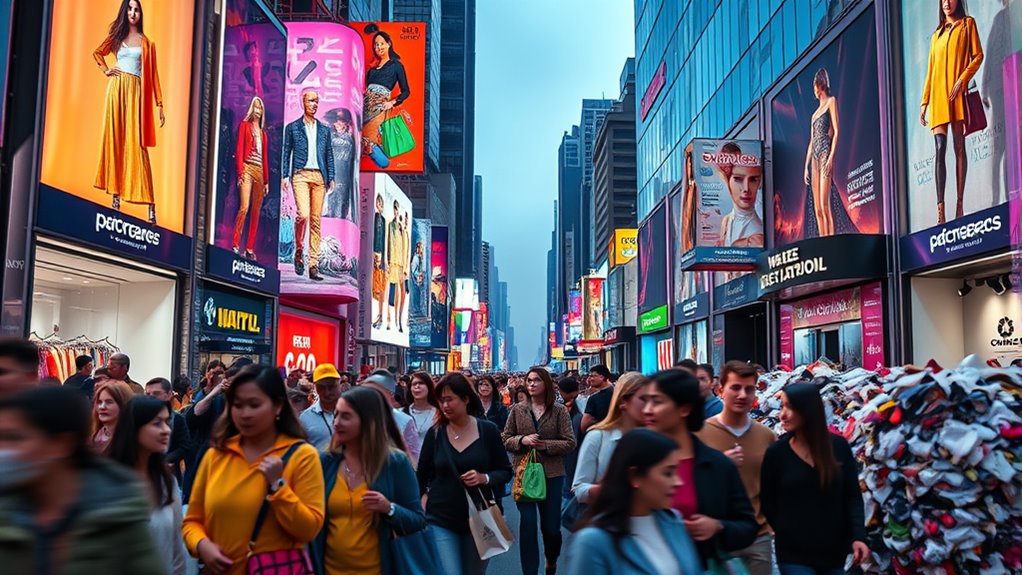

Fast fashion is all about quickly producing trendy, cheap clothing that mimics high-end designs for mass markets. Its rise has been driven by a focus on speed, low costs, and frequent new styles, encouraging you to buy more often and dispose of clothes rapidly. However, this system leads to environmental harm, such as pollution and resource depletion, and ethical issues like poor working conditions. Knowing how fast fashion impacts society can help you make more responsible choices.
Key Takeaways
- Fast fashion offers trendy, affordable clothing with rapid turnover, encouraging frequent purchasing and disposal.
- Its supply chain prioritizes speed and low costs, often involving factories in developing countries with lax regulations.
- Environmental impacts include synthetic fiber pollution, water and energy consumption, and waste from unsold clothing.
- Ethical concerns arise from low wages, unsafe working conditions, and exploitation in the supply chain.
- Consumers can promote sustainability by reducing consumption, choosing ethical brands, and supporting eco-friendly practices.
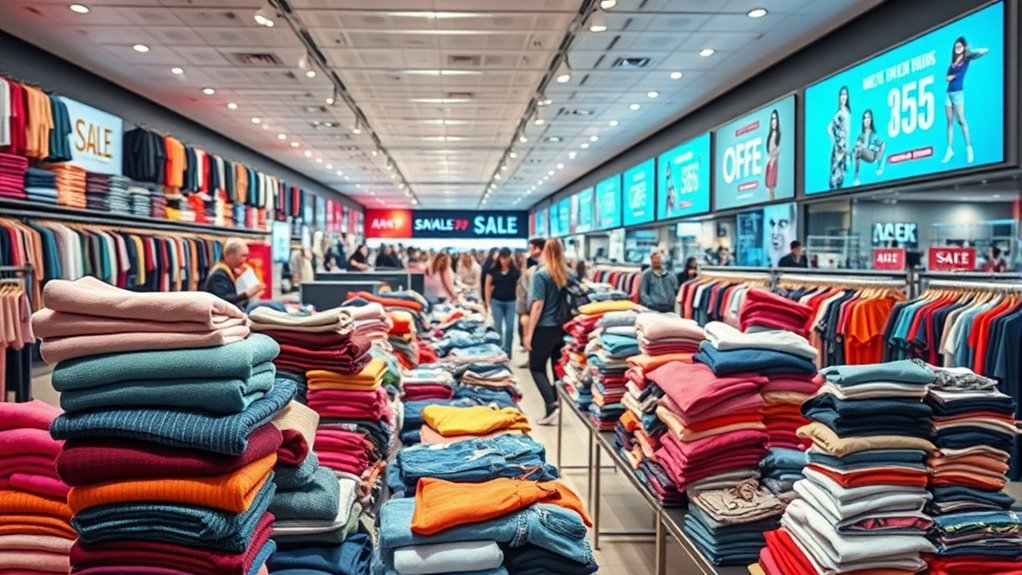
Fast fashion refers to the quick and affordable production of trendy clothing that mimics high-end designs. When you shop from fast fashion brands, you’re participating in a system that relies heavily on an intricate and often opaque supply chain. This supply chain connects raw material suppliers, factories, and distribution centers across different countries, often prioritizing speed and cost reduction over sustainability. This rapid turnover means new styles hit stores weekly, encouraging you to buy more often and discard old clothing quickly. As a result, the supply chain becomes a driving force behind the continuous demand for new items, pushing manufacturers to cut corners or source materials irresponsibly to keep up with trends. This relentless pace substantially amplifies the environmental impact of the fashion industry, as it leads to increased waste, pollution, and resource depletion.
The environmental footprint of fast fashion is staggering. The quick production cycles mean that garments are often made from synthetic fibers like polyester, which are derived from fossil fuels and take hundreds of years to decompose. The manufacturing process consumes vast amounts of water, energy, and chemicals, contributing to pollution and greenhouse gas emissions. For example, dyeing textiles releases toxic chemicals into waterways, harming ecosystems and local communities. Additionally, the fast pace encourages overproduction, resulting in huge amounts of unsold clothing that often end up in landfills or are incinerated, releasing harmful emissions into the atmosphere. You might not see or feel these impacts directly, but your buying habits contribute to this cycle, increasing the strain on the planet’s resources. Furthermore, the complex supply chain often involves low-wage labor in developing countries, raising ethical concerns about workers’ rights and safety.
The supply chain in fast fashion is designed for efficiency and speed, but it often neglects environmental considerations. Factories located in developing countries may operate under lax environmental regulations, leading to pollution and unsafe working conditions. The pressure for quick turnaround times means that sustainability takes a backseat to profit. As a consumer, your choices influence this system. When you purchase a cheap, trendy piece, you’re supporting a model that prioritizes rapid production and high turnover, often at the expense of the environment. Recognizing the connection between your consumption habits and the supply chain’s environmental impact can motivate you to seek more sustainable options. Choosing to buy less, opt for quality over quantity, or support brands committed to ethical and eco-friendly practices can help reduce the negative effects of fast fashion on the environment and encourage a more responsible supply chain.
ZURU Mini Brands Fashion Series 4
ZURU Mini Brands Fashion Series 4
As an affiliate, we earn on qualifying purchases.
As an affiliate, we earn on qualifying purchases.
Frequently Asked Questions
How Does Fast Fashion Influence Global Textile Waste?
Fast fashion markedly increases global textile waste by encouraging frequent, cheap clothing purchases that quickly lose appeal. You contribute to this cycle when you discard items after minimal use, which challenges waste management systems. Textile recycling can help reduce waste, but fast fashion‘s rapid turnover often overwhelms recycling efforts. To lessen this impact, you should choose sustainable brands and extend your clothing’s lifespan, easing the burden on waste management and promoting eco-friendly practices.
What Are the Main Environmental Impacts of Fast Fashion?
Fast fashion’s environmental impacts are staggering—you might be surprised how much it damages our planet. It depletes water sources, releases toxic chemicals from non-eco friendly dyes, and produces vast amounts of textile waste. By choosing sustainable fabrics and eco friendly dyes, you can help reduce pollution and lessen your carbon footprint. Your choices matter, and switching to more eco-conscious options can make a real difference in protecting our environment.
How Does Fast Fashion Affect Garment Worker Rights?
You might not realize it, but fast fashion often undermines garment worker rights through wage exploitation and poor working conditions. Companies prioritize low costs, which leads to unfair wages and neglects labor rights. As a result, workers face unsafe environments and minimal pay. By supporting fast fashion, you contribute to these injustices. It is crucial to choose brands that prioritize fair wages and uphold labor rights to make a positive impact.
Can Consumers Make More Sustainable Choices in Fast Fashion?
Yes, you can make more sustainable choices by opting for ethical shopping and choosing brands that prioritize sustainable materials. Look for certifications like Fair Trade or GOTS, and avoid fast fashion labels that promote quick turnover. By researching brands’ practices and supporting those committed to fair labor and eco-friendly fabrics, you help reduce environmental impact and improve garment worker rights. Your choices matter in creating a more responsible fashion industry.
What Are the Economic Effects of Fast Fashion on Local Industries?
Fast fashion causes local market disruption and small business decline because big brands flood the market with cheap, trendy clothes. You might notice local shops struggling to compete with fast fashion giants that offer lower prices and rapid turnover. This economic effect reduces diversity in local industries, pushing small businesses out and making communities less unique. As a consumer, your choices can influence whether local businesses thrive or decline.

Tranquil Threads Women's Harem Pants with Pockets and Drawstring, Hippie Boho Yoga Clothes S Twilight Root
Comfort Fit – Cute and comfortable, our boho harem pants for women feature a stretchy elastic waist with…
As an affiliate, we earn on qualifying purchases.
As an affiliate, we earn on qualifying purchases.
Conclusion
Fast fashion may seem like a quick fix for trendy clothes, but it’s like chasing a mirage—beautiful to look at but impossible to catch sustainably. By understanding its rise and social impact, you can make smarter choices and push for change. Remember, every purchase is a vote for the kind of world you want to live in. Stay informed, stay mindful, and together, we can steer the fashion industry toward a kinder, more sustainable future.

The 10-Piece Wardrobe: 100+ Effortlessly Stylish Outfits from Clothes You Already Own: A Minimalist Capsule Wardrobe Guide to Mix-and-Match Essentials, Timeless Style, and Endless Everyday Outfits
As an affiliate, we earn on qualifying purchases.
As an affiliate, we earn on qualifying purchases.

TREDECIM Men's 100% Organic Cotton Fine Jersey Soft Lightweight Short Sleeve Crew Neck T-Shirts Pack of 3 (White, Medium)
100% Hypoallergenic, Premium Quality, Super Combed Organic cotton Jersey fabric.
As an affiliate, we earn on qualifying purchases.
As an affiliate, we earn on qualifying purchases.