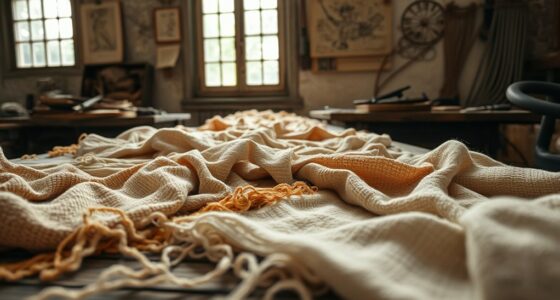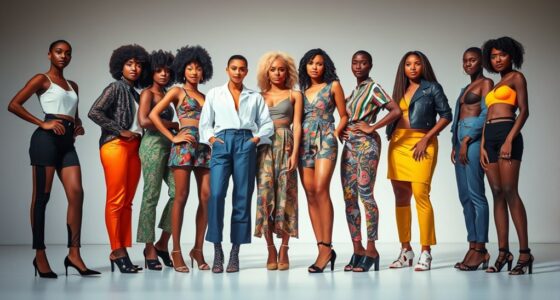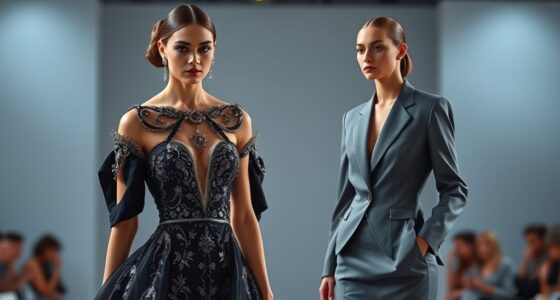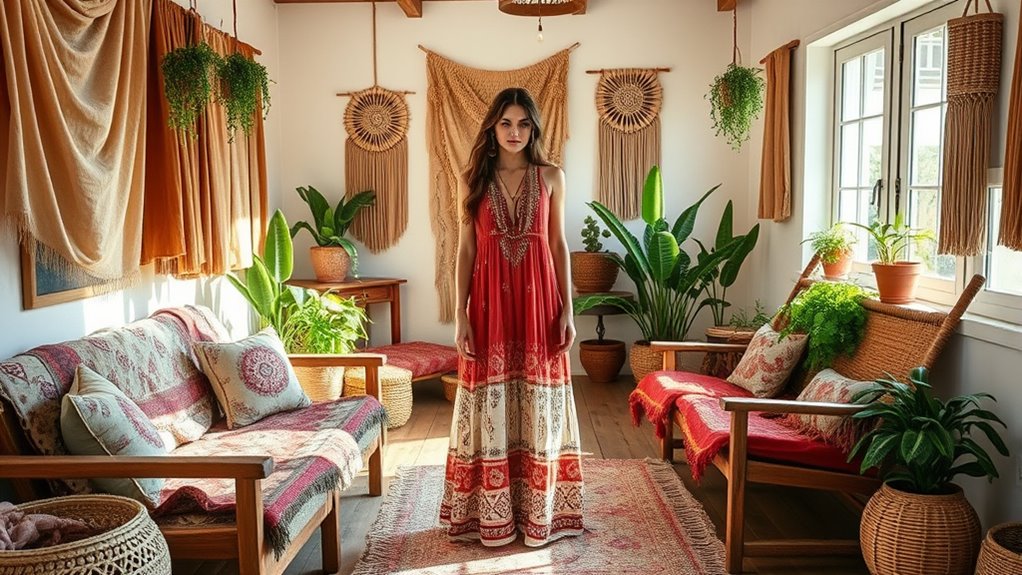

The boho aesthetic evolved from a rebellious, free-spirited movement in the 1960s and 70s into the versatile boho-chic style you see today. It blends vintage influences, natural textures, and handcrafted details with modern trends like sustainability and minimalism. While maintaining its core values of individuality and relaxed expression, it’s become more polished and accessible. If you keep exploring, you’ll discover how this style continuously adapts to fit contemporary lifestyles and personal tastes.
Key Takeaways
- The boho aesthetic originated in the 1960s/70s as a rebellious, eclectic style emphasizing individuality, nature, and handcrafted details.
- Over time, it evolved from counterculture to a mainstream, versatile look blending relaxed, layered elements with modern sophistication.
- Contemporary boho-chic incorporates sustainability, eco-friendly fabrics, and vintage shopping, aligning with ethical fashion trends.
- Technological advances enhance textures and patterns, ensuring visual appeal and high-quality presentation in fashion and interior design.
- The style maintains its core values of creativity and free-spiritedness while adapting to modern lifestyles and aesthetic preferences.

Have you ever wondered how the boho aesthetic has transformed over the years? It’s a fascinating journey that reflects shifts in cultural attitudes, fashion trends, and personal expression. Originally rooted in the free-spirited hippie influence of the 1960s and 70s, the boho style embodied a sense of rebellion against mainstream norms, emphasizing individuality, peace, and a love for nature. Back then, it was characterized by flowing fabrics, fringe, ethnic prints, and handcrafted accessories, creating a look that seemed effortlessly eclectic and deeply personal. Over time, this distinctive style evolved as it was embraced by wider audiences, morphing from a counterculture statement into a versatile aesthetic that can be adapted to contemporary tastes.
The boho aesthetic evolved from 1960s hippie rebellion to a versatile, contemporary style emphasizing individuality, natural textures, and sustainable fashion.
With the rise of modern reinterpretations, the boho look has become more polished and accessible without losing its core essence. Today, you might see boho elements in everything from fashion to interior decor, but the spirit remains the same: mixing textures, layering jewelry, and incorporating natural materials. The hippie influence continues to be felt, but it’s been reimagined to suit modern sensibilities—think sustainable fabrics, minimalist takes on traditional patterns, and a more refined approach to accessories. It’s no longer just about looking free-spirited; it’s about creating a style that feels intentional yet relaxed. This evolution shows how the boho aesthetic has adapted to fit the needs of contemporary life, blending comfort with a sense of individuality.
The modern reinterpretations of boho also reflect broader cultural trends, such as a focus on sustainability and ethical fashion. You might notice that many boho-inspired pieces now emphasize eco-friendly production, vintage shopping, or handcrafted details that honor the original ethos of authenticity and connection to the earth. This shift is part of a larger movement toward mindful consumption, which aligns perfectly with the boho’s roots in peace and love. Additionally, color accuracy in fashion and interior design has played a role in elevating the visual appeal of boho-inspired aesthetics, ensuring that the textures and patterns are presented in the best possible light. Meanwhile, designers have incorporated boho elements into mainstream fashion, making it more accessible. As a result, you can find boho-inspired styles in high-end boutiques or fast-fashion stores alike, all while maintaining that laid-back, carefree vibe that originally defined the aesthetic.
Ultimately, the boho aesthetic’s journey from its hippie influence to modern reinterpretations illustrates how a style can evolve while staying true to its roots. It’s about blending the old with the new—keeping the essence of free spirit, creativity, and connection alive in a way that resonates with today’s world. Whether you’re wearing a flowy dress, layering jewelry, or decorating your space with natural textures, the boho style invites you to express your individuality while honoring a rich history of cultural and artistic influence.

Kathfly Set of 4 Decorative Round Pleated Throw Pillows, Classy Velvet Pumpkin Round Throw Pillows, Decorative Floor Pillow for Bed Chair Home Sofa Decor, 14" Diameter(Colorful)
Package Includes: there are 4 pieces of pumpkin throw pillows in the package, coming with 4 colors, including…
As an affiliate, we earn on qualifying purchases.
As an affiliate, we earn on qualifying purchases.
Frequently Asked Questions
How Did the Bohemian Style Originate Historically?
You might be surprised to learn that the bohemian style originated from the hippie movement in the 1960s, inspired by free-spirited ideals and anti-establishment attitudes. It draws heavily on the aesthetics of nomadic tribes, who valued handcrafted textiles, layered jewelry, and relaxed clothing. This eclectic mix reflects a desire for individuality and a connection to diverse cultures, shaping the boho look we see today.
What Cultural Influences Shaped the Boho-Chic Aesthetic?
You might think fashion’s all about runway trends, but the boho-chic aesthetic’s shaped by genuine influences. Indigenous craftsmanship adds earthy textures, while spiritual symbolism infuses your look with meaning. These elements blend history and culture, creating a style that’s free-spirited yet rooted. So, next time you toss on a fringe bag, remember you’re embracing a rich tapestry of traditions and beliefs, all wrapped into one effortless, stylish statement.
Which Fashion Icons Popularized the Boho Look?
You can thank hippie icons like Janis Joplin and Jerry Garcia, along with vintage celebrities such as Jane Birkin and Brigitte Bardot, for popularizing the boho look. They embraced flowing fabrics, layered accessories, and a carefree attitude that defined the style. Their influence made boho-chic iconic, inspiring countless fashion enthusiasts to adopt its relaxed, eclectic vibe that continues to evolve today.
How Has the Boho Trend Influenced Interior Design?
The boho trend paints your space with a vibrant tapestry of color palettes and decorative motifs, turning your home into a storybook of wanderlust. It invites eclectic patterns, layered textures, and earthy tones to dance together in harmony. You embrace the free-spirited vibe, blending vintage finds with modern touches, creating an inviting oasis that reflects your bohemian soul and makes every corner whisper adventures and cherished memories.
What Are Eco-Friendly Practices Associated With Boho Fashion?
You can embrace eco-friendly practices by choosing sustainable textiles like organic cotton, hemp, or recycled fabrics for your boho wardrobe. Incorporate upcycled accessories, such as jewelry or bags made from repurposed materials, to reduce waste. This way, you stay true to the boho spirit of free-spirited sustainability, helping the environment while expressing your unique style. Sustainable textiles and upcycled accessories make your fashion choices more environmentally conscious and truly boho-chic.

Ausicfen Moon Phase Wall Hanging Wood Beaded with Tassel,Phases of The Moon,Boho Home Decor for Living Room Bedroom Office(Brown)
【Moon Phase Garland Wall Decor】Inspired by the changing process of phases of the moon, this perfect home decor…
As an affiliate, we earn on qualifying purchases.
As an affiliate, we earn on qualifying purchases.
Conclusion
As you embrace the journey from bohemian roots to boho-chic elegance, you’re gently weaving your own story into a rich tapestry of style. The evolving aesthetic invites you to explore textures, colors, and free-spirited details that subtly reflect your personality. With each new element, you’re shaping a look that’s both timeless and uniquely yours—like a delicate breeze that whispers of adventure and artistry, softly guiding you toward a gracefully curated expression of yourself.

SMUOBT Mystery Jewelry Jar Bundle, Vintage Surprise Jewelry Box for Women Gift Set (Necklace, Earrings, Rings, Bracelet, Keychain, Hair Clip) – Unique Birthday Gift for Her
Unbox a Sparkling Surprise – Each jar contains 40-45 mystery jewelry pieces(necklaces, earrings, rings) with styles ranging from…
As an affiliate, we earn on qualifying purchases.
As an affiliate, we earn on qualifying purchases.

DIY Boho Decor: Crafting Boho-Inspired Decorations with Macrame, Rattan, and Upcycled Materials
As an affiliate, we earn on qualifying purchases.
As an affiliate, we earn on qualifying purchases.