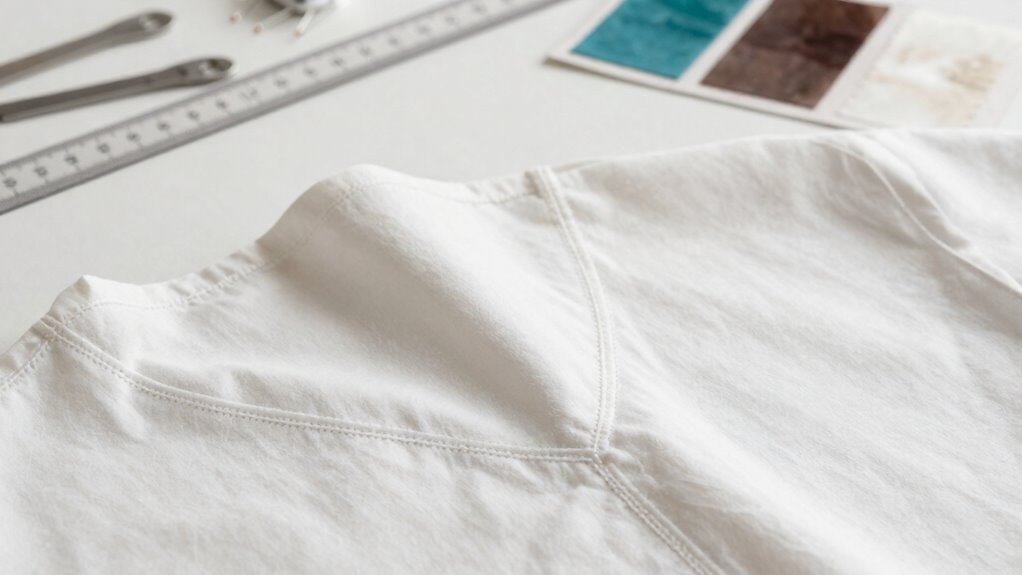
Home designers obsessed with cleaner garment finishes focus on the perfect tension and consistent seam allowances. You need to adjust your tension carefully to prevent puckered or loose stitches, while maintaining uniform seam allowances ensures neat, professional results. Properly feeding fabric and fine-tuning the cutter blade help create smooth, even edges. Mastering these details makes your garments durable and polished. Continue exploring these key techniques to elevate your sewing projects even further.
Key Takeaways
- Achieving proper thread tension ensures balanced, professional-looking stitches and prevents puckering or loose seams.
- Maintaining consistent seam allowances contributes to neat edges and accurate garment fit.
- Regular testing on scrap fabric helps fine-tune tension and cutter settings for optimal results.
- Using adjustable cutter blades ensures uniform seam allowances and tidy finishes.
- Combining correct tension adjustment with precise seam allowance control results in durable, high-quality garments.
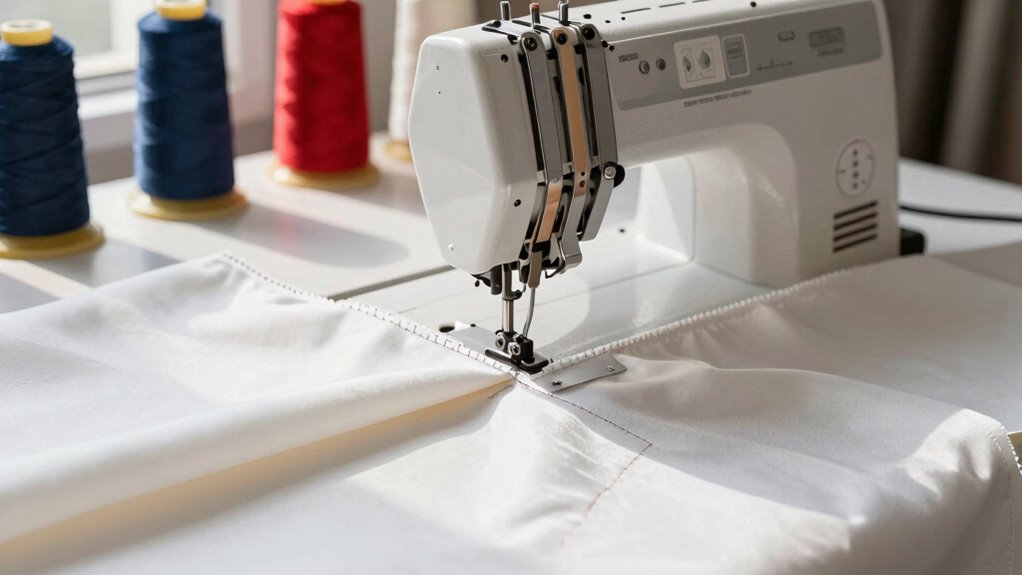
When it comes to achieving professional-looking garment finishes at home, sergers are essential tools that can elevate your sewing projects. But to get those clean, polished edges that mimic store-bought garments, you need to pay close attention to a few key details—particularly thread tension and seam allowance. These elements might seem small, but they make a huge difference in the final result. Proper thread tension ensures that your stitches are balanced, neither too tight nor too loose, which results in a smooth, even seam. If the tension is off, your stitches can become puckered or loose, compromising both the appearance and durability of your garment. You’ll want to experiment with tension settings on your serger, especially when changing fabrics or threads, to find that perfect balance. This requires a bit of patience, but once dialed in, it becomes second nature. Additionally, understanding sewing machine mechanics can help you troubleshoot tension issues more effectively.
Seam allowance is another critical factor that home designers obsess over. It’s the extra fabric you leave along the raw edge of your fabric before serging. Maintaining a consistent seam allowance is essential because it directly affects how neatly your edges are finished. Too narrow, and you risk weak seams or fraying; too wide, and your garment may look bulky or poorly fitted. Many home sewists prefer a standard seam allowance of 1/4 inch to 1/2 inch, depending on the project. When using your serger, you’ll want to ensure that the fabric feeds evenly and that the cutter blade (if your machine has one) trims at the correct width. This consistency guarantees a tidy, uniform edge every time.
To perfect your finishes, you also pay close attention to how your thread tension and seam allowance work together. For example, if your tension isn’t properly adjusted, even a perfect seam allowance can look uneven or puckered. Conversely, if your seam allowance isn’t consistent, no amount of tension tweaking will save the finish. Home designers often test their settings on scrap fabric before working on their actual project, fine-tuning both thread tension and seam allowance until they achieve the desired look. This step might seem tedious, but it’s the secret to professional results. By mastering these details, you’ll create garments with clean, durable, and attractive finishes that stand up to everyday wear.

VEVOR Serger Overlock Sewing Machine, 1250 Stitches Per Minute, 2-3-4 Thread Capability, 0.7-2 Adjustable Differential Feed, with Free Arm and LED Light, Sewing Machine for Various Fabrics, White
2/3/4-Thread Flexibility: Our serger sewing machine features easy switching between 2/3/4 threads with adjustable stitch length. Whether it's…
As an affiliate, we earn on qualifying purchases.
As an affiliate, we earn on qualifying purchases.
Frequently Asked Questions
What Are the Different Types of Sergers Available?
You’ll find various types of sergers, including 2-, 3-, 4-, and 5-thread models, each offering different stitch options. You can adjust thread tension and stitch length to customize your finish, ensuring cleaner seams. For delicate fabrics, a 2-thread serger works well, while a 4-thread model provides stronger seams for heavier materials. Choose based on your project needs, and always fine-tune tension and stitch length for perfect results.
How Do I Maintenance My Serger Properly?
To properly maintain your serger, regularly check and adjust the thread tension to guarantee smooth stitching. Keep the needle aligned correctly, replacing it if it becomes dull or bent. Clean out lint and dust from the tension discs and loopers, and oil the machine following the manufacturer’s instructions. This routine keeps your serger running efficiently, preventing thread jams and uneven seams for flawless garment finishes.
Can Sergers Be Used for Embroidery Projects?
Using a serger for embroidery projects is like painting with a needle and thread. While sergers excel at finishing seams and creating decorative stitches, they’re not designed for detailed embroidery techniques like hooping and intricate design work. However, you can incorporate decorative stitches into your projects, adding texture and flair. For complex embroidery, a dedicated embroidery machine offers better precision, but your serger can still enhance some creative touches.
What Safety Precautions Should I Follow With Sergers?
When using a serger, always wear appropriate safety gear like safety glasses to protect your eyes from flying debris. Keep your fingers away from the needle area to prevent injuries, practicing needle safety diligently. Turn off and unplug the machine when threading or cleaning to avoid accidents. Regularly check for loose parts, and follow the manufacturer’s instructions to guarantee safe operation. Staying vigilant helps you work confidently and safely with your serger.
How Do I Troubleshoot Common Serger Issues?
When troubleshooting common serger issues, start by checking your thread tension and ensuring it’s balanced on all threads. If stitches are uneven, consider adjusting tension settings. Also, verify your needle selection; using the right needle type and size for your fabric prevents skipped stitches and fabric damage. Regularly clean your serger to remove lint buildup, which can cause threading problems, and replace needles if they’re bent or dull for smoother operation.

Syyavrrta Industrial Polyester Serger Thread for Garment Finishing, Overlock Stitching & Clothing Production – 95g Spool
High Strength and Durability: Crafted from polyester, this serger thread delivers exceptional tensile strength and abrasion resistance, making…
As an affiliate, we earn on qualifying purchases.
As an affiliate, we earn on qualifying purchases.
Conclusion
Once you start using these sergers, you’ll wonder how you ever finished garments without them—sergers truly are the secret weapon every home designer needs. Their ability to deliver flawless, professional-looking seams will elevate your sewing game to legendary status. Don’t settle for anything less than perfection—these machines are the game-changers that will turn your projects into masterpiece masterpieces. Get ready to impress everyone with your impeccable finishes, because with a serger, your sewing skills will skyrocket to the stars!
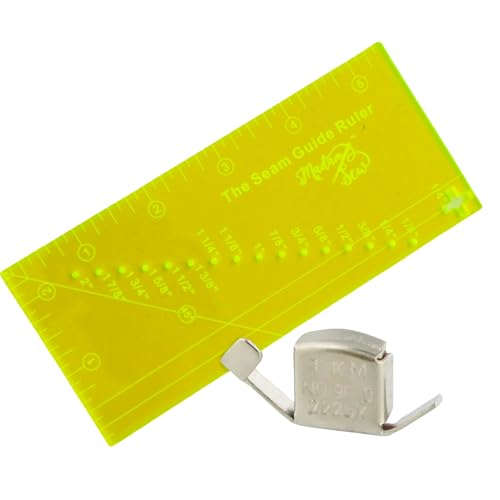
Madam Sew Seam Allowance Ruler & Magnetic Seam Guide for Sewing Machine | Perforated Seam Guide Ruler & Gauge for Perfect 1/8”- 2” Straight Line Hems | Includes 1/4” Pivot Point & 45 Degree Trim Line
SET STITCHES ACCURATELY – Use any sewing machine with the Madam Sew Sewing and Quilting Seam Guide Ruler….
As an affiliate, we earn on qualifying purchases.
As an affiliate, we earn on qualifying purchases.

Brother Serger Blade for Brother 1034D Upper and Lower Knife X77683001 XB0563001-2PCS
High-quality materials: made of high-quality metal materials, strong and durable; the good quality that can be used for…
As an affiliate, we earn on qualifying purchases.
As an affiliate, we earn on qualifying purchases.