Undergarments have shifted dramatically from stiff, constrictive corsets made of whalebone and steel to modern, flexible sports bras designed for comfort and support. Early corsets shaped social status but limited movement and caused health issues. Advances in fabrics like Lycra and nylon, along with technological improvements, led to lighter, more comfortable options. Today’s styles focus on functionality and confidence. If you explore further, you’ll discover how these changes reflect cultural shifts and innovations over time.
Key Takeaways
- Early corsets used stiff materials like whalebone to shape the waist, often causing discomfort and health issues.
- Advances in fabric technology and steel boning improved corset support and comfort over time.
- The development of bras in the 20th century shifted focus from waist-shaping to bust support, emphasizing comfort.
- Modern undergarments feature synthetic fibers and innovative designs like seamless and wireless bras for enhanced comfort.
- The evolution from corsets to sports bras reflects technological progress and changing cultural priorities toward comfort and functionality.
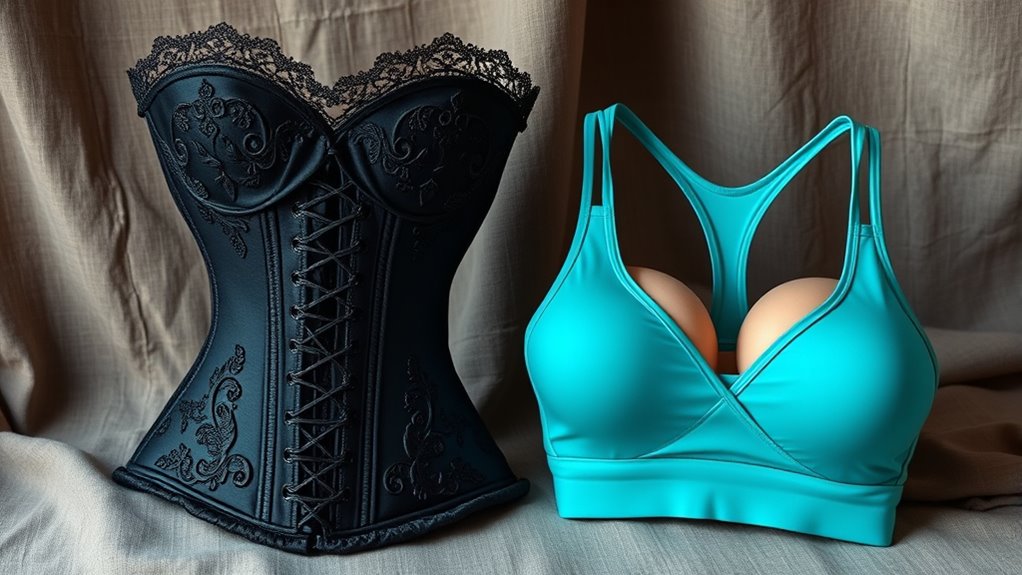
Have you ever wondered how undergarments have evolved over centuries? The story is fascinating, especially when you consider the corset evolution and the materials used to create these foundational garments. In earlier centuries, women wore tightly laced corsets to shape their figures and display social status. These corsets weren’t just fashion statements—they often severely restricted movement and could cause health issues. Over time, the design of corsets shifted, influenced by changing fashion trends and advances in fabric technology. Initially, they were made from stiff materials like whalebone, baleen, or wood, which provided the desired shape but lacked comfort. As textile manufacturing improved, undergarment materials evolved, incorporating softer fabrics such as silk, cotton, and linen, which made corsets somewhat more comfortable, though still restrictive. By the 19th century, steel boning became common, allowing for better support and a more durable structure, but the overall focus remained on shaping the waist and torso.
The corset evolution didn’t occur in isolation; it reflected broader shifts in social attitudes and technological progress. As industrialization advanced, so did the variety of undergarment materials, making them more accessible and affordable. This meant that more women could afford to wear corsets or similar undergarments, and they could choose from different styles depending on their needs and social standing. Despite improvements, corsets still had their limitations—most particularly, discomfort and health risks. This led to the development of alternative undergarments that prioritized comfort without sacrificing style or support.
Furthermore, the introduction of new materials and manufacturing techniques, such as synthetic fibers, revolutionized undergarment design, making them lighter and more flexible. Fast forward to the 20th century, and you see a dramatic shift with the advent of more flexible, lightweight materials like nylon and Lycra. These innovations paved the way for the bra, which eventually replaced the corset as the primary undergarment for supporting and shaping the bust. Unlike the rigid corsets of the past, modern bras focus on comfort, with adjustable straps and cushioned cups, made from breathable fabrics that adapt to your body’s movements. Today, undergarments continue to evolve, balancing functionality, comfort, and style. You can find everything from seamless, wireless bras to high-tech sports bras that provide support during intense activities. The journey from corsets to sports bras highlights how technological advancements and changing cultural attitudes continue to shape the undergarment landscape, always aiming to make you feel comfortable and confident in your own skin.
Frequently Asked Questions
How Did Undergarments Influence Fashion Trends Over Centuries?
You see, undergarments like corsets greatly influence fashion trends over centuries. The corset evolution shaped the silhouette of each era, dictating how outer garments were designed and worn. By constraining or supporting your body, these undergarments set standards of beauty and femininity, inspiring fashion influence that extended beyond underwear. As trends changed, so did undergarments, continuously shaping the way you dress and perceive style.
Were Undergarments Used for Medical or Health Reasons Historically?
Imagine wrapping yourself in a shield—undergarments historically served more than just fashion. Yes, they were used for medical necessity and health benefits, like supporting weak or injured areas, preventing infections, or improving posture. Throughout history, undergarments like corsets or abdominal binders aimed to promote health and comfort. You can see how these hidden layers often played essential roles in health, not just style, shaping your body’s well-being beneath the surface.
How Did Undergarments Differ Across Various Cultures and Regions?
You’ll notice that undergarments differ across cultures and regions through their cultural symbolism and regional fabrics. For example, in Japan, kimonos often feature silk and intricate embroidery, while in Africa, colorful wraps and beaded designs hold cultural significance. In Western societies, cotton and lace became popular, reflecting social norms. These variations showcase how undergarments express identity, tradition, and regional craftsmanship worldwide.
What Materials Were Traditionally Used in Early Undergarments?
Imagine your undergarments as the armor of ancient times, crafted from sturdy linen or hemp that offered fabric durability and comfort. Early textiles relied on natural fibers, with innovations like weaving techniques improving strength. These materials shielded and supported, much like a knight’s armor, using the best available resources for their era. Over time, textile innovations transformed undergarments into softer, more functional pieces, reflecting progress in fabric technology.
How Have Undergarments Impacted Women’s Social and Professional Lives?
Undergarments have considerably impacted your social empowerment and professional opportunities by shaping confidence and comfort. As they evolved, they allowed women to participate more freely in public and work environments, breaking barriers of restrictive fashion. Modern undergarments support your independence, enabling you to pursue careers and social roles previously limited. Their development reflects a broader shift toward gender equality, empowering you to express yourself comfortably and assertively in all areas of life.
Conclusion
As you explore the evolution from corsets to sports bras, you can appreciate how undergarments have gracefully adapted to your changing needs and styles. They’ve quietly supported your comfort and confidence through the ages, often working behind the scenes. So, next time you choose your favorite piece, remember it’s part of a long, elegant tradition of caring for yourself—always there, always discreet, yet always essential.