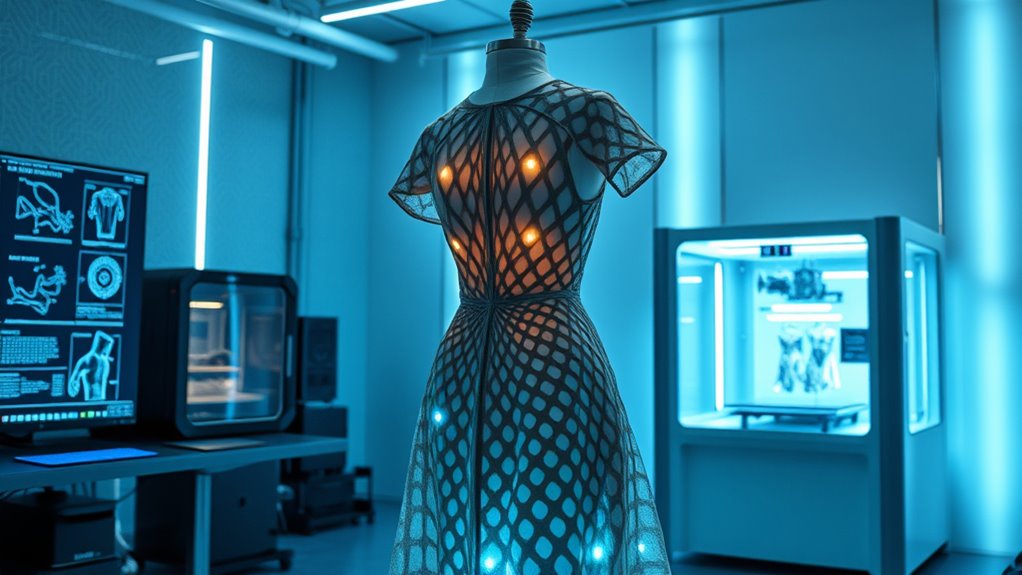

AI and 3D printing are transforming fashion by making design more innovative, sustainable, and personalized. You can create eco-friendly garments from recycled and organic materials, reducing waste and lowering environmental impacts. AI helps predict trends and generate custom styles quickly, while 3D printing enables on-demand production that minimizes excess inventory. These advancements make fashion smarter and greener, opening new possibilities for your wardrobe and beyond. Keep exploring to discover how these technologies continue to shape the industry.
Key Takeaways
- AI analyzes fashion trends and consumer preferences to enable faster, data-driven design and innovation.
- 3D printing allows on-demand, customized manufacturing, reducing waste and inventory costs.
- AI accelerates prototyping and testing, streamlining the transition from concept to final product.
- 3D printing supports sustainable practices by minimizing material waste and enabling eco-friendly designs.
- The integration of AI and 3D printing fosters innovative, personalized, and environmentally conscious fashion solutions.

Have you ever wondered how technology is transforming the way we experience fashion? It’s an exciting time where innovation is reshaping every aspect of the industry, from how clothes are designed to how they’re worn. One of the most significant shifts is the integration of sustainable fabrics, which focus on reducing environmental impact without sacrificing style. These fabrics, made from recycled materials, organic fibers, or bio-based sources, are changing the way designers approach creation. Instead of relying on traditional, resource-intensive textiles, you now have access to eco-friendly options that promote sustainability. This shift not only helps protect the planet but also offers you clothing that aligns with your values.
Alongside sustainable fabrics, wearable tech is revolutionizing the way you interact with fashion. Devices embedded into clothing—like fitness trackers, smart textiles, or even mood sensors—are making garments more functional than ever. Imagine a jacket that adjusts its insulation based on the weather or a shirt that monitors your heart rate during a workout. Wearable tech doesn’t just add convenience; it personalizes your style and health management in ways that were once science fiction. Designers are blending fashion with technology to craft pieces that serve practical purposes while still being stylish, giving you the best of both worlds.
These technological advancements are also enabling more sustainable practices in production. 3D printing, for example, allows for on-demand manufacturing, reducing waste and excess inventory. Instead of mass-producing items that may never sell, you get customized pieces made precisely to your measurements. This not only minimizes material waste but also shortens the supply chain, lowering carbon emissions associated with transportation. The ability to produce garments on-demand also opens up creative possibilities, allowing you to choose unique designs tailored specifically for you without the environmental cost of large-scale manufacturing.
Furthermore, AI-driven design tools are making the creative process more efficient. They analyze trends, predict consumer preferences, and generate prototypes rapidly, speeding up the journey from concept to wardrobe. This means you benefit from constantly evolving styles that are both innovative and environmentally conscious. As technology continues to advance, the connection between sustainability, wearable tech, and cutting-edge design becomes more seamless. You’re now part of a movement that values both style and responsibility, where fashion is smarter, greener, and more personalized than ever before.
eco-friendly 3D printed clothing
As an affiliate, we earn on qualifying purchases.
As an affiliate, we earn on qualifying purchases.
Frequently Asked Questions
How Will AI Influence Sustainable Fashion Practices?
AI will markedly influence sustainable fashion practices by enabling AI customization, which reduces waste through precise production tailored to individual needs. It also optimizes sustainable sourcing, helping you choose eco-friendly materials and suppliers more effectively. By integrating AI, you can minimize excess inventory, cut down on environmental impact, and create more sustainable collections. This technology empowers you to make smarter, greener decisions throughout the design and manufacturing processes.
Can 3D Printing Reduce Clothing Waste Significantly?
You’ll be surprised to learn that 3D printing can cut clothing waste by up to 90%. By enabling precise manufacturing, it improves clothing efficiency and minimizes excess material. This technology allows on-demand production, reducing overstock and discarded garments. As a result, 3D printing markedly advances waste reduction, making the fashion industry more sustainable and environmentally friendly — a game-changer for eco-conscious consumers like you.
What Are the Ethical Concerns With Ai-Designed Fashion?
You should consider that AI-designed fashion raises ethical concerns like privacy issues, as personal data might be used without consent. Additionally, intellectual property rights become complicated when AI creates original designs, risking infringements. You need to be mindful of these issues, ensuring that AI development respects designers’ rights and safeguards user privacy. Staying informed and advocating for clear regulations helps address these ethical challenges effectively.
How Accessible Is 3D Printing Technology for Emerging Designers?
Imagine trying to craft a runway-worthy gown with a breadboard and a soldering iron—welcome to the world of 3D printing for emerging designers. While prices are dropping, cost barriers still loom large, and a skill gap exists. You might find the tech accessible, but mastering it feels like learning rocket science without a manual. So, unless you’re a tech wizard, it’s still a steep climb for most newcomers.
Will AI Replace Traditional Fashion Designers Entirely?
AI won’t replace you entirely; instead, it enhances your creativity. It acts as a tool, allowing for innovative designs through AI creativity, but your expertise and vision remain essential. Collaborating with AI can streamline processes and inspire new ideas, making your work more dynamic. Embrace this technology as a partner, not a substitute, and continue shaping fashion with your unique perspective and skills.
As an affiliate, we earn on qualifying purchases.
Conclusion
As you step into this new era, fashion becomes a vibrant tapestry woven with threads of AI and 3D printing. Imagine your designs as seeds, sprouting into bold, innovative forms with each technological breakthrough. Embrace these tools like a painter wields a brush, transforming your vision into reality. The future of fashion is an open canvas—limitless and waiting for your unique touch to shape its vibrant landscape.
custom 3D printed fashion accessories
As an affiliate, we earn on qualifying purchases.
As an affiliate, we earn on qualifying purchases.
sustainable recycled fabric garments
As an affiliate, we earn on qualifying purchases.
As an affiliate, we earn on qualifying purchases.