For designers and fashion innovators, choosing the right 3D printer can make or break a prototype’s success. The best options combine precision, speed, and versatile material capabilities, but tradeoffs often exist between build size, color options, and ease of use. The ANYCUBIC Photon Mono M7 PRO 14K stands out as the overall top pick for its detailed resin printing, ideal for intricate fashion accessories. The Bambu Lab P2S Combo offers multi-color flexibility, making it a strong choice for color-rich prototypes. Meanwhile, the Creality K2 SE 4C balances fast printing with multi-color features for rapid iteration. Continue reading to see how these and other options compare to find the best fit for your fashion design needs.

Get beauty and skincare favorites delivered free with Prime
- Fast, free delivery on millions of items
- Prime Video, Amazon Music and more included
- Member-only deals all year
Complete the kit


Key Takeaways
- Resin printers like the ANYCUBIC Photon Mono M7 PRO excel at detailed, fine-feature prototypes suited for jewelry and embellishments.
- Multi-color FDM printers such as the Bambu Lab P2S Combo offer greater versatility for complex, colorful fashion pieces.
- Speed is a common tradeoff; high-speed models like the FlashForge AD5X may sacrifice some detail for rapid prototyping.
- Build volume varies significantly, with larger options better for full-scale prototypes but often at a higher cost.
- Ease of use and setup are crucial for beginners, with models like the ELEGOO Neptune 3 Pro providing faster, auto-leveling features.
| ANYCUBIC Photon Mono M7 PRO 14K Resin 3D Printer, 170mm/h Fast Printing |  | Best Overall for High-Resolution Fine Detail | Print Speed: 170mm/h | Resolution: 13312 x 5120 pixels | XY Resolution: 16.8 × 24.8 μm | VIEW ON AMAZON | See Our Full Breakdown |
| Bambu Lab P2S Combo, P2S 3D Printer & AMS 2 Pro, Multi-Color 3D Printing |  | Best for Multi-Color and Multi-Material Flexibility | Print Speed: 600 mm/s | Setup Time: 15 minutes | Filament Drying Temperature: 65 °C | VIEW ON AMAZON | See Our Full Breakdown |
| Creality K2 SE 4C 3D Printer, Multi-Color, Fast Printing 500mm/s |  | Best for Fast Multi-Color Printing at Home or Small Studio | Color Printing: Multi-Color 4-Color | Print Speed: 500mm/s | Auto Leveling: Yes | VIEW ON AMAZON | See Our Full Breakdown |
| Snapmaker U1 3D Printer, 4-Toolhead with 5s Toolchanger, Multi-Color Printing |  | Best for Versatile Multi-Tool and Multi-Color Prototyping | Product Dimensions: 22.6 x 13 x 14.2 inches | Item Weight: 59 pounds | Build Volume: 270 x 270 x 270 mm | VIEW ON AMAZON | See Our Full Breakdown |
| Bambu Lab P1S 3D Printer |  | Best for User-Friendly Multi-Color Multi-Material Production | Color Capabilities: Up to 16 colors | Printing Speed: 500mm/s | Auto Bed Leveling: Yes | VIEW ON AMAZON | See Our Full Breakdown |
| QIDI Plus5 Multi-Color 3D Printer, 320×320×300mm Large Build Volume |  | Best Overall for Large-Scale Fashion Prototypes | Build Volume: 320×320×300mm | Dimensions: 22 x 22 x 24 inches | Weight: 96.8 pounds | VIEW ON AMAZON | See Our Full Breakdown |
| FlashForge AD5X Multi-Color 3D Printer, CoreXY, 600mm/s High-Speed, 220x220x220mm Build Volume | 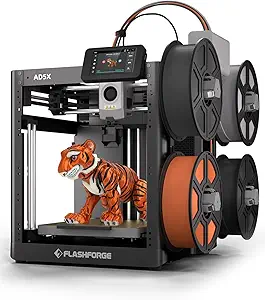 | Best for Rapid Multi-Color Prototyping | Print Speed: 600mm/s | Build Volume: 220x220x220mm | Extruder Temperature: 300°C | VIEW ON AMAZON | See Our Full Breakdown |
| Bambu Lab A1 3D Printer, Ready-to-Use FDM 3D Printer for Beginners and Kids |  | Best for Beginners and Small-Scale Fashion Projects | Product Dimensions: 21.76 x 20.83 x 12.87 inches | Item Weight: 22 pounds | Auto Calibration: Yes | VIEW ON AMAZON | See Our Full Breakdown |
| Bambu Lab A1 Mini 3D Printer + LED Lamp Kit, Ready-to-Use for Beginners |  | Best Compact and Creative for Home Use | Product Dimensions: 15.21 x 16.77 x 17.94 inches | Item Weight: 12.1 pounds | Includes: LED Lamp Kit | VIEW ON AMAZON | See Our Full Breakdown |
| ELEGOO Neptune 3 Pro 3D Printer, Auto Leveling, Quick Assembly |  | Best for Reliable Small-Scale Fashion Prototyping | Build Volume: 225x225x280 mm | Motherboard: STM32 | Noise Level: 47dB | VIEW ON AMAZON | See Our Full Breakdown |
| 3d printer for fashion prototype | Build Volume |
|---|---|
| ANYCUBIC Photon Mono M7 PRO 14 | 170mm (height) |
| Bambu Lab P2S Combo | — |
| Creality K2 SE 4C 3D Printer | Not specified |
| Snapmaker U1 3D Printer | 270 x 270 x 270 mm |
| Bambu Lab P1S 3D Printer | — |
| QIDI Plus5 Multi-Color 3D Prin | 320×320×300mm |
| FlashForge AD5X Multi-Color 3D | 220x220x220mm |
| Bambu Lab A1 3D Printer | — |
| Bambu Lab A1 Mini 3D Printer + | — |
| ELEGOO Neptune 3 Pro 3D Printe | 225x225x280 mm |
More Details on Our Top Picks
ANYCUBIC Photon Mono M7 PRO 14K Resin 3D Printer, 170mm/h Fast Printing
The ANYCUBIC Photon Mono M7 PRO stands out for its impressive printing speed of 170mm/h, which significantly reduces production time for complex fashion prototypes. Its 14K monochrome LCD delivers exceptional detail, surpassing many resin printers like the ELEGOO Neptune 3 Pro, which offers slightly lower resolution. The advanced COB LighTurbo 3.0 light source ensures uniform curing, improving print consistency. However, its substantial size and complex features mean it may challenge beginners or those with limited space, and the high price could be a barrier. Compared with the Bambu Lab P1S, which excels in multi-material versatility, this resin model prioritizes ultra-fine detail and speed, making it suitable for highly detailed prototypes where resolution matters most.
Pros:- Ultra-fast printing speed of 170mm/h enhances productivity
- High-resolution 14K LCD for intricate detail
- Advanced COB LighTurbo 3.0 for uniform exposure
- Intelligent features like resin auto-fill and detection
Cons:- Large size requires significant dedicated space
- Complex interface may have a steep learning curve for beginners
- Potentially high price limits accessibility for casual users
Best for: Professional designers and studios needing high-resolution, detailed prototypes with fast turnaround times
Not ideal for: Small workshops or hobbyists with limited space or budget, due to its size and potentially high cost
- Print Speed:170mm/h
- Resolution:13312 x 5120 pixels
- XY Resolution:16.8 × 24.8 μm
- Build Volume:170mm (height)
- Item Dimensions:25 x 15 x 35 inches
- Item Weight:33.3 pounds
Our verdict“This printer is best suited for experienced professionals prioritizing speed and detail in high-quality fashion prototypes.”
Bambu Lab P2S Combo, P2S 3D Printer & AMS 2 Pro, Multi-Color 3D Printing
The Bambu Lab P2S Combo offers an excellent mix of high-speed printing and multi-color capabilities, making it a flexible choice for fashion prototypes that require varied materials and colors. Its 600 mm/s printing speed outpaces many competitors like the Creality K2 SE 4C, enabling rapid iteration. The automatic calibration system simplifies setup, ideal for users who want quick results without fuss. However, the P2S itself does not support multi-color printing without the AMS 2 Pro, which adds complexity and cost. Compared with the Snapmaker U1, which offers multi-tool versatility, the P2S excels in speed and streamlined operation but sacrifices some multi-color ease without the AMS module. It’s best for users who value speed and multi-material options but are willing to manage the system’s complexity.
Pros:- High-speed printing up to 600mm/s accelerates production
- Quick setup with automatic calibration
- Supports multi-color and multi-material printing with AMS 2 Pro
- Streamlined operation suitable for fast prototyping
Cons:- Requires additional AMS 2 Pro for multi-color printing, increasing overall cost
- Complex features may need some learning for new users
- Limited support for certain filament types without additional investments
Best for: Designers and small studios seeking rapid multi-material, multi-color prototypes with minimal manual calibration
Not ideal for: Beginners or hobbyists who prefer simple setups or don’t want to invest in additional modules like the AMS 2 Pro
- Print Speed:600 mm/s
- Setup Time:15 minutes
- Filament Drying Temperature:65 °C
- Chamber Temperature:50 °C
- Multi-Color Support:Yes (with Combo version)
Our verdict“This printer is ideal for fast-paced design teams needing versatile multi-material production with efficient setup.”
Creality K2 SE 4C 3D Printer, Multi-Color, Fast Printing 500mm/s
The Creality K2 SE 4C makes a compelling case for multi-color printing at high speeds, reaching up to 500mm/s. Its automatic bed leveling and smart features like filament runout detection improve reliability for busy workflows. Compared with the Snapmaker U1, which offers multi-tool capabilities, the K2 SE focuses on speed and ease of use, though it offers less versatility in tool changing. Its supported materials include PLA and PETG, suitable for many fashion prototypes but lacking clarity on the full range of supported filaments. The limited build volume detail and somewhat high complexity might challenge absolute beginners. This model is a good fit for those who need quick multi-color results without extensive setup or specialized multi-tool operations.
Pros:- Fast printing up to 500mm/s accelerates project turnaround
- Automatic bed leveling ensures consistent quality
- Smart features enhance reliability during busy sessions
- Supports multi-color printing
Cons:- Limited information on supported filament types
- Build volume details are not specified
- May be complex for absolute beginners
Best for: Small studios or designers who need fast multi-color prototypes without extensive manual setup
Not ideal for: Complete beginners or those requiring large build volumes, due to missing specifics and limited filament support
- Color Printing:Multi-Color 4-Color
- Print Speed:500mm/s
- Auto Leveling:Yes
- Build Volume:Not specified
Our verdict“This printer suits users who prioritize speed and multi-color output within a compact, reliable system.”
Snapmaker U1 3D Printer, 4-Toolhead with 5s Toolchanger, Multi-Color Printing
The Snapmaker U1 offers unmatched versatility with its four-toolhead system and quick 5-second automatic tool changer, making it ideal for multi-material and multi-color fashion prototypes. Its coreXY motion ensures high-speed, precise printing up to 500mm/s, comparable to other high-performance models like the Creality K2 SE 4C. The wide filament compatibility and smart calibration features support complex, multi-step workflows. However, its substantial weight and size demand ample workspace, and the complex setup may intimidate beginners. The higher price point reflects its multi-functionality, so casual users or small hobbyists might prefer more straightforward options. This pick excels for those who need a multi-tool system that can switch rapidly between different materials and colors, streamlining multi-stage prototype creation.
Pros:- Fast 5-second automatic tool change accelerates multi-material workflows
- High-speed coreXY system ensures quick and precise prints
- Compatible with a wide range of filaments including flexible and specialty types
- Smart calibration for consistent results
Cons:- Heavy and large, requiring significant space
- Complex setup may challenge beginners
- Higher price limits accessibility for casual or budget-conscious users
Best for: Hobbyists and professionals requiring multi-material, multi-color multi-tool systems for complex fashion prototypes
Not ideal for: Small spaces or users seeking a simple, single-material printer without multi-tool capabilities
- Product Dimensions:22.6 x 13 x 14.2 inches
- Item Weight:59 pounds
- Build Volume:270 x 270 x 270 mm
- Number of Toolheads:4
- Toolchanger Speed:5 seconds
- Maximum Printing Speed:500 mm/s
- Warranty:1 year
Our verdict“This printer is best suited for users who need swift, multi-material prototyping with maximum versatility and speed.”
Bambu Lab P1S 3D Printer
The Bambu Lab P1S offers a compelling combination of ease of use and multi-material capability, particularly with its support for up to 16 colors and high-speed operation at 500mm/s. Its enclosed design enhances print quality and consistency, making it suitable for both hobbyists and professionals working on fashion prototypes that benefit from vibrant multi-color rendering. Compared with the P2S Combo, which requires additional modules for multi-color, the P1S integrates this feature seamlessly, simplifying workflow. Its automatic bed leveling and 15-minute setup time make it accessible for users of all skill levels, though it does not support carbon or glass fiber reinforced filaments, limiting some advanced material options. This model excels when ease of use and multi-color output are priorities.
Pros:- Supports up to 16 colors for vibrant multi-material printing
- High-speed printing at 500mm/s reduces wait times
- Enclosed design improves print stability and quality
- Automatic bed leveling for consistent results
Cons:- Limited to standard filaments, not suitable for fiber-reinforced materials
- Requires connection to Bambu Lab AMS for multi-color features
- Some limitations on filament types may restrict advanced prototype materials
Best for: Designers and small teams seeking straightforward, high-speed multi-color, multi-material prototyping with minimal setup
Not ideal for: Users needing support for advanced, fiber-reinforced filaments or extensive customization beyond standard materials
- Color Capabilities:Up to 16 colors
- Printing Speed:500mm/s
- Auto Bed Leveling:Yes
- Design:Enclosed
- Supported Filaments:PLA, PETG, TPU, PVA, PET, ABS, ASA
Our verdict“This printer is ideal for users who prioritize ease, speed, and vibrant multi-color production without extensive manual intervention.”
QIDI Plus5 Multi-Color 3D Printer, 320×320×300mm Large Build Volume
The QIDI Plus5 stands out for its expansive 320×320×300mm build volume, making it ideal for creating large or intricate fashion prototypes that other printers like the Bambu Lab A1 can’t accommodate. Its support for high-performance engineering filaments and multi-color printing through active drying technology provides both versatility and color richness, crucial for detailed fashion samples. However, its substantial weight and complex setup may challenge smaller studios or beginners. Compared to smaller models, this printer’s size and advanced features come with a higher price and space requirement, but they translate into fewer project limitations. Its smart features such as automatic bed leveling and remote control streamline the process, though they add to the overall complexity. This pick suits established studios or designers needing large, multi-material prototypes with consistent quality.Pros:- Enormous build volume for large or complex prototypes
- Supports a wide range of engineering filaments including composites
- Smart features like automatic bed leveling and remote control
Cons:- Heavy and takes up significant space, requiring a dedicated setup area
- Complex assembly and calibration may be challenging for newcomers
Best for: Large fashion design studios and artists working on big, multi-material prototypes
Not ideal for: Small fashion startups or home hobbyists with limited space and simpler needs
- Build Volume:320×320×300mm
- Dimensions:22 x 22 x 24 inches
- Weight:96.8 pounds
- Max Extrusion Temperature:370°C
- Chamber Temperature:65°C
- Material Compatibility:PLA, ABS, PETG, TPU, PA, PC, carbon/glass-fiber composites
Our verdict“This is best suited for professional studios needing large-scale, multi-material fashion prototypes without space or budget constraints.”
FlashForge AD5X Multi-Color 3D Printer, CoreXY, 600mm/s High-Speed, 220x220x220mm Build Volume
The FlashForge AD5X excels in speedy multi-color printing, offering speeds up to 600mm/s, far surpassing the slower, more detailed printing of the Bambu Lab A1. Its 220x220x220mm build volume is smaller but sufficient for many fashion prototypes that prioritize quick iterations over size. The 1-click auto leveling and versatile nozzle options make setup and adjustments easier, though the high speed demands precise calibration and may compromise detail quality if not carefully managed. Unlike the QIDI Plus5, which favors large, detailed pieces, the AD5X is geared toward rapid testing of designs with multiple colors. This printer provides a compelling balance of speed and multi-color capability, ideal for those needing fast turnaround prototypes.Pros:- Exceptional printing speed for rapid prototyping
- Supports multi-color printing with up to 4 colors simultaneously
- Auto leveling simplifies setup
Cons:- Limited build volume for larger designs
- High speed may require careful calibration to maintain quality
Best for: Designers needing fast multi-color prototypes and quick iteration cycles
Not ideal for: Artists requiring large, detailed models or working with engineering-grade materials
- Print Speed:600mm/s
- Build Volume:220x220x220mm
- Extruder Temperature:300°C
- Nozzle Sizes:0.25mm to 0.8mm
- Auto Leveling:Yes
- Connectivity:Mobile app control
Our verdict“This is perfect for fashion designers who prioritize speed and multi-color capabilities over large-scale modeling.”
Bambu Lab A1 3D Printer, Ready-to-Use FDM 3D Printer for Beginners and Kids
The Bambu Lab A1 offers a user-friendly experience with automatic calibration, making it accessible for newcomers and educational settings. Its support for multi-color printing via AMS lite adds creative flexibility, although it requires an additional purchase, unlike the integrated multi-material systems in the QIDI Plus5. Weighing just over 22 pounds, it’s portable enough for small studios or home use, and its quiet operation suits environments where noise is a concern. However, its specifications are less extensive, and the multi-color capacity is somewhat limited without extra investment. Compared to more advanced or larger printers, the A1 simplifies operations but at the expense of larger build size and advanced material support, making it ideal for small prototypes and practice runs.Pros:- Easy setup with automatic calibration
- Supports multi-color printing with AMS lite
- Quiet operation for home or studio environments
Cons:- Additional purchase needed for multi-color capability
- Limited build volume for large or complex prototypes
Best for: Beginners, students, and small studios focusing on simple, multi-color fashion prototypes
Not ideal for: Professional studios requiring large or highly detailed prototypes
- Product Dimensions:21.76 x 20.83 x 12.87 inches
- Item Weight:22 pounds
- Auto Calibration:Yes
- Supports Multi-Color:Yes (via AMS lite)
- Operation Noise:Quiet
- Warranty:See product page
Our verdict“This is best suited for new designers or small projects where ease of use and multi-color options are priorities.”
Bambu Lab A1 Mini 3D Printer + LED Lamp Kit, Ready-to-Use for Beginners
The Bambu Lab A1 Mini shines as a compact, easy-to-setup option for small-scale fashion prototypes or decorative projects, especially with its included LED Lamp Kit for creative lighting effects. Its automatic calibration and quiet operation make it ideal for home or studio environments where space is limited. While it offers a decent library of models through MakerWorld, its smaller size restricts the scope of larger or more elaborate prototypes compared to the QIDI Plus5. Its simple setup and portability make it accessible for beginners, but its limited build volume means it’s less suitable for larger fashion samples or multi-material projects. This model balances ease of use with creative potential, perfect for casual or experimental designers.Pros:- Compact size fits small studios or home setups
- Includes LED Lamp Kit for decorative lighting
- Automatic calibration and quiet operation
Cons:- Limited build volume restricts larger prototypes
- Price may be high relative to features for hobbyists
Best for: Home-based designers, hobbyists, or small-scale fashion projects requiring creative lighting
Not ideal for: Professional fashion studios needing large, complex prototypes or multi-material support
- Product Dimensions:15.21 x 16.77 x 17.94 inches
- Item Weight:12.1 pounds
- Includes:LED Lamp Kit
- Auto Calibration:Yes
- Model Library Access:MakerWorld
- Operation Noise:Quiet
Our verdict“This is a good choice for small, creative projects and casual designers preferring ease of use and compactness.”
ELEGOO Neptune 3 Pro 3D Printer, Auto Leveling, Quick Assembly
The ELEGOO Neptune 3 Pro offers a straightforward, reliable setup with auto bed leveling and a durable dual lead screw Z-axis, making it suitable for consistent small-scale prototypes, similar to the Bambu Lab A1. Its 225x225x280mm build volume strikes a balance between size and practicality, though it falls short of the large-scale capabilities of the QIDI Plus5. Its quick assembly and quiet operation make it appealing for studios needing dependable results without lengthy setup. However, some users may find its size limiting for larger fashion samples, and it lacks the advanced multi-material features of higher-end models. It’s a dependable choice for those seeking a straightforward, reliable printer for routine prototypes, rather than complex multi-material projects.Pros:- Auto bed leveling for easy setup
- Quiet operation at 47dB
- Supports multiple filament types including PLA, TPU, PETG, and ABS
Cons:- Relatively large footprint requiring space
- Some users report issues with certain features or calibration
Best for: Small studios, educational settings, or designers focused on consistent small prototypes
Not ideal for: Large fashion houses or projects requiring multi-material or large-scale prototypes
- Build Volume:225x225x280 mm
- Motherboard:STM32
- Noise Level:47dB
- Extruder:Dual-gear direct drive
- Auto Bed Leveling:36-point
- Item Dimensions:23 x 9 x 19 inches
Our verdict“This is suitable for reliable, small-scale fashion prototypes in environments where ease and consistency matter most.”

How We Picked
The selection process prioritized printers that excel in creating fashion prototypes, focusing on print precision, versatility, speed, and ease of use. We examined build quality, material compatibility (resins versus filaments), multi-color capabilities, and setup complexity. Devices that offered a good balance of performance and value were ranked higher, while tradeoffs such as size limitations or learning curves influenced lower placements. The goal was to identify options suitable for different stages of fashion design, from detailed jewelry to larger apparel prototypes, ensuring a variety of needs are met.Factors to Consider When Choosing 3d Printer For Fashion Prototypes
Choosing the right 3D printer for fashion prototypes depends on understanding how various features impact your workflow. Critical factors include material compatibility, print quality, speed, build size, and ease of operation. Being aware of common pitfalls—like underestimating necessary build volume or overpaying for unnecessary features—can save time and money. The following sections break down key considerations to help you select a printer that aligns with your specific design process and budget.Material Compatibility and Type
Fashion prototypes often demand different materials, from detailed resin for jewelry to flexible filaments for wearable prototypes. Resin printers provide high-resolution outputs ideal for intricate designs, but they can be messier and require more post-processing. FDM filament printers are generally more straightforward and better for larger, structural prototypes. Understanding the pros and cons of each material type helps prevent costly mistakes, such as purchasing a printer that can’t handle the materials you need most.
Print Quality and Resolution
High resolution is vital for prototypes with fine details, especially in jewelry or surface textures. Resin printers generally offer finer detail than FDM models, but they come at a higher cost and require more maintenance. Consider your typical design complexity; investing in a higher-resolution printer makes sense if your prototypes depend on intricate features. Lower-resolution printers can still produce decent prototypes but may require more post-processing or retouching.
Speed and Production Volume
Speed can be a game-changer in fashion, where rapid iteration accelerates the creative process. Resin printers tend to be slower due to layer curing times, but some models like the Photon Mono M7 PRO aim to reduce this with high-speed features. FDM models, especially those with high-speed capabilities, can produce larger prototypes faster but might compromise on fine details. Balance your need for speed against the detail level required for your prototypes.
Build Size and Workflow
Size matters when creating full-scale garments or larger accessories. A larger build volume enables more ambitious projects but also increases the printer’s cost and complexity. For smaller, detailed prototypes, a compact printer may suffice and save space. Always consider your typical project size and available workspace to avoid frustration or needing to upgrade later.
Ease of Use and Maintenance
Beginners benefit from models with straightforward setup, automatic leveling, and reliable support. Resin printers often require handling chemicals and cleaning, which can be daunting for newcomers. FDM models with user-friendly interfaces and minimal calibration needs offer a gentler learning curve. Budgeting for ongoing maintenance, supplies, and potential troubleshooting can influence your long-term satisfaction with the machine.
Frequently Asked Questions
Can I use standard 3D printers for fashion prototypes?
While some standard 3D printers can produce basic prototypes, specialized printers—like resin models for detailed accessories or multi-material FDM printers—are often better suited. They provide the resolution and material options that make high-quality fashion prototypes feasible. Choosing a printer designed for detailed work ensures your prototypes meet the aesthetic and functional standards required in fashion design.
What is the best material for fashion prototypes?
Resin materials are excellent for detailed, high-fidelity prototypes, especially jewelry and intricate embellishments. Flexible filaments like TPU are better for wearable prototypes that need some elasticity. Consider your prototype’s purpose—whether it needs to be rigid, flexible, or detailed—to select the most appropriate material. Be aware that material costs and post-processing requirements vary significantly between resin and filament options.
How important is print speed for fashion prototyping?
Speed is often critical when rapidly iterating designs or producing multiple prototypes. Faster printers can reduce turnaround times, especially for larger batches. However, speed may come at the expense of detail and surface finish quality, particularly with high-speed FDM printers. Prioritize speed if your workflow depends on quick turnarounds, but ensure it doesn’t compromise the quality needed for your prototypes.
Are multi-color 3D printers worth the investment for fashion work?
Multi-color printers are highly valuable if your prototypes require realistic, multi-tone appearances or complex color combinations. They enable you to produce more lifelike models, reducing the need for painting or post-processing. However, they tend to be more expensive and complex to operate. For designers focused on visual fidelity and detailed presentations, investing in multi-color capability can be justified.
What should I consider if I want to scale up production?
Scaling up production means looking for printers with larger build volumes, faster print speeds, and reliable multi-part printing capabilities. Consider the printer’s durability and ease of maintenance for continuous operation. Additionally, evaluate if the printer supports automated workflows or multi-material setups, which can streamline large batches of prototypes or small runs, saving time and reducing manual intervention.