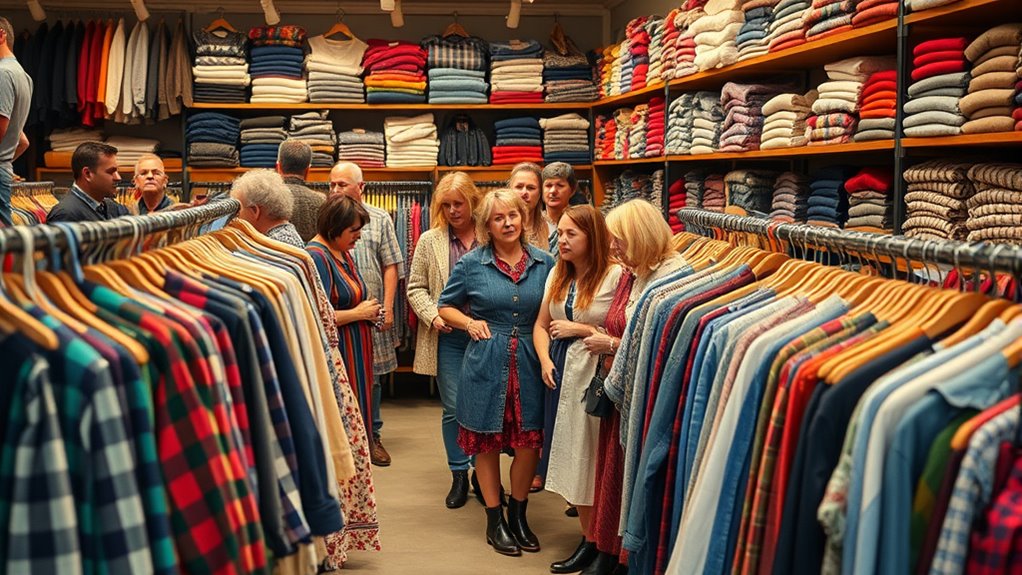

The second-hand clothing market is booming as more people like you embrace sustainable fashion and seek unique styles through resale platforms. These sites make shopping easy from home, offering curated, authentic vintage pieces that reflect your personality. Buying second-hand not only reduces waste and carbon footprint but also saves you money. If you’d like to discover how this growing trend can boost your style and eco-conscious choices, explore further to learn more.
Key Takeaways
- The rise of sustainable fashion fuels the growth of second-hand clothing and resale platforms worldwide.
- Resale platforms offer curated, authentic vintage items, making eco-friendly shopping convenient and accessible.
- Buying pre-loved clothing promotes personal style, individuality, and reduces textile waste.
- Increased environmental awareness drives consumers to choose second-hand over fast fashion.
- The market’s expansion reflects a societal shift towards ethical, mindful consumption and circular economy practices.
Have you ever wondered why second-hand clothing and resale platforms have surged in popularity? The answer lies in a mix of environmental awareness, unique style options, and the desire to make smarter shopping choices. More people are realizing that embracing sustainable fashion isn’t just good for the planet—it also allows you to find one-of-a-kind pieces that stand out from fast fashion. Vintage shopping, in particular, has become a favorite among trendsetters and eco-conscious shoppers alike. When you buy vintage, you’re not only giving clothing a second life but also reducing waste and lowering your carbon footprint. This shift toward more mindful consumption has fueled the rapid growth of resale platforms, making it easier than ever to access a treasure trove of pre-loved garments.
Resale platforms have revolutionized how you approach shopping for clothing. Instead of visiting traditional stores, you can browse through countless listings from the comfort of your home. These platforms often feature curated selections that highlight quality, style, and authenticity. Whether you’re searching for a classic leather jacket, a designer handbag, or retro sneakers, you’re likely to find what you want without supporting fast fashion brands that contribute heavily to environmental degradation. Plus, shopping second-hand often means snagging items at a considerably lower price, making it an affordable way to elevate your wardrobe. It’s a win-win: you get stylish pieces, save money, and help promote sustainable fashion practices.
Vintage shopping isn’t just about saving money; it’s about expressing your individuality. When you choose second-hand clothing, you’re more likely to find distinctive styles that aren’t mass-produced. This uniqueness allows you to craft a wardrobe that reflects your personality rather than fleeting trends. Many resale platforms now focus on providing well-maintained, authentic vintage items, making it easier for you to build a curated collection of timeless pieces. Additionally, shopping second-hand encourages a circular economy, where clothes are reused rather than discarded, which considerably cuts down on textile waste. As awareness about the environmental impacts of clothing production grows, more consumers are turning to vintage shopping and resale platforms as ethical alternatives to fast fashion. Engaging in positive thinking about sustainable choices can further reinforce your commitment to eco-friendly habits and inspire others to follow suit.
Frequently Asked Questions
How Do Resale Platforms Verify the Authenticity of Designer Items?
You can trust resale platforms by checking their authentication methods and seller verification processes. They often use expert inspectors or advanced technology like AI to examine logos, stitching, and materials. Plus, they verify sellers’ identities through ID checks or reviews. By combining these steps, platforms confirm designer items are genuine, giving you confidence when buying preloved luxury pieces. Always look for platforms with transparent authentication and seller verification policies.
What Are the Environmental Benefits of Buying Second-Hand Clothing?
When you buy second-hand clothing, you help reduce environmental impact by cutting down on fast fashion’s harmful cycle. This prevents textile waste from ending up in landfills and saves resources used in production. By choosing preloved items, you’re supporting sustainable practices, lowering carbon emissions, and promoting a circular economy. Your purchase makes a difference, helping protect the planet from the excess waste caused by fast fashion trends.
How Can Sellers Maximize Profit on Resale Platforms?
To maximize profit, you should focus on pricing strategies that attract buyers while ensuring good margins. Research similar items to set competitive prices, and consider offering discounts for bundle deals. Listing optimization is key—use clear, high-quality photos, detailed descriptions, and relevant keywords to boost visibility. Regularly update your listings and respond promptly to inquiries. These tactics help you stand out and increase your sales potential.
Are There Specific Brands or Items That Sell Best Second-Hand?
You’ll find luxury labels and vintage favorites tend to sell best second-hand. Brands like Chanel, Louis Vuitton, and Gucci often attract buyers looking for quality and status. Vintage pieces from the 80s and 90s, especially unique or rare items, also perform well. To maximize profit, focus on authentic, well-maintained items from these categories, and highlight their provenance to appeal to enthusiastic shoppers on resale platforms.
How Do Resale Platforms Ensure User Privacy and Data Security?
Resale platforms guarantee your privacy and data security through robust privacy measures and data encryption. They implement secure login protocols, encrypt your personal and payment information, and regularly update their security systems. You should also use strong, unique passwords and enable two-factor authentication. By following these practices, you protect your data while enjoying the benefits of buying and selling preloved items confidently.
Conclusion
You can see how resale platforms like Depop or ThredUp not only help you find unique, affordable pieces but also make a positive impact on the environment. Imagine someone reselling their designer jacket instead of throwing it away—reducing waste and giving it a new life. By choosing preloved fashion, you’re part of a sustainable movement that benefits both your wardrobe and the planet. Embrace the thrifting trend and make a difference today.