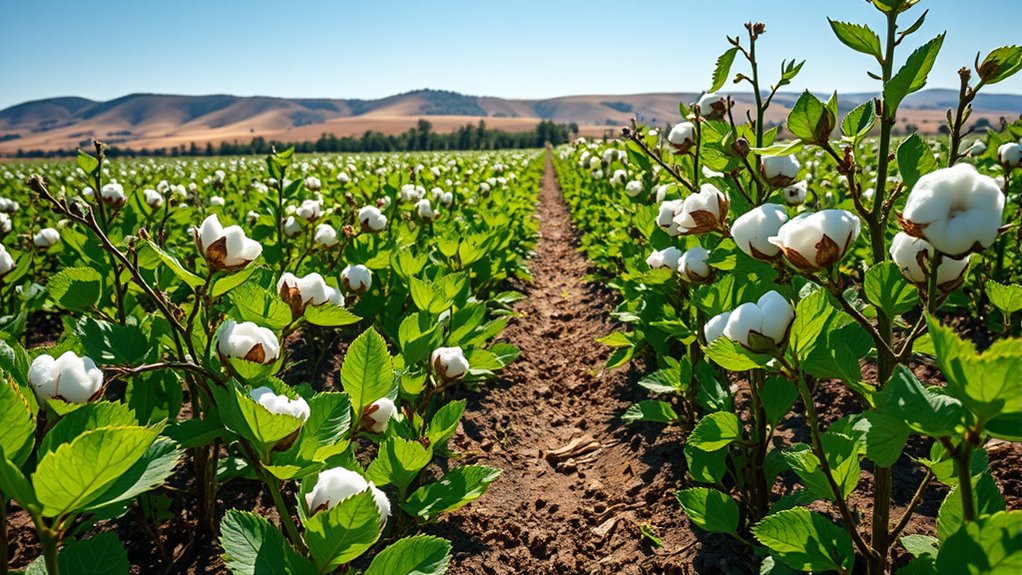

Regenerative cotton farming goes beyond organic by actively restoring soil health, conserving water, and reducing environmental impact. By building healthy soils, promoting biodiversity, and minimizing chemical use, it creates resilient ecosystems that fight climate change. This sustainable approach lowers costs, boosts farm productivity, and reduces pollution. If you want to understand how this innovative method can truly save the planet and benefit future generations, there’s more to explore.

Get beauty and skincare favorites delivered free with Prime
- Fast, free delivery on millions of items
- Prime Video, Amazon Music and more included
- Member-only deals all year
Key Takeaways
- Regenerative cotton improves soil health, increasing carbon sequestration and reducing climate change impact.
- It conserves water through cover cropping and mulching, lowering water usage and runoff pollution.
- Promoting biodiversity and natural pest control, regenerative cotton reduces chemical dependence and environmental harm.
- These practices lower long-term costs, enhance resilience, and boost crop productivity sustainably.
- Overall, regenerative cotton supports ecosystem stability, mitigates climate change, and promotes sustainable agriculture.

Have you ever wondered how cotton farming can actually improve the environment? It might surprise you, but regenerative cotton practices are transforming traditional agriculture into a more sustainable force. One of the key aspects is how these methods enhance soil health. Instead of depleting nutrients with intensive chemical use, regenerative cotton farmers focus on building organic matter and promoting microbial activity in the soil. This approach not only restores the land’s natural fertility but also creates a resilient ecosystem that can better withstand droughts and pests. When soil health improves, it holds more carbon and reduces the need for synthetic fertilizers, which often runoff into waterways and cause pollution. Incorporating cover cropping and soil enrichment techniques further amplifies these benefits by fostering biodiversity and natural pest control. Water conservation is another critical benefit of regenerative cotton farming. Conventional methods typically rely on heavy irrigation, wasting precious water resources. By contrast, regenerative techniques emphasize minimal water use through practices like cover cropping, mulching, and targeted irrigation. Cover crops, for instance, protect the soil from erosion, retain moisture, and reduce the need for supplemental watering. Mulching further conserves water by preventing evaporation and maintaining consistent soil temperature. These practices not only cut water use profoundly but also help create a more stable environment for the cotton plants to thrive. You might think that adopting regenerative techniques would be difficult or costly, but in reality, they often lead to increased farm resilience and lower input costs over time. With healthier soil, plants grow stronger and require fewer chemical interventions, which reduces expenses and environmental impact. Water-saving strategies mean less reliance on pumping and irrigation infrastructure, saving money and conserving water resources. Plus, these practices support biodiversity by creating habitats for beneficial insects and soil organisms, which naturally control pests and improve crop productivity.
As an affiliate, we earn on qualifying purchases.
Frequently Asked Questions
How Does Regenerative Cotton Compare in Cost to Conventional Cotton?
Regenerative cotton often costs more upfront than conventional cotton, but its economic viability improves with consumer willingness to support sustainable options. You might find that regenerative practices require higher investments in soil health and eco-friendly methods, which can raise prices. However, as consumers prioritize environmental impact, demand grows, making regenerative cotton more economically sustainable over time. So, your choices can help drive the shift toward more eco-conscious and financially viable cotton production.
What Are the Main Challenges in Scaling Regenerative Cotton Farming?
You’ll find that scaling regenerative cotton farming faces key challenges like improving soil health and providing farmer education. Farmers need to learn new techniques that enhance soil vitality, which takes time and resources. Additionally, shifting from conventional methods can be risky without proper support. Overcoming these hurdles requires investment in education and practices that prioritize soil health, helping more farmers adopt regenerative techniques sustainably and effectively.
Can Regenerative Cotton Produce the Same Yield as Conventional Methods?
Think of regenerative cotton like a well-tended garden—it can produce yields comparable to conventional methods. You might worry about soil health and water efficiency, but these practices actually enhance both. As soil health improves, plants grow stronger, and water efficiency increases, reducing dependency on irrigation. While it may take time to reach peak yields, with proper management, regenerative cotton can match or even surpass traditional crop outputs.
How Does Regenerative Cotton Impact Local Communities and Farmers?
You’ll see that regenerative cotton positively impacts local communities and farmers by promoting social equity and strengthening community resilience. It encourages fair wages, better working conditions, and shared knowledge, empowering farmers to become more independent. These practices foster a sense of collaboration and support, helping communities withstand economic and environmental challenges. As a result, regenerative cotton creates a more equitable and resilient local farming culture, benefiting everyone involved.
Are There Certifications or Standards for Regenerative Cotton Products?
Like a guiding star, certifications help you navigate regenerative cotton’s promises. You’ll find certification standards and sustainability benchmarks that verify eco-friendly practices, ensuring your purchase supports truly regenerative methods. These standards, like GOTS or Regenerative Organic Certification, set rigorous criteria, so you know your cotton isn’t just sustainable on paper but genuinely beneficial to the environment and communities. Trusting these benchmarks means you’re part of a positive change.
As an affiliate, we earn on qualifying purchases.
Conclusion
By choosing regenerative cotton, you’re planting seeds for a healthier planet, turning your everyday choices into powerful acts of change. Think of it as steering a ship through turbulent waters—your actions can guide us toward calmer seas and a greener future. Every fiber you support helps repair the earth, proving that even small steps can create waves of transformation. Together, we can weave a brighter, more sustainable world—one cotton thread at a time.
As an affiliate, we earn on qualifying purchases.
As an affiliate, we earn on qualifying purchases.
Halloween Picks
halloween
As an affiliate, we earn on qualifying purchases.