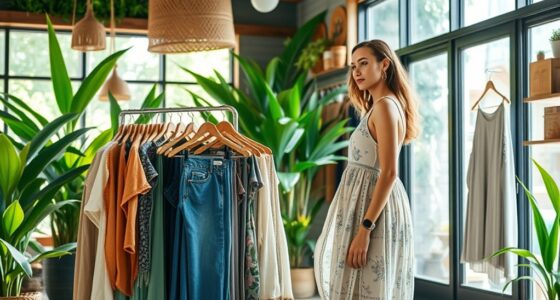
To spot genuine sustainable labels, look for clear indicators like natural fibers such as organic cotton, hemp, or linen, and check for trusted certifications like Fair Trade or GOTS. Avoid vague claims or labels that lack transparency about production practices. Investigate if brands share details about their supply chains and ensure fair wages. Recognizing these markers helps, but understanding the subtleties of greenwashing can further safeguard you—explore the details to become a savvy consumer.
Key Takeaways
- Check for transparent supply chain information and avoid vague or vague claims.
- Look for credible certifications like Fair Trade, GOTS, or B Corp that verify sustainability efforts.
- Verify that natural fibers like organic cotton or hemp are used, avoiding synthetic fabrics like polyester.
- Assess whether the brand communicates genuine environmental initiatives and avoids superficial green marketing.
- Be cautious of brands that lack transparency or rely heavily on green imagery without backing up claims.
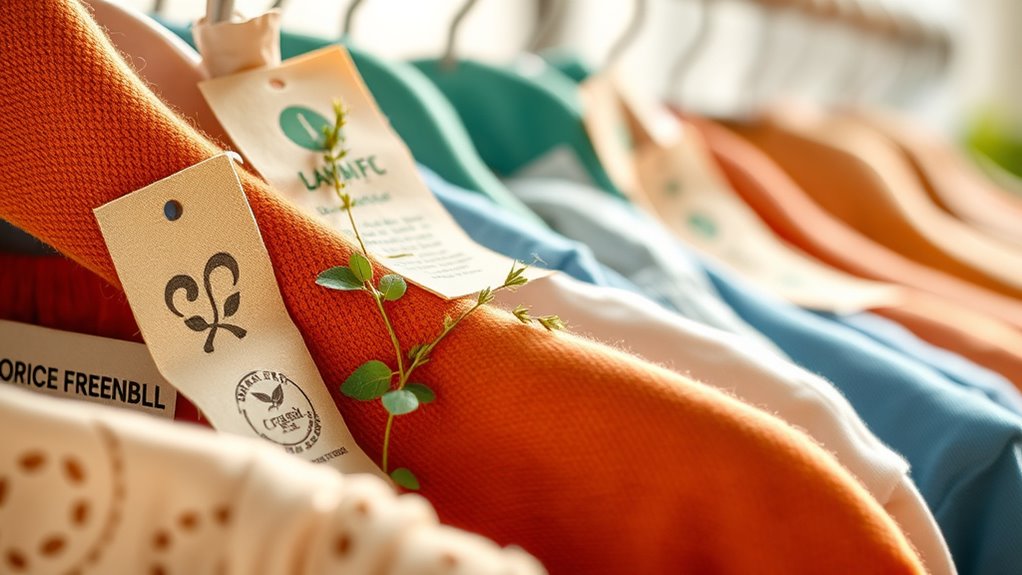
Have you ever wondered if that seemingly eco-friendly clothing label is truly making a difference? It’s a common question, especially as more brands jump on the sustainability bandwagon. The truth is, many labels claim to be eco-conscious without backing it up with real action. To avoid falling for greenwashing, you need to learn how to spot genuine sustainable practices. One of the key indicators is the use of eco friendly materials. Brands genuinely committed to sustainability often prioritize natural fibers like organic cotton, hemp, or linen, which have lower environmental impacts. They avoid synthetic fabrics such as polyester or nylon, which are derived from fossil fuels and shed microplastics. When you see labels that specify the use of certified organic or recycled materials, it’s a good sign they’re making an effort to reduce their ecological footprint. But material choice alone isn’t enough. Ethical manufacturing is equally important. A truly sustainable brand is transparent about its supply chain, ensuring fair wages, safe working conditions, and no exploitation. If a brand openly shares details about where and how their products are made, it demonstrates a commitment to ethical standards. Conversely, vague claims or lack of transparency should raise red flags. Pay attention to certifications like Fair Trade, GOTS (Global Organic Textile Standard), or B Corp, which verify a company’s adherence to social and environmental criteria. These labels aren’t foolproof, but they do provide a level of credibility that the brand is serious about sustainability. Additionally, look for brands that are proactive about reducing waste and carbon emissions—whether through using eco friendly materials, implementing sustainable packaging, or investing in energy-efficient manufacturing processes. Genuine sustainable brands often communicate their efforts clearly and consistently, rather than just using green imagery or buzzwords. If a company’s marketing feels more like a marketing ploy than a genuine commitment, that’s a warning sign of greenwashing. Remember, sustainability is a journey, not a destination, and transparent brands are willing to admit their challenges and goals for improvement. Embracing a self-understanding approach can help consumers recognize their own values and priorities when choosing eco-friendly products. By staying informed and asking the right questions—such as what materials they use and how they ensure ethical manufacturing—you can make smarter choices. The next time you shop, look beyond the labels and explore the story behind the product. Genuine sustainability isn’t just about looking good on the outside; it’s about supporting brands that prioritize the planet and people behind every stitch.

TREDECIM Men's 100% Organic Cotton Fine Jersey Soft Lightweight Short Sleeve Crew Neck T-Shirts Pack of 3 (White, Medium)
100% Hypoallergenic, Premium Quality, Super Combed Organic cotton Jersey fabric.
As an affiliate, we earn on qualifying purchases.
As an affiliate, we earn on qualifying purchases.
Frequently Asked Questions
How Can Consumers Verify the Authenticity of Sustainable Claims?
You can verify the authenticity of sustainable claims by checking eco labels verification and ensuring transparency in sourcing. Look for trusted certifications like GOTS or Fair Trade, and read product details to confirm ethical practices. Research the brand’s transparency in sourcing, including supply chain info. Don’t hesitate to contact companies directly to ask about their sustainability efforts. This proactive approach helps you spot genuine sustainable labels and avoid greenwashing.
What Are Common Greenwashing Tactics Used by Fashion Brands?
Many fashion brands employ flashy falsehoods and fuzzy phrases to foster false sustainability. They often use marketing jargon like “eco-friendly” or “green,” paired with vague language that obscures real practices. These tactics tempt you with tempting tags and trendy terms, but behind the scenes, they may lack transparency or true eco-effort. Stay skeptical of superficial sustainability signs, and scrutinize claims that seem too good to be genuinely green.
Are There Trusted Third-Party Certifications for Sustainable Fashion?
Yes, there are trusted third-party certifications for sustainable fashion. You should look for eco label standards like GOTS (Global Organic Textile Standard), Fair Trade, and OEKO-TEX, which verify sustainable practices and eco-friendliness. These third-party certifications guarantee that brands meet strict environmental and social criteria, helping you avoid greenwashing. Always check for official logos on labels to confirm the authenticity of these eco-friendly claims.
How Does Greenwashing Impact Environmental and Social Efforts?
Greenwashing undermines genuine efforts by creating environmental deception, making it hard for you to trust brands claiming sustainability. It also hampers social responsibility because companies may prioritize marketing over real positive impact. When you fall for greenwashed claims, you inadvertently support practices that harm the environment and exploit workers. This weakens overall progress toward sustainable fashion, discouraging brands that truly prioritize eco-friendly and ethical standards.
Can Small Brands Genuinely Practice Sustainable Fashion Without Greenwashing?
Yes, small brands can genuinely practice sustainable fashion without greenwashing. You should look for small brand transparency, which shows their honest communication about practices. Also, check if they follow ethical sourcing practices, ensuring fair labor and eco-friendly materials. When brands openly share their processes and commitments, you can trust they’re genuinely dedicated to sustainability, not just marketing tricks. Supporting such brands helps promote authentic eco-conscious fashion.

NS HEMP Hemp T-Shirt for Men (Military Green, L)
55%Hemp 45%Organic cotton
As an affiliate, we earn on qualifying purchases.
As an affiliate, we earn on qualifying purchases.
Conclusion
So, as you navigate the world of fashion, don’t be fooled by shiny claims. Greenwashing is more cunning than you think, hiding true sustainability behind clever marketing. But if you stay vigilant, question labels, and look for real certifications, you can uncover genuine brands. The question remains: will you uncover the truth behind those glossy promises or fall for the next big deception? The choice is yours — and the stakes are higher than ever.

Bedsure 100% Organic Cotton Duvet Cover King Size – GOTS Certified, Luxury PureWoven Duvet Cover Set with Zipper, Ultra-Soft Breathable Bedding Set for Home Hotel(Linen, 104"x90") 2 Pillowcases
100% GOTS Organic Cotton for Sensitive Skin: From field to bed, this duvet cover king linen is crafted…
As an affiliate, we earn on qualifying purchases.
As an affiliate, we earn on qualifying purchases.

Build Your Sustainable Fashion Brand: A Guided Workbook to Plan, Design & Launch Your Eco-Friendly Fashion Brand: A printable workbook for ethical fashion designers, students, and entrepreneurs
As an affiliate, we earn on qualifying purchases.
As an affiliate, we earn on qualifying purchases.