
The true cost of textile production involves massive water use, especially during dyeing, which can soak fabrics with chemicals and dyes, creating wastewater pollution. Many factories lack proper treatment, allowing harmful chemicals to seep into water sources, harming ecosystems and communities. These environmental impacts are often hidden and overlooked, yet they affect everything from aquatic life to human health. If you want to understand how your clothing choices contribute to this problem, discover more below.
Key Takeaways
- Textile dyeing consumes vast amounts of water, often leading to significant resource depletion.
- Wastewater from dyeing contains residual dyes and chemicals, causing severe environmental pollution.
- Many factories lack effective treatment, resulting in untreated wastewater contaminating water sources.
- Consumer choices can influence industry practices towards more sustainable water use and pollution reduction.
- The hidden environmental costs of textile production include water depletion and ecosystem damage.
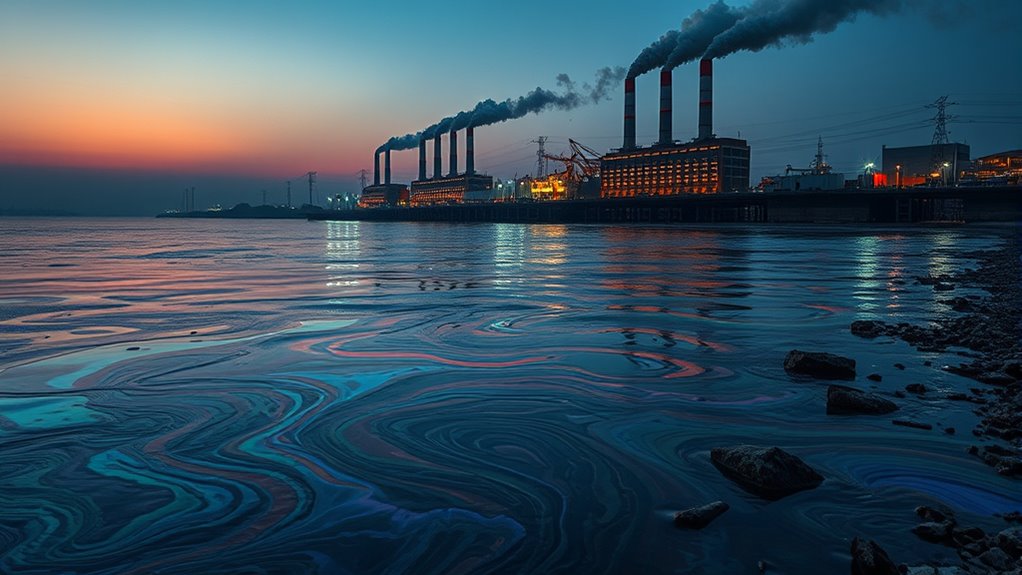
Have you ever wondered how much water you use daily and what impact it has on our environment? When you think about clothing, it’s easy to overlook the resources needed to produce each piece. The textile industry is notorious for its substantial water consumption and pollution, especially during dyeing processes and wastewater management. These stages are vital to creating vibrant fabrics, but they come at a significant environmental cost.
Dyeing processes are among the most water-intensive parts of textile production. Manufacturers often use vast quantities of water to soak, rinse, and color fabrics, sometimes using toxic dyes that are not environmentally friendly. As a result, huge amounts of wastewater are generated, containing residual dyes, chemicals, and other pollutants. If not properly managed, this contaminated water can seep into local water sources, harming aquatic life and contaminating drinking water supplies. You might not see this pollution directly, but it impacts communities, ecosystems, and even your health when pollutants enter the food chain.
Wastewater management becomes a vital concern in this context. Ideally, factories should treat wastewater thoroughly before releasing it into the environment. Unfortunately, many do not have effective treatment facilities or choose to cut costs, leading to the discharge of untreated or inadequately treated water. This wastewater often contains synthetic dyes, heavy metals, and harmful chemicals, which can cause serious environmental issues. Proper wastewater management involves using advanced filtration systems, chemical treatments, and recycling methods to reduce the amount of pollutants released. When industry standards lag or enforcement weakens, pollution levels rise, and ecosystems suffer. Implementing innovative wastewater treatment technologies can significantly reduce the environmental footprint of textile manufacturing.
As a consumer, your role might seem distant from these industrial processes, but your purchasing choices can influence change. Supporting brands that prioritize sustainable dyeing processes and responsible wastewater management encourages manufacturers to adopt eco-friendly practices. Choosing clothing from companies committed to reducing water use and pollution can help lessen the environmental footprint of your wardrobe.
In essence, the environmental impact of dyeing processes and wastewater management is profound yet often invisible. The next time you buy a new shirt or pair of jeans, consider the hidden costs behind its vibrant color. Behind the scenes, vast amounts of water are consumed, and pollutants are generated, threatening ecosystems and communities. Recognizing this connection empowers you to make more informed choices and advocate for a cleaner, more sustainable textile industry. The true cost of your clothing extends beyond the price tag—it’s embedded in the water used and the pollution created during production.
Frequently Asked Questions
How Can Consumers Reduce Their Textile Water Footprint?
You can reduce your textile water footprint by choosing eco-friendly dyes that require less water and harmful chemicals. Opt for brands that implement water conservation techniques in their manufacturing processes, and wash your clothes in cold water to save energy and reduce water use. Additionally, buy fewer, higher-quality garments to extend their lifespan. These actions help decrease overall water consumption and lessen pollution linked to textile production.
What Are the Most Water-Efficient Textile Manufacturing Technologies?
You can use water-efficient textile manufacturing technologies like innovative dyeing methods and water recycling systems. Innovative dyeing reduces water use by employing less water-intensive processes and eco-friendly dyes. Water recycling captures and reuses water within the production cycle, markedly lowering overall consumption. By supporting brands that adopt these technologies, you help promote sustainable practices, reduce pollution, and conserve essential water resources in the textile industry.
How Does Textile Pollution Affect Local Communities’ Health?
Imagine polluted water seeping into your community’s streams, releasing airborne toxins that drift into the air you breathe, and waterborne diseases stirring in contaminated water sources. Textile pollution directly harms your health by exposing you to harmful chemicals, increasing respiratory problems, skin issues, and disease risks. You might experience coughing fits, irritated skin, or even more severe illnesses as toxins infiltrate your environment, impacting your well-being daily.
What Policies Are in Place to Regulate Water Use in Textile Factories?
You should know that policies regulating water use in textile factories focus on water rights and regulatory enforcement. Governments often set limits on water extraction and discharge, requiring factories to obtain permits and follow strict guidelines. Agencies monitor compliance through inspections and penalties for violations. These policies aim to reduce water consumption and pollution, ensuring sustainable practices and protecting local communities’ water sources.
Can Recycled Water Be Effectively Used in Textile Production?
Yes, recycled water can be effectively used in textile production through advanced recycling processes that treat and purify wastewater for reuse. You can implement water reuse strategies to reduce your factory’s freshwater intake and minimize pollution. By investing in efficient recycling systems, you not only cut costs but also promote environmental sustainability. Properly treated recycled water guarantees quality and safety, making it a practical solution for sustainable textile manufacturing.
Conclusion
You see, shedding light on the staggering, soiled side of textile production reveals the true toll on water. By understanding the hidden harm, you can choose consciously, champion change, and challenge careless consumption. Every effort counts—reducing water waste, resisting pollution, and rewriting the narrative of textile’s cost. Together, you and I can combat contamination and create a cleaner, calmer current for future generations. Let’s lead with awareness, act with intention, and aspire for a sustainable, spotless supply chain.