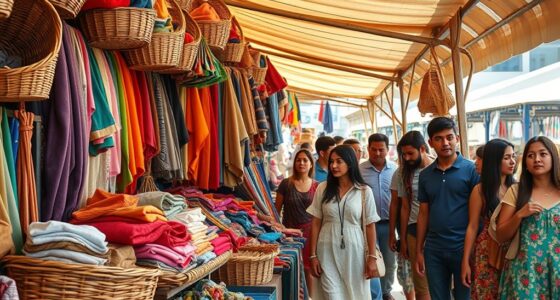
Eco-activism in fashion has shifted from isolated protests to active collaboration between brands, activists, and organizations. You now see companies adopting sustainable sourcing, fair labor practices, and transparency to meet consumer demand for ethical products. These partnerships drive meaningful industry change, making sustainability a competitive edge. If you stay engaged, you’ll discover how collective efforts are shaping a more responsible and conscious fashion landscape that benefits both people and the planet.
Key Takeaways
- Eco-activism has shifted from protests to fostering industry collaborations and certifications promoting sustainable sourcing and fair labor practices.
- Consumer activism and awareness now drive brands to adopt transparent, eco-friendly, and ethically responsible production standards.
- Partnerships between brands, NGOs, and activists develop innovative standards, making sustainability a competitive advantage.
- High-precision manufacturing and transparency initiatives build trust and demonstrate genuine commitment to ethical fashion.
- Collective consumer engagement and activism are transforming the industry into a more conscious, sustainable fashion landscape.
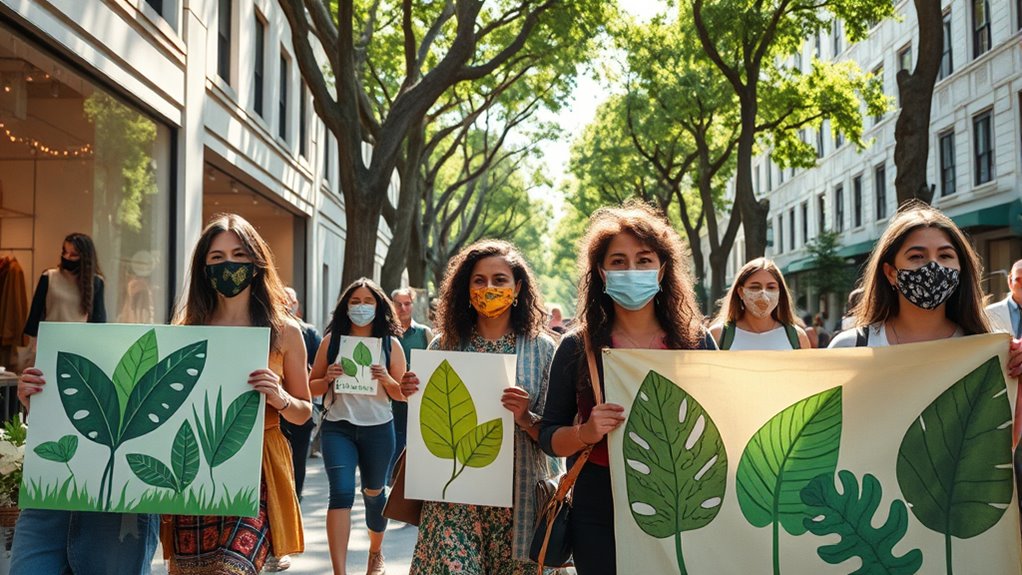
Eco-activism in fashion is transforming the industry by pushing brands and consumers to prioritize sustainability and ethical practices. You’re now more aware of how your choices impact the environment and the lives of workers behind the scenes. As a result, sustainable sourcing has become a core element of conscious fashion. Brands are shifting away from conventional supply chains and instead sourcing materials that are eco-friendly, renewable, and responsibly harvested. This means choosing organic cotton, recycled fabrics, or plant-based dyes that reduce pollution and resource depletion. You can see these efforts reflected in labels that proudly display their commitment to transparency and sustainability. Such sourcing not only minimizes environmental harm but also supports local farmers and communities, fostering a more ethical approach to production.
Alongside sustainable sourcing, ethical labor practices are gaining prominence. You’re increasingly demanding that brands ensure fair wages, safe working conditions, and the right to organize for workers involved in making your clothes. Many companies now audit their factories regularly, adhering to international standards that protect workers’ rights. This shift is in direct response to activism and public pressure, which have exposed exploitative labor practices in fast fashion and other sectors. When you choose brands that prioritize ethical labor, you’re actively supporting fair employment and helping to eliminate sweatshop conditions. This movement encourages transparency, prompting companies to disclose their supply chain details, so you can make informed decisions. Your voice as a consumer plays a significant role in encouraging brands to uphold these standards, making ethical labor a competitive advantage rather than an afterthought. Additionally, the adoption of high-precision manufacturing techniques improves the quality and consistency of ethically produced garments, reinforcing consumer trust.
Eco-activism also fuels collaborations between brands, activists, and nonprofit organizations. These partnerships aim to develop innovative solutions for sustainable sourcing and fair labor, often resulting in new standards and certifications that hold companies accountable. Your participation—whether through purchasing decisions or activism—drives this momentum. When you support brands that are committed to ethical practices, you’re not just buying a product; you’re endorsing a movement that values environmental health and human dignity. This collective push for change is reshaping the industry from within, leading to more responsible production cycles and a more conscious fashion landscape. Ultimately, your awareness and choices help accelerate the shift toward a more sustainable and ethical industry, proving that activism isn’t just about protests but about fostering positive, lasting change through everyday actions.

Touched by Nature unisex baby Organic Cotton Casual Pants, Cactus, 2T US
Set includes coordinated organic cotton pants
As an affiliate, we earn on qualifying purchases.
As an affiliate, we earn on qualifying purchases.
Frequently Asked Questions
How Do Eco-Activist Fashion Brands Sustain Their Ethical Supply Chains?
You can uphold your eco-activist fashion brand’s ethical supply chains by prioritizing supply chain transparency and ethical sourcing. Regularly audit your suppliers, demand clear documentation, and build strong relationships with responsible vendors. By constantly monitoring and verifying that materials come from sustainable sources, you guarantee your supply chain remains ethical. This proactive approach helps maintain your brand’s integrity and demonstrates your commitment to environmental and social responsibility.
What Role Do Social Media Campaigns Play in Eco-Activism?
You see how social media campaigns ignite change with viral hashtags and influencer partnerships? They spark awareness and rally support for eco-activism, making issues feel personal and urgent. When you share stories or join discussions online, you help amplify voices demanding sustainability. These campaigns create a ripple effect, inspiring others to take action and hold brands accountable. Your engagement becomes part of a powerful movement driving real change in the fashion industry.
How Do Consumers Influence Eco-Friendly Fashion Collaborations?
You influence eco-friendly fashion collaborations through your consumer awareness and demand for transparency. When you prioritize brands that openly share their sustainability efforts, you encourage companies to partner with eco-conscious organizations and develop sustainable collections. Your choices signal that eco-friendly practices matter, motivating brands to be more transparent and innovative. By supporting ethical brands, you help shift the industry towards greater environmental responsibility and foster meaningful collaborations that make a difference.
What Are the Biggest Challenges Eco-Activists Face in the Fashion Industry?
Imagine you’re in a 90s cyber cafe, and eco-activists face tough hurdles like consumer skepticism and corporate greenwashing. These challenges make it hard to trust brands claiming eco-friendly practices. Activists struggle to hold companies accountable, often battling misinformation and superficial sustainability efforts. Overcoming these obstacles requires transparency and genuine commitment, so consumers can believe in real change rather than just marketing gimmicks.
How Is Eco-Activism Impacting Global Fashion Policies and Regulations?
Eco-activism is driving policy shifts and increasing corporate accountability in global fashion. You see brands adopting sustainable practices and stricter regulations that prioritize environmental impact. Your advocacy pushes policymakers to implement eco-friendly standards, making companies more responsible for their ecological footprint. As a result, the industry responds with greener innovations, transparent supply chains, and commitments to reduce waste, transforming fashion into a more sustainable and ethically conscious sector.

FABRIC UPCYCLING: TURN OLD CLOTHES INTO NEW TREASURES: Creative Sewing Ideas for Sustainable and Stylish Crafts
As an affiliate, we earn on qualifying purchases.
As an affiliate, we earn on qualifying purchases.
Conclusion
Just as a river carves valleys over time, your choices shape the future of fashion. Eco-activism flows through every stitch and seam, transforming protests into powerful collaborations. By embracing this movement, you become a essential current in the tide of change, guiding the industry toward sustainability. Remember, your voice is the drop that can swell into a mighty stream, carving a new path where fashion and nature thrive together. The future is yours to shape—make it green.

Womens Organic T Shirt | Fair Trade Scoop Neck Tee | Certified Organic 100% Cotton Shirt | Eco Friendly | Black or White (Medium, 1, Black)
Super soft and Breathable 100 percent Cotton Scoop Neck T-shirt
As an affiliate, we earn on qualifying purchases.
As an affiliate, we earn on qualifying purchases.

Felina Organic Cotton Bralette (Aloe Cloud, Medium) – Made with Organic Cotton & Plant-Based Dyes – Wirefree Womens with Ligh Support
Light Support, Slim Fit – Designed for a closer fit. If between sizes or prefer more coverage, we…
As an affiliate, we earn on qualifying purchases.
As an affiliate, we earn on qualifying purchases.