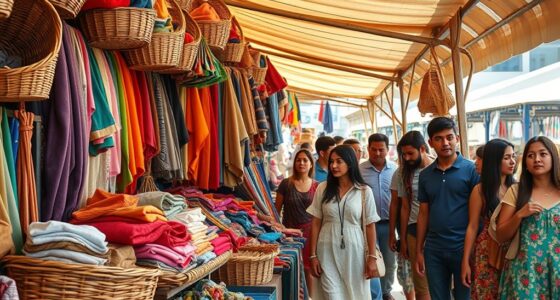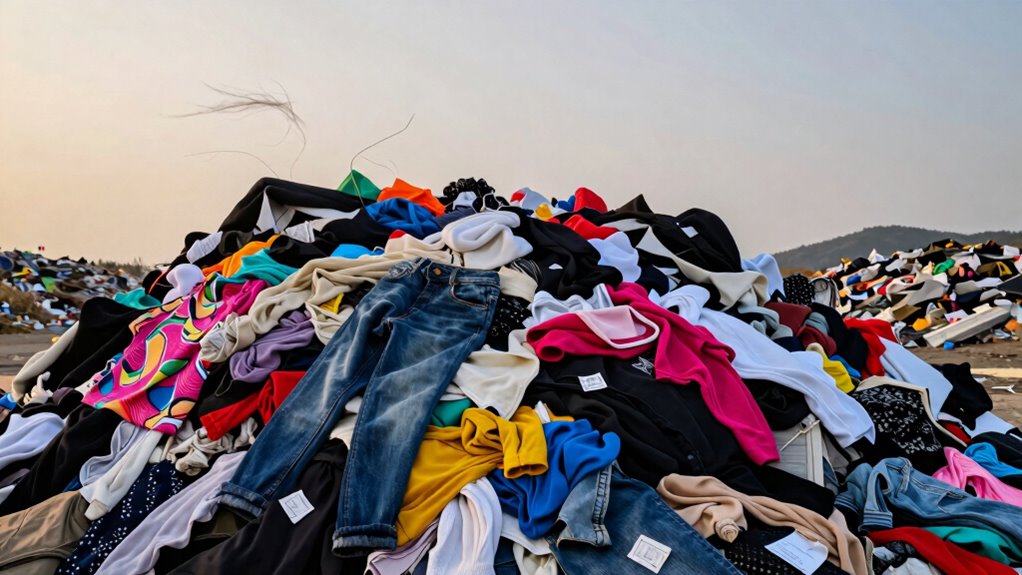

Clothing waste has become a major fashion issue due to fast fashion trends encouraging constant buying and disposal. You often wear garments only a few times before tossing them out, which causes heaps of textile waste in landfills. This not only harms ecosystems but also releases harmful chemicals and greenhouse gases. As you explore further, you’ll discover how sustainable choices and recycling innovations can help curb this growing problem and make fashion more eco-friendly.

Get beauty and skincare favorites delivered free with Prime
- Fast, free delivery on millions of items
- Prime Video, Amazon Music and more included
- Member-only deals all year
Key Takeaways
- The rise of fast fashion encourages rapid clothing turnover and discarding, increasing textile waste.
- Synthetic fibers, prevalent in cheap clothing, take centuries to decompose, polluting ecosystems.
- Consumer preference for low-cost, trendy apparel leads to frequent disposal of garments.
- Limited recycling technologies and awareness hinder sustainable waste management in fashion.
- Industry practices favor fast production cycles over environmental sustainability, escalating waste issues.
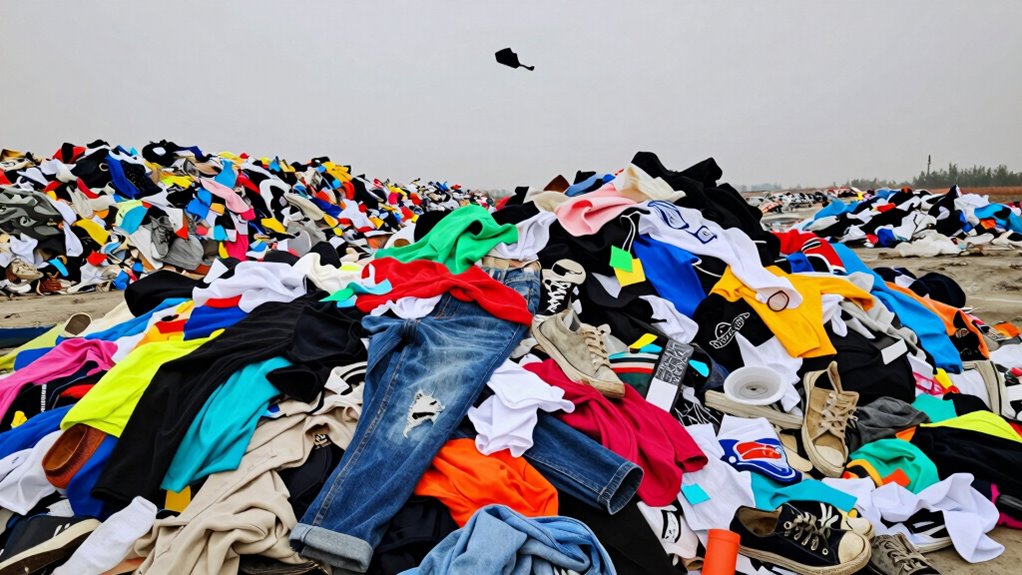
Have you ever wondered how your new outfit might contribute to a growing environmental crisis? Every time you buy clothes, especially fast fashion items, you’re part of a cycle that accelerates clothing waste. The world produces tons of textiles annually, much of which ends up in landfills. This surge in waste doesn’t just fill up spaces; it harms ecosystems, pollutes water sources, and releases greenhouse gases. The root of the problem lies in how clothing is made, discarded, and replaced at a rapid pace. Fast fashion encourages consumers to constantly update their wardrobes, often leading to garments that are worn only a few times before being thrown away. This pattern has created a massive waste problem that’s hard to ignore.
One key factor behind this issue is the widespread use of synthetic fibers, which are cheap and versatile but environmentally taxing. Natural fibers like cotton and wool are more sustainable in theory but often require significant resources to produce. To address this, many companies are turning to sustainable fibers that have less environmental impact, such as recycled textiles or innovative plant-based materials. These fibers help reduce reliance on virgin resources, but they’re not enough alone. The industry is also investing heavily in recycling innovations that aim to give old garments a second life. Recycling innovations make it possible to break down used clothing into raw materials, which can then be spun into new fabrics. This process reduces waste and minimizes the extraction of new resources, but it’s still in development and not yet widely implemented. Additionally, consumer education about the environmental impact of clothing disposal is crucial for fostering responsible habits. Raising awareness about textile recycling and its benefits can motivate more consumers to participate in sustainable practices. Understanding the full lifecycle of textiles, including how they can be reused or repurposed, is essential for meaningful change. Incorporating recycling technologies into supply chains is a promising step toward reducing environmental impacts, but widespread adoption remains a challenge.
Despite these technological advances, the rate of clothing disposal continues to soar. Consumers often lack awareness about the environmental costs of discarded clothing, or they simply prioritize affordability and style over sustainability. This disconnect fuels a cycle where garments are cheap, trendy, and disposable. When you toss out clothes after a few wears, they often end up in landfills where synthetic fibers can take hundreds of years to decompose, releasing harmful chemicals along the way. Even natural fibers can decompose slowly and produce methane in landfills, a potent greenhouse gas. The challenge lies in changing both industry practices and consumer habits to prioritize longevity, recycling, and sustainable materials.
In the end, tackling clothing waste requires a collective effort. As a consumer, your choices matter. Opting for brands that prioritize sustainable fibers and support recycling innovations can make a difference. Being mindful of how often you buy and how long you keep your clothes can help slow down this environmental crisis. The fashion industry is evolving, but it’s up to you to choose sustainable options and push for a future where clothing waste doesn’t threaten our planet. Recognizing the importance of sustainable fibers and recycling technologies is essential in addressing this global issue. Emphasizing circular fashion and closed-loop systems can further support the reduction of clothing waste and promote more sustainable consumption patterns.
As an affiliate, we earn on qualifying purchases.
Frequently Asked Questions
How Does Fast Fashion Contribute to Clothing Waste?
Fast fashion contributes to clothing waste because it encourages you to buy quickly and discard easily. It promotes cheap, trendy items that lack durability, leading to frequent disposal. While sustainable fabrics and ethical sourcing are better options, fast fashion often ignores these practices, prioritizing low costs. As a result, you end up with more waste, contributing to environmental harm and a cycle of constant consumption that’s hard to break.
What Are the Environmental Impacts of Discarded Textiles?
Did you know that over 92 million tons of textile waste end up in landfills annually? When textiles degrade, they release harmful chemicals into the environment, contributing to pollution. Discarded textiles also cause landfill pollution, affecting soil and water quality. This degradation process releases greenhouse gases, intensifying climate change. By understanding these impacts, you realize how essential it is to reduce textile waste and support sustainable fashion choices.
Are There Effective Recycling Methods for Old Clothing?
Yes, there are effective recycling methods for old clothing. You can participate in textile sorting programs that separate fabrics by type, making recycling more efficient. Recycling innovations, like chemical recycling, break down textiles into raw materials for new fibers. These methods help reduce waste and conserve resources. By supporting and utilizing these advanced techniques, you contribute to a more sustainable fashion industry and help tackle the growing clothing waste problem.
How Can Consumers Reduce Their Clothing Waste?
You can reduce your clothing waste by practicing sustainable shopping—choose quality pieces that last longer and avoid fast fashion. When you no longer need items, donate clothing to charities instead of throwing them away, giving them a second life. Additionally, consider repairing or repurposing clothes to extend their use. By making mindful choices and supporting sustainable brands, you help lessen the environmental impact of fashion waste.
What Policies Are Being Implemented to Address Fashion Waste?
You’re likely encouraged by policies promoting sustainable manufacturing and extended producer responsibility. These initiatives hold brands accountable for their products’ entire lifecycle, urging them to minimize waste and adopt eco-friendly practices. Governments and organizations are implementing regulations that incentivize recycling, eco-design, and responsible disposal. By supporting these policies, you help foster a fashion industry that values sustainability, reducing waste and ensuring a healthier planet for future generations.
eco-friendly clothing recycling bin
As an affiliate, we earn on qualifying purchases.
As an affiliate, we earn on qualifying purchases.
Conclusion
Imagine your favorite shirt tearing after just a few wears, then tossed aside like yesterday’s news. That’s the cycle we’re stuck in—clothing waste piling up faster than we can recycle it. Did you know that over 92 million tons of textile waste end up in landfills annually? You have the power to change this story. By choosing sustainability, you help rewrite the future—turning a mountain of waste into a manageable, mindful wardrobe.
As an affiliate, we earn on qualifying purchases.
As an affiliate, we earn on qualifying purchases.
Columbus Day / Indigenous Peoples' Day Picks
long weekend sales
As an affiliate, we earn on qualifying purchases.