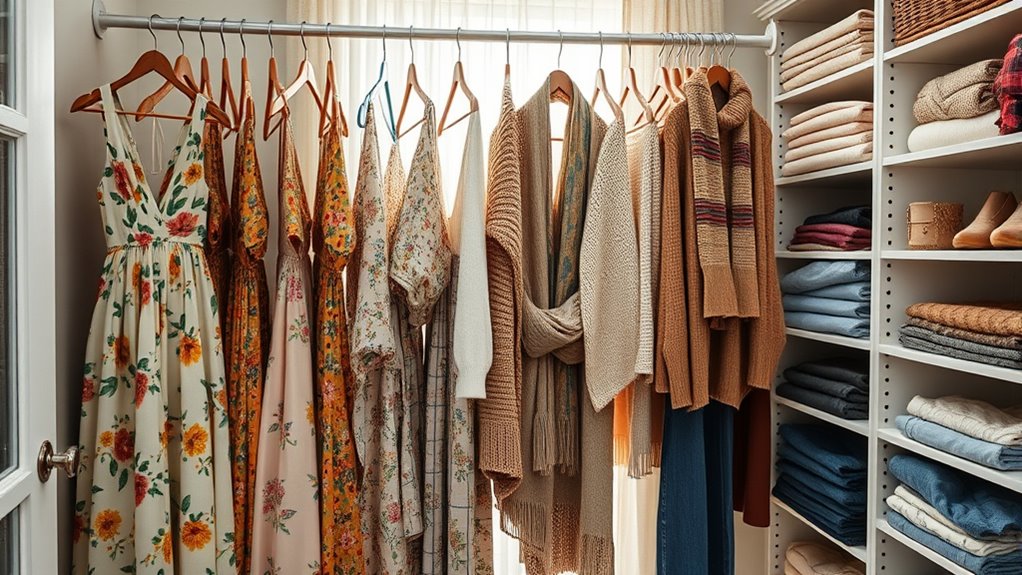

To shift your wardrobe without buying new items, focus on strategic swaps and layering techniques. Maximize your existing pieces by pairing lightweight tops with jackets or cardigans, and add scarves for extra style and warmth. Mix textures and adjust layers as temperatures change daily. Uses accessories creatively to update outfits effortlessly. These simple steps keep your wardrobe fresh and functional across seasons. Keep exploring to discover more tips for seamless seasonal style updates.
Key Takeaways
- Use layering techniques with existing pieces to adapt outfits to different temperatures.
- Swap lightweight summer tops for long-sleeves or blouses during transitional seasons.
- Incorporate versatile accessories like scarves to add color, texture, and warmth.
- Maximize wardrobe items by mixing textures and styles for fresh seasonal looks.
- Remove or add layers to seamlessly transition your wardrobe without purchasing new clothing.

As the seasons change, so should your wardrobe to stay stylish and comfortable year-round. You don’t need to buy a whole new closet each time the weather shifts; instead, focus on smart wardrobe swaps that maximize what you already own. One effective way to do this is through layering techniques. Layering allows you to adapt your outfits to fluctuating temperatures and changing styles with ease. Start with lightweight basics like t-shirts or thin sweaters, then add a cardigan or blazer for warmth or a pop of color. You can also mix textures—pair a silky blouse with a chunky knit scarf or a denim jacket—to add depth and interest. The key is to think vertically, stacking pieces that can be added or removed as needed. This way, you stay comfortable and stylish without overhauling your wardrobe. Incorporating versatile pieces that can be styled in multiple ways maximizes your wardrobe’s potential and minimizes unnecessary purchases.
Layer smartly with lightweight basics, textured pieces, and versatile layers to stay stylish year-round.
Accessorizing with scarves is another simple yet impactful method to shift your look from season to season. Scarves are versatile accessories that can transform an outfit instantly. During cooler months, wrap a thick, woven scarf around your neck for warmth and a touch of sophistication. In milder weather, a lightweight silk or chiffon scarf can add a splash of color or pattern to a simple top or dress, giving your outfit a fresh, seasonal feel. Scarves can also be styled in multiple ways—draped, tied, or looped—allowing you to experiment with different looks without buying new pieces. They are a quick fix to update your outfit, add personality, or just provide a little extra comfort on chilly days.
The beauty of these strategies lies in their simplicity and adaptability. You can take your existing wardrobe and give it a new lease on life by mixing and matching layers and accessories. Swap out summer tanks for long-sleeve shirts, then add a scarf to make the transition seamless. For winter, layer your lightweight tops under sweaters and add scarves for extra insulation and style. When spring arrives, remove the heavier layers and let your scarves stand out as statement pieces. The more you experiment with layering techniques and accessories like scarves, the more confident you’ll become in creating fresh, seasonally appropriate looks without spending extra money.
In essence, staying stylish through seasonal changes comes down to smart layering and accessorizing. These simple adjustments make it possible to enjoy your existing wardrobe all year round, keeping your style fresh without the need for constant shopping. It’s about being creative with what you have and knowing how to use key pieces—like scarves—to elevate your outfits. With a little effort, you’ll find that dressing for the seasons can be both effortless and exciting. Embracing wardrobe versatility as a core concept can help you maximize your style options year-round.
Frequently Asked Questions
How Do I Store Seasonal Clothing Properly?
To store seasonal clothing properly, focus on clothing preservation and clever storage solutions. You should clean each item thoroughly before packing to prevent damage. Use breathable garment bags or plastic containers to protect against dust and pests. Store heavier pieces like sweaters in labeled bins, and hang delicate items in sturdy, space-saving hangers. Keep everything in a cool, dry place to make certain your wardrobe stays fresh and ready for next season.
Can I Mix Different Seasonal Pieces Creatively?
Sure, go ahead and mix those seasonal pieces—who says you can’t rock a winter sweater over a summer dress? Use clever layering techniques and color coordination to make it work. Embrace the chaos, because fashion’s about creativity, not rules. You’ll be surprised how a little mix-and-match can refresh your wardrobe, saving you money and giving your style a fun, unpredictable edge. Who knew seasonal blending could be so stylish?
What’s the Best Way to Repurpose Old Wardrobe Items?
You can effortlessly repurpose old wardrobe items by using upcycling techniques like transforming worn-out shirts into trendy crop tops or turning jeans into stylish shorts. Additionally, enhance your outfits with accessory layering—add scarves, jewelry, or belts to give old pieces a fresh look. This approach not only refreshes your wardrobe but also promotes sustainability. Get creative, experiment with different combinations, and make your existing wardrobe feel brand new without buying anything extra.
How Do I Maintain Fabric Quality During Swaps?
Did you know that proper fabric care can double your clothing’s lifespan? To maintain fabric quality during swaps, handle your garments gently—wash and dry according to labels, avoid over-washing, and store items properly. This practice boosts clothing longevity and keeps fabrics looking fresh. When swapping seasons, focus on these care tips to preserve quality, so your wardrobe stays stylish and durable without needing to buy new pieces frequently.
Are There Eco-Friendly Ways to Refresh My Wardrobe?
You can refresh your wardrobe sustainably by choosing eco-conscious fabrics and practicing sustainable shopping. Opt for versatile pieces that mix and match easily, reducing the need to buy new often. Repair and repurpose old clothes instead of discarding them. Shop at thrift stores or participate in clothing swaps. These eco-friendly methods help you update your style without harming the planet, making your wardrobe both stylish and sustainable.
Conclusion
Think of your wardrobe as a garden, thriving with each season’s unique blooms. By swapping your clothes like changing flowers—tulips for daisies—you keep your style fresh without planting new seeds. Just as a gardener nurtures what’s already there, you nurture your wardrobe’s potential. Embrace these seasonal swaps, and watch your style blossom year-round, effortlessly transforming your look like a garden shifting through vibrant, beautiful phases. Your closet’s endless cycle keeps you beautifully in bloom.