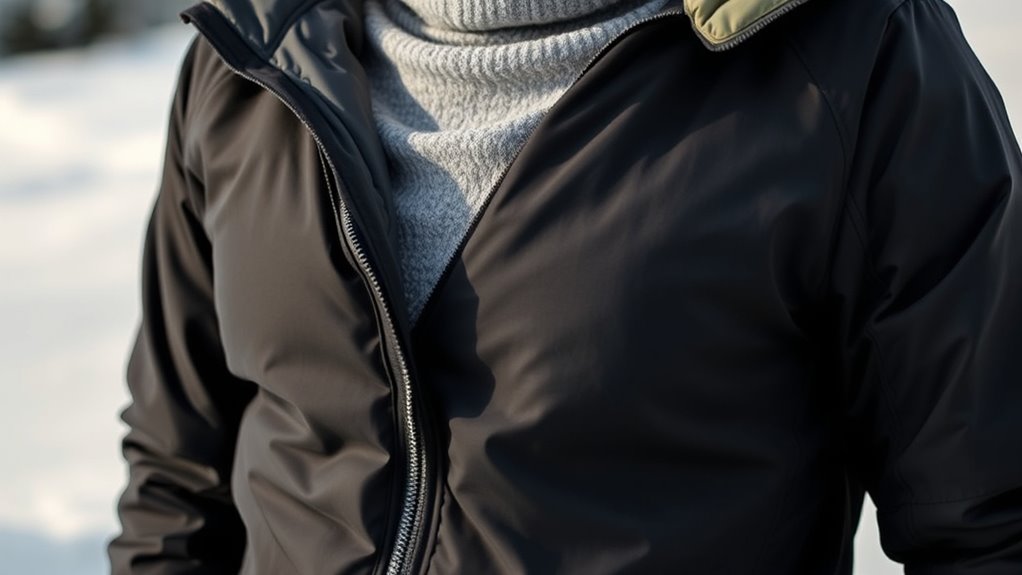
To stay warm without bulk, start with a fitted moisture-wicking base layer that hugs your body closely. Add a slim mid-layer like a fleece or stylish sweater for insulation. Choose outerwear that protects against wind and water without being oversized. Use accessories like scarves, hats, and gloves to add warmth and style. Focus on balancing textures and colors to create a sleek look while keeping layers functional. Keep going to discover more tips to master effortless layering.
Key Takeaways
- Use snug, moisture-wicking base layers to retain heat and prevent bulk by hugging the skin without constriction.
- Incorporate slim, insulating mid-layers like fleece or fine sweaters that add warmth without bulk.
- Select well-fitted, streamlined outerwear that protects from wind and water while avoiding oversized, bulky styles.
- Add lightweight accessories such as scarves, hats, and gloves to boost warmth and style flexibility.
- Focus on coordinating textures and colors across layers to create a sleek, balanced look without excess volume.
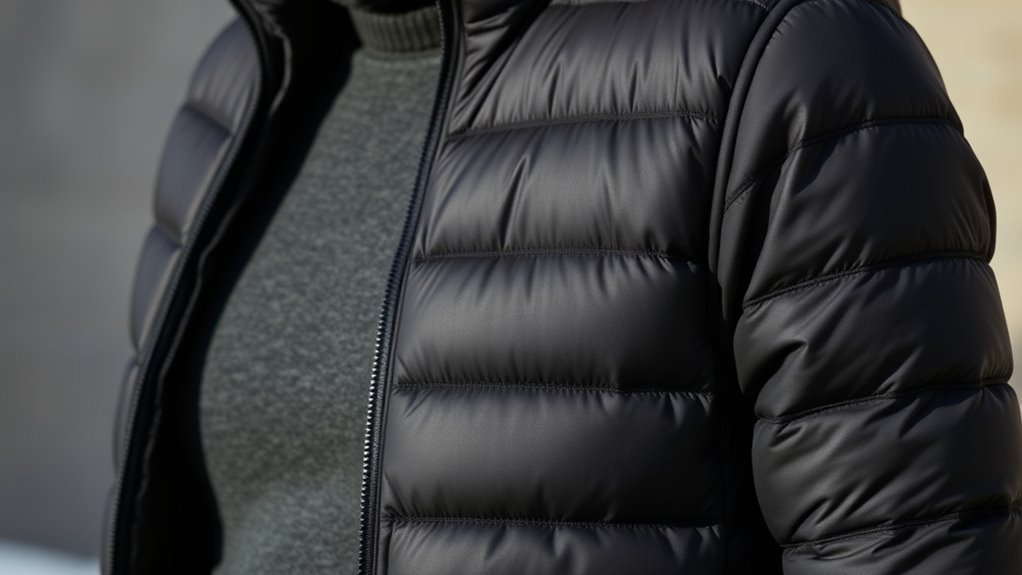
Ever wonder how seasoned style enthusiasts master the art of layering? It’s all about understanding how different pieces work together to provide warmth without sacrificing style. When you focus on thermal insulation, you’re ensuring that each layer contributes to trapping heat, so you stay cozy even when temperatures drop. But just piling on clothes isn’t enough; smart fashion coordination is key to creating a sleek, balanced look that doesn’t look bulky or sloppy. The goal is to build a wardrobe where each item complements the others, allowing you to easily adjust your layers based on the weather and your activity level.
Start with a snug, fitted base layer. Think lightweight, moisture-wicking fabrics like merino wool or high-quality cotton. This layer should hug your skin without constricting, providing thermal insulation by trapping the warm air close to your body. Because it’s form-fitting, it won’t add unnecessary bulk and sets the foundation for a streamlined silhouette. Next, add a mid-layer that acts as an insulator. A thin fleece or a stylish sweater works well here. It offers extra warmth without turning you into a marshmallow. When selecting this piece, focus on colors and textures that can easily coordinate with your base layer and outerwear for seamless fashion coordination.
Begin with a snug, moisture-wicking base layer for warmth and a streamlined silhouette.
Your outer layer should serve two purposes: protection from the elements and style statement. A well-fitted jacket or coat that’s windproof and waterproof will keep you dry and warm. When choosing outerwear, consider neutral tones or classic patterns that can match multiple outfits, making your layering versatile and always in fashion. Remember, the key to good fashion coordination is balancing textures and colors. For instance, a smooth, sleek base layer paired with a textured coat creates visual interest without adding bulk. Additionally, pay attention to the fit—oversized outerwear can hide your layers but might make you look bulky if not balanced properly.
Accessories are your secret weapon for effective layering. Scarves, hats, and gloves not only add extra thermal insulation but also allow you to introduce pops of color or pattern to elevate your overall look. Choose pieces that complement your main outfit and can easily be added or removed as needed. This way, you’re not just staying warm—you’re also controlling your style narrative.
Mastering the art of layering is about more than just stacking clothes. It’s about strategic fashion coordination, choosing the right materials for thermal insulation, and understanding how each piece works together to keep you warm and chic. Incorporating layering techniques can significantly enhance both functionality and style. With practice, you’ll develop a sense of balance that lets you stay comfortable in any weather while looking effortlessly stylish.
Top picks for "layer like stay"
Open Amazon search results for this keyword.
As an affiliate, we earn on qualifying purchases.
Frequently Asked Questions
What Are the Best Fabrics for Lightweight Layering?
When choosing fabrics for lightweight layering, you want materials that offer thermal insulation without adding bulk. Look for fabric blends like merino wool and synthetic fibers, which trap heat effectively while remaining breathable and lightweight. These fabrics wick moisture away and dry quickly, keeping you warm and comfortable. They’re perfect for layering because they provide insulation without bulk, allowing you to stay warm and mobile during colder days.
How Do I Prevent Sweating During Layered Outdoor Activities?
To prevent sweating during layered outdoor activities, focus on moisture management by choosing breathable materials that wick sweat away from your skin. Wear moisture-wicking base layers, which help keep you dry and comfortable. Adjust your layers as needed, removing or adding pieces to regulate your temperature. Staying hydrated also helps your body manage sweat better. With the right breathable fabrics and active adjustments, you’ll stay comfortable and dry no matter the activity.
Can Layering Help Reduce Clothing Costs Over Time?
Layering can definitely help reduce clothing costs over time. By investing in versatile pieces, you can mix and match for different weather conditions, boosting your wardrobe’s versatility. This approach leads to cost savings because you won’t need to buy as many separate outfits. Plus, layering allows you to adapt your clothing to various activities and seasons, extending the lifespan of your clothes and saving you money in the long run.
What Are Quick-Drying Options for Layered Clothing?
Imagine you’re caught in unexpected rain during a hike. You want your clothing to dry quickly so you stay comfortable. Moisture-wicking fabrics like polyester or nylon quickly draw sweat away, helping you stay dry. Pair these with quick-dry accessories, such as microfiber towels or quick-dry socks, to enhance drying time. These options keep you comfortable and ready for any adventure, even in wet conditions.
How Should I Care for Layered Clothing to Maintain Its Warmth?
To keep your layered clothing warm and effective, follow the washing instructions carefully, using gentle cycles and mild detergents to prevent damage. Always dry your clothes properly—air dry when possible—and avoid high heat. Store your layers in a cool, dry place, folding them neatly to prevent wrinkles and maintain insulation. Proper care guarantees your clothing retains its warmth and longevity, so you stay comfortable in cold weather.
Conclusion
Mastering the art of layering keeps you warm without the bulk, so you can enjoy winter adventures comfortably. Did you know that layering can reduce heat loss by up to 30%? That means you stay cozy even in freezing temperatures, all while moving freely. Next time you gear up, remember: smart layering isn’t just about looking good—it’s about feeling unstoppable. Stay warm, stay active, and layer like a pro!