
To build effective outfits from base layers to outerwear, start with selecting moisture-wicking fabrics like merino wool or synthetic materials for comfort and temperature regulation. Focus on soft textures that prevent chafing and guarantee long wear. Coordinate the colors and patterns of mid-layers and outerwear to create a balanced, cohesive look. Layer thoughtfully to combine functionality with style, and if you keep exploring, you’ll discover how to master every detail for a versatile wardrobe.

Get beauty and skincare favorites delivered free with Prime
- Fast, free delivery on millions of items
- Prime Video, Amazon Music and more included
- Member-only deals all year
Key Takeaways
- Start with a moisture-wicking, soft base layer in neutral tones for comfort and versatility.
- Add mid-layers with complementary colors or textures to enhance insulation and visual interest.
- Incorporate textured fabrics to improve warmth, style, and depth in your outfit.
- Choose outerwear suited to weather, contrasting or matching inner layers for a cohesive look.
- Ensure all layers work together for comfort, functionality, and a polished, layered appearance.
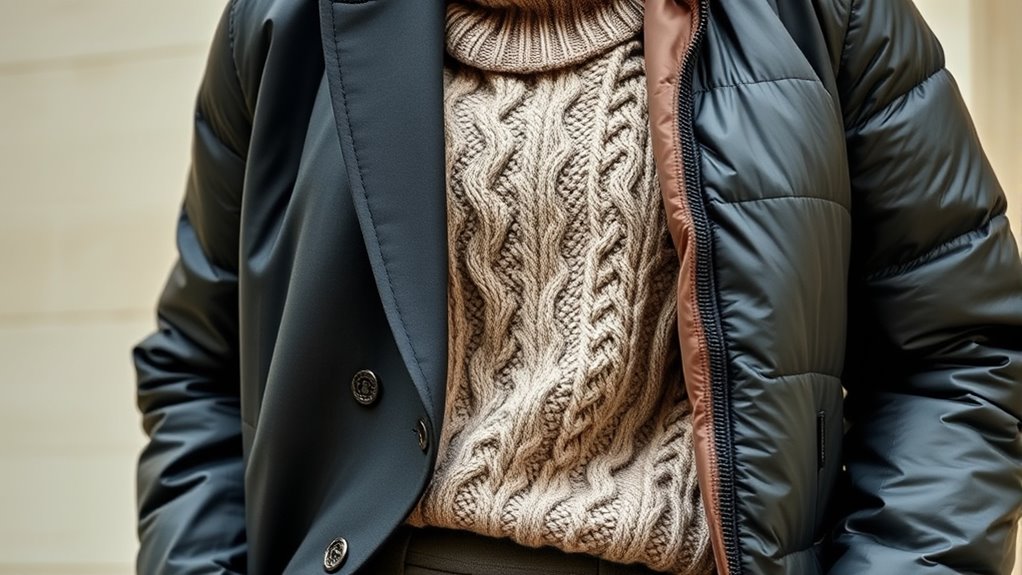
Have you ever wondered how to stay warm and comfortable in changing weather? The secret lies in mastering the art of layering, starting with the perfect base layer and building outward. When selecting your base, pay close attention to fabric textures. Opt for materials that wick moisture away from your skin, like merino wool or technical synthetic fabrics, which help regulate your body temperature and keep you dry. These textures feel soft against your skin and prevent chafing, making them ideal for long wear. Once you’ve chosen a comfortable base, think about color coordination. Your goal is to create a cohesive look that seamlessly transitions from one layer to the next. Pick neutral tones like black, gray, or beige for your base, which are easy to match and versatile. Then, choose mid-layers that add insulation, such as fleece or lightweight down, in complementary colors or subtle patterns to add visual interest. When layering, consider how the textures of each piece interact; combining smooth fabrics with textured knits can add depth and dimension to your outfit. This not only looks stylish but also enhances functionality, as different textures trap varying amounts of heat. As you add mid-layers, remember to maintain your color coordination so that each piece complements the others. For example, if your base is a dark gray, a charcoal fleece or patterned sweater in similar tones can work well. The goal is a balanced palette that feels intentional and polished. When it comes to outerwear, choose pieces that suit the weather and your style. A waterproof jacket or a winter coat with textured details, like quilted patterns or textured fabrics, can elevate your look. Make sure your outer layer contrasts or harmonizes with your inner layers to create a unified appearance. The right outerwear not only adds protection but also completes your outfit, making you look put-together even on the coldest, dreariest days. Remember, the key to successful layering isn’t just about warmth; it’s about creating a functional, stylish ensemble that adapts to changing conditions. Play with fabric textures and color coordination to express your personal style while staying comfortable. Layering techniques can help you combine different textures and hues to craft an outfit that is both practical and fashionable. By thoughtfully combining textures and hues, you ensure each layer works harmoniously, keeping you warm, dry, and fashionable no matter the weather. With these principles in mind, layering becomes a creative and practical process, transforming a simple outfit into an adaptable, stylish look that adjusts effortlessly to whatever the day brings.
Frequently Asked Questions
How Do I Choose the Right Fabric for Each Layer?
You should consider fabric selection by matching materials to the activity and weather. Opt for moisture-wicking fabrics like polyester or merino wool for your base layer to keep sweat away. For insulation, choose materials like fleece or down. Outer layers should be windproof and waterproof, such as Gore-Tex. Always match the fabric’s breathability and durability with your needs, ensuring each layer works together effectively for comfort and protection.
What Are Common Layering Mistakes to Avoid?
To avoid common layering mistakes, follow proper layering etiquette and seasonal layering tips. Don’t wear bulky layers that restrict movement or cause discomfort; instead, choose lightweight, breathable fabrics. Avoid mismatched colors or textures that clash visually. Over-layering can make you hot and sweaty, so peel off layers as needed. Guarantee each layer fits well without bunching. By paying attention to these tips, you’ll stay comfortable and stylish no matter the weather.
How Can I Layer Effectively in Humid Climates?
Layering in humid climates is like walking through a rainforest—stay light and adaptable. Use breathable fabrics and moisture-wicking materials to keep sweat away from your skin and prevent overheating. Start with a thin, moisture-wicking base layer, add a loose, breathable top, and finish with a lightweight, ventilated outer layer if needed. This approach keeps you comfortable, dry, and ready for sudden weather changes.
What Accessories Can Enhance Layered Outfits?
You can enhance layered outfits with accessories like scarf styling, which adds color, texture, and versatility. Try draping, tying, or wrapping scarves to change your look easily. Statement jewelry, such as bold necklaces or chunky earrings, draws attention and adds personality to your ensemble. These accessories not only elevate your style but also make layering more fun and personalized, helping you express your unique fashion sense effortlessly.
How Do I Layer for Different Outdoor Activities?
Imagine you’re a modern-day explorer, ready for any outdoor adventure. To layer effectively, start with moisture control base layers to wick sweat, then add thermal insulation for warmth, and finish with a waterproof outer layer. Adjust these layers based on activity intensity and weather. For high-energy activities, keep layers light and breathable, while for static moments, add extra insulation. This approach keeps you comfortable and prepared for everything from hiking to snowshoeing.
Conclusion
Layering isn’t just about looking stylish; it’s about practicality and comfort. Think of it as a science—each layer serves a purpose, from wickering sweat to insulating warmth. When you master the art of layering, you’re better prepared for any weather surprise. So, trust the theory that layering works—it’s proven to keep you comfortable and adaptable. With a little practice, you’ll confidently build outfits that suit every season and occasion.
Halloween Picks
halloween
As an affiliate, we earn on qualifying purchases.