To create a cohesive color palette for harmonious outfits, start by understanding basic color theory—use complementary, analogous, or triadic schemes to select shades that work well together. Identify which colors suit your natural features if you’ve done seasonal color analysis, and choose hues that enhance your skin tone and eye color. Balance bold colors with neutrals and mix shades thoughtfully to avoid clashes. Keep experimenting with these tips, and you’ll discover how to craft stylish, unified looks effortlessly.
Key Takeaways
- Use color theory to select complementary, analogous, or triadic color schemes for balanced outfits.
- Identify your seasonal color palette to choose hues that enhance your natural features and create harmony.
- Limit your palette to 3-5 colors for cohesiveness and easier outfit coordination.
- Balance bold colors with neutral tones to prevent visual overload and maintain visual harmony.
- Incorporate accent colors through accessories to add interest without disrupting the overall cohesiveness.
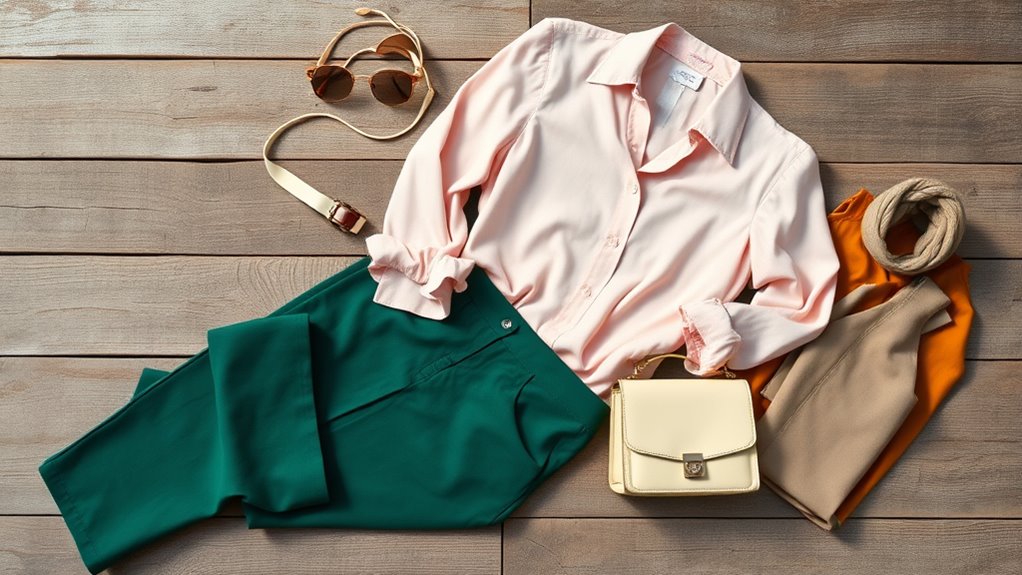
Have you ever struggled to choose colors that work well together? You’re not alone. Creating a cohesive color palette can feel overwhelming, especially with so many options available. Luckily, understanding basic principles like color theory and seasonal color analysis can make the process much easier. Color theory explains how colors interact, helping you select combinations that look harmonious rather than clashes. It covers concepts like complementary, analogous, and triadic color schemes, giving you a foundation to build outfits that are visually appealing. Seasonal color analysis, on the other hand, helps you identify which colors naturally suit your skin tone, hair color, and eye color. When you know your season—be it winter, spring, summer, or autumn—you can choose a palette that enhances your natural features, making your wardrobe look more polished and intentional.
Start by figuring out your seasonal color analysis. For example, if you’re a spring, you’ll likely look great in warm, bright hues like coral, peach, and golden yellow. If you’re a winter, cooler shades like icy blues, charcoal, and jewel tones will complement you better. Knowing this helps narrow down your options and creates a cohesive look without the guesswork. Once you’ve identified your season, you can select colors that align with your natural coloring, ensuring your outfits look balanced and flattering. From there, use color theory to craft combinations that make sense visually. Pair complementary colors—like blue and orange—or create harmony with analogous shades—such as blue, teal, and green. These combinations will feel natural and pleasing to the eye, fostering a sense of unity across your wardrobe.
To keep your outfits looking intentional, consider the importance of balance. If you’re wearing a bold, vibrant top, pair it with neutral bottoms to avoid overwhelming the eye. Conversely, if your outfit is mostly neutral, add a pop of color through accessories or a statement piece. Using a color wheel can also guide you in mixing and matching efficiently. For instance, choosing colors that are next to each other on the wheel creates a seamless flow, while contrasting hues add visual interest. Remember, the goal is to create a wardrobe that feels effortlessly put together. When your color choices are guided by color theory and seasonal analysis, you develop a personal palette that makes mixing and matching much simpler. Additionally, embracing the role of attention in your creative process can help you focus on details and refine your style over time. Over time, this approach helps you build confidence in your style, knowing every outfit is thoughtfully coordinated.
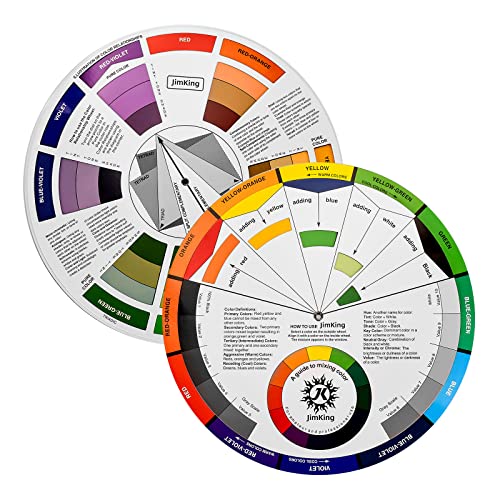
JimKing Creative Color Wheel, Paint Mixing Learning Guide, Art Class Teaching Tool for Makeup Painting Tattoo,Blending Board Chart Color Mixed Guide Hardboard(9.25inch)
Helps organise colours to make choices and combinations easier;Defines common terms and helps the artist to understand colour…
As an affiliate, we earn on qualifying purchases.
As an affiliate, we earn on qualifying purchases.
Frequently Asked Questions
How Do I Choose Colors That Suit My Skin Tone?
To choose colors that suit your skin tone, start with a skin tone analysis to identify if you have warm, cool, or neutral undertones. Use color matching techniques by selecting shades that complement your undertones—warm tones for warm skin, cool shades for cool skin. Experiment with different hues to see what makes your complexion glow, and trust your instincts to find your perfect palette.
What Are Common Mistakes to Avoid When Pairing Colors?
When pairing colors, avoid common mistakes like creating a color clash or overmatching. Don’t pick hues that fight each other or make your outfit look too uniform. Stay away from matching every piece perfectly, which can seem dull. Instead, choose complementary or analogous colors that balance well. Always test combinations in natural light to ensure they harmonize, and trust your instincts to create a cohesive, stylish look.
Can I Mix Patterns With My Color Palette?
Absolutely, you can mix patterns with your color palette. Think of pattern mixing as a vibrant dance, where bold stripes or florals complement your color blocking choices. To keep it stylish, choose patterns with colors that match or complement your palette, and vary the scale for visual interest. This approach creates a lively, harmonious look, turning simple outfits into eye-catching ensembles that showcase your unique style.
How Do I Transition Colors Between Seasons?
To shift colors between seasons, focus on seasonal color blocking by mixing warm and cool tones thoughtfully. Incorporate transitional wardrobe staples like versatile scarves, layered pieces, and neutral tones that can adapt easily. You can gradually swap out lighter fabrics for heavier ones and introduce accent colors from your previous palette. This approach guarantees smooth, stylish shifts between seasons while maintaining a cohesive look.
What Accessories Best Complement a Cohesive Color Look?
Did you know that accessories can boost outfit cohesion by 60%? To complement a cohesive color look, opt for complementary jewelry that highlights your palette’s tones, like gold or silver pieces. Matching shoes also enhance harmony and create a polished appearance. Keep your accessories simple and in harmony with your outfit’s colors, ensuring they don’t overpower your look but instead add subtle, stylish accents.

Personal Color: The Definitive Guide to Finding and Wearing Your Best Colors
As an affiliate, we earn on qualifying purchases.
As an affiliate, we earn on qualifying purchases.
Conclusion
Now that you know how to craft a harmonious color palette, remember—your outfit is your canvas. With each thoughtfully chosen hue, you paint a story that’s uniquely yours. Embrace the dance of colors, let your style be a symphony, and watch how confidence blossoms with every carefully selected shade. After all, when your colors align, your whole look sings—beautiful, balanced, unforgettable. So go ahead, create your masterpiece and wear it with pride.

HOW TO BUILD A CAPSULE WARDROBE: Simplify Your Closet, Maximize Every Look
As an affiliate, we earn on qualifying purchases.
As an affiliate, we earn on qualifying purchases.

80s Neon Hair Scrunchies – Elastic Hair Bands and Ponytail Holders, Hair Accessories for 80s Party Outfits and Workout Costumes
Neon Hair scrunchies: Bright NEON scrunchies (set of 4) neon-colored hair accessories; Perfect for any occasion like a…
As an affiliate, we earn on qualifying purchases.
As an affiliate, we earn on qualifying purchases.