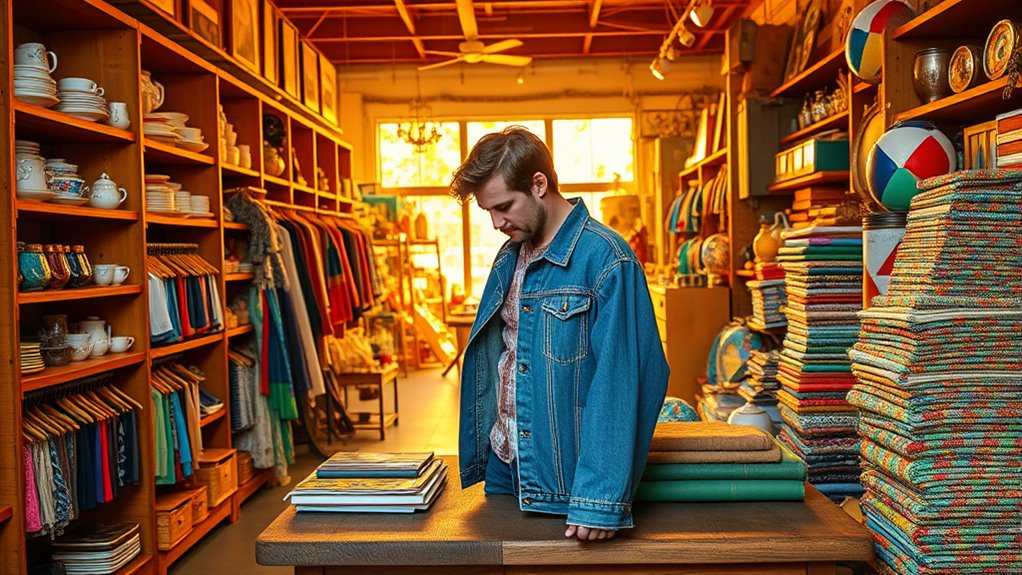

To find gems in thrift shopping, be patient and take your time browsing each section carefully. Focus on vintage accessories like jewelry, scarves, and bags, and check for quality details like stitching and fabric condition. Keep an open mind for creative upcycling ideas—turn old scarves into headbands or necklaces into bracelets. Mixing styles and eras helps create unique looks while supporting sustainability. Stay curious and persistent, and you’ll discover ways to elevate your style with eco-friendly flair.

Get beauty and skincare favorites delivered free with Prime
- Fast, free delivery on millions of items
- Prime Video, Amazon Music and more included
- Member-only deals all year
Key Takeaways
- Be patient and thorough when browsing; take time to examine quality and hidden details.
- Focus on vintage accessories like jewelry, scarves, and bags to elevate your style.
- Have clear goals for desired styles or colors to streamline your thrift hunt.
- Upcycle items creatively—transform scarves into headbands or vintage jewelry into bracelets.
- Stay open-minded and explore different eras and unexpected pieces for unique finds.

Thrift shopping can be a rewarding way to find unique clothing and save money, but it requires a strategic approach. When you step into a thrift store, keep in mind that patience is key. Take your time to browse through the racks thoroughly; hidden gems often sit among overlooked items. Focus on vintage accessories, like statement jewelry, scarves, or bags, which can instantly elevate your outfits while adding a touch of history and character. These accessories are perfect for creating one-of-a-kind looks, and because they’re vintage, they promote sustainable fashion by giving old items new life instead of supporting fast fashion trends.
Patience and focusing on vintage accessories can transform your thrift shopping into a sustainable style adventure.
To make your thrift experience more successful, go in with a clear idea of what you’re searching for. Whether it’s a specific style, color, or piece, having goals helps narrow down your options and prevents you from feeling overwhelmed. Remember, the key to finding great vintage accessories is to look beyond the surface. Check for quality—examine clasps, fabric condition, and stitching—so your finds last longer and look good. Don’t be discouraged if you don’t find the perfect item immediately; sometimes, it’s about patience and persistence.
Another tip is to contemplate how you can upcycle or repurpose thrifted pieces. Many items may need a little TLC or creative tweaking, but that’s part of the fun. For example, an old scarf can become a stylish headband or a vintage necklace can be transformed into a chic bracelet. Thrift shopping encourages sustainability because instead of buying new, you’re giving existing items a fresh purpose. This mindset helps reduce waste and supports eco-friendly fashion practices, making your shopping not just budget-friendly but also environmentally responsible.
Stay open-minded about different eras and styles. Sometimes, the most unexpected vintage accessories can inspire a whole new look. Mix and match different textures and patterns to create a unique ensemble that reflects your personality. When you’re shopping with a sustainable fashion mindset, it’s not just about finding something affordable but also about making thoughtful choices that minimize your environmental impact. You might also find inspiration from local artisans or small sellers within thrift stores, who often offer handcrafted pieces that add individuality to your wardrobe. Recognizing the diverse designs available to enhance indoor aesthetics can inspire creative ways to incorporate vintage pieces into home decor or personal style.
In the end, successful thrift shopping involves patience, a keen eye for quality, and a creative spirit. By seeking out vintage accessories and embracing sustainable fashion, you’re not only saving money but also contributing to a more environmentally conscious and unique style. With practice, you’ll develop a sharper eye for hidden treasures and create a wardrobe that’s as distinctive as you are—all while making a positive impact on the planet.
As an affiliate, we earn on qualifying purchases.
Frequently Asked Questions
How Can I Tell if Thrifted Clothing Is High Quality?
To tell if thrifted clothing is high quality, check the fabric durability by feeling the material—strong, thick fabrics usually last longer. Look for brand authenticity, as recognizable labels often indicate better craftsmanship. Inspect seams for neat stitching, and avoid items with loose threads or stains. By paying attention to these details, you’ll make certain you’re choosing durable, authentic pieces that stand the test of time.
What Are the Best Days to Find New Items?
The best days to find new arrivals are typically early in the week, like Monday or Tuesday, when stores restock after the weekend. These days often feature the freshest new items, giving you a better chance to snag unique finds. Keep an eye on the store’s schedule, and visit shortly after new shipments arrive. Being early guarantees you catch the best selection of new arrivals before others do.
How Do I Clean Vintage or Delicate Fabrics Safely?
To clean vintage or delicate fabrics safely, start with gentle fabric care. Use cold water and a mild detergent, avoiding harsh chemicals. For stain removal, test a small, inconspicuous area first, then gently dab with a soft cloth or sponge. Avoid wringing or scrubbing. Hand wash if possible, or use a delicate cycle. Air dry, keeping the fabric flat, to prevent damage and preserve its integrity.
Are There Specific Brands or Eras to Look For?
You should look for popular brands like Levi’s, Nike, and Polo, which often hold value and are easy to identify. Vintage eras such as the 70s, 80s, and 90s are also great to explore because they offer unique styles and higher quality pieces. Keep an eye out for iconic labels and distinctive design features from these eras, as they can make your thrift finds truly special.
How Can I Negotiate Prices at Thrift Stores?
You can definitely negotiate prices at thrift stores, even if they don’t advertise it openly. Start by politely asking about store policies on price negotiation—some places are open to offers, especially on items that have been there a while. Be respectful, bundle items, or offer a fair price to show you’re serious. Remember, a friendly approach often opens the door to better deals and makes the process enjoyable.
upcycling scarves into headbands
As an affiliate, we earn on qualifying purchases.
As an affiliate, we earn on qualifying purchases.
Conclusion
Thrift shopping is like a treasure hunt—you never know what hidden gems you’ll find. Keep an open mind, trust your instincts, and don’t be afraid to get a little creative with upcycling. Every piece has potential, just waiting for your unique touch. With patience and a keen eye, you’ll turn thrift store finds into one-of-a-kind treasures that tell your story. Happy hunting—your perfect gem is just around the corner!
As an affiliate, we earn on qualifying purchases.
As an affiliate, we earn on qualifying purchases.
Columbus Day / Indigenous Peoples' Day Picks
long weekend sales
As an affiliate, we earn on qualifying purchases.