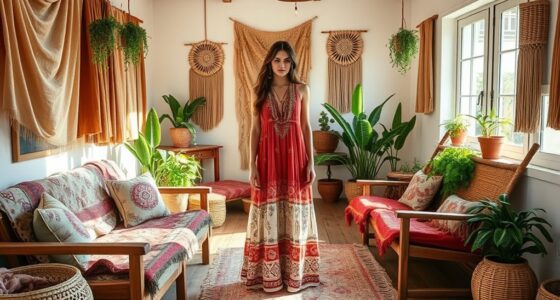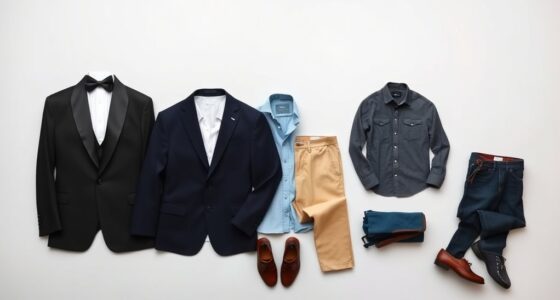

Today, your perception of luxury value depends on what you prioritize: vintage pieces offer timeless authenticity through rich history, craftsmanship, and character that age gracefully. In contrast, contemporary luxury emphasizes innovation, modern design, and customization for a cutting-edge appeal. Both styles reflect different values—heritage versus progress—so your choice aligns with whether you seek tradition or innovation. Keep exploring to understand how these principles shape luxury’s worth and appeal in today’s world.
Key Takeaways
- Vintage luxury emphasizes heritage, craftsmanship, and timeless character, valuing authenticity and historical significance.
- Contemporary luxury focuses on innovation, modern design, and customization, prioritizing current trends and technological integration.
- Vintage items develop charm over time and promote sustainability through reuse, while modern pieces often incorporate eco-friendly materials and features.
- The value of vintage lies in uniqueness and cultural stories, whereas contemporary luxury is valued for cutting-edge aesthetics and personalization.
- Personal preference determines whether heritage preservation or modern innovation best aligns with individual lifestyle and values.
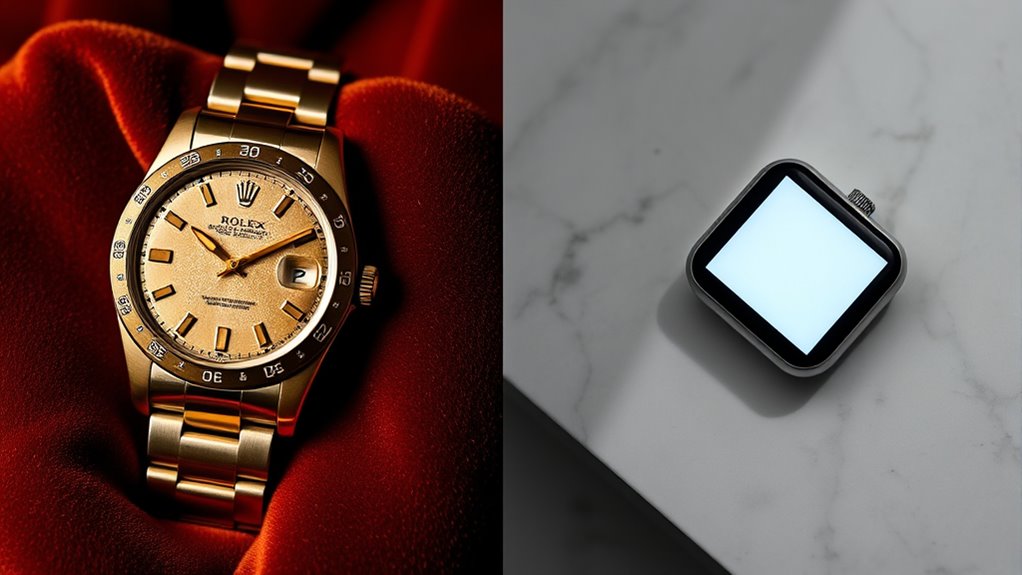
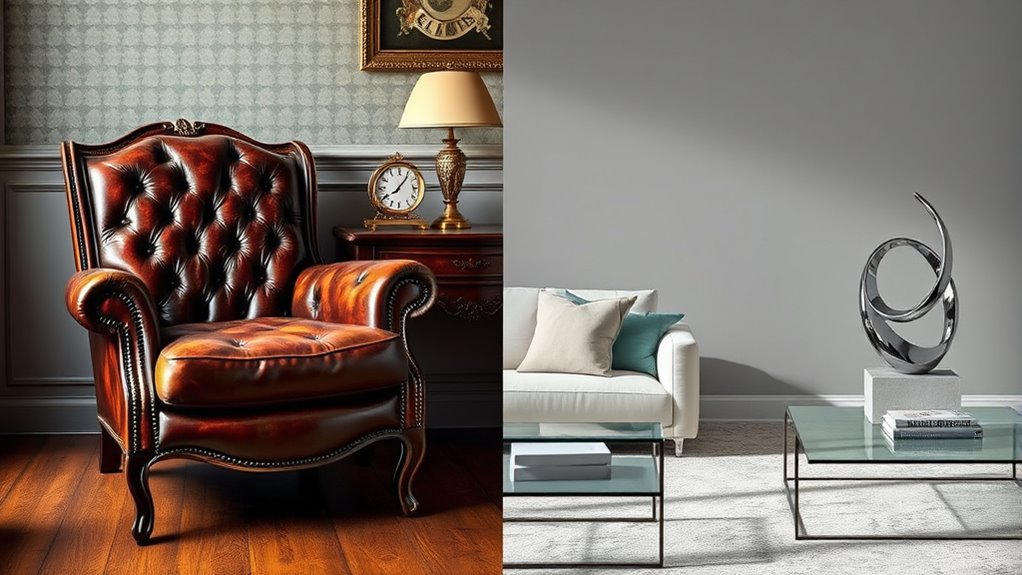
When choosing between vintage and contemporary luxury, it’s essential to contemplate what each style offers. Vintage pieces often embody a rich sense of heritage preservation, capturing a moment in history and maintaining the craftsmanship that defined an era. These items carry stories and traditions, making them feel uniquely authentic and timeless. Their value is deeply rooted in the history they represent, which appeals to those who appreciate the artistry and cultural significance of bygone days. On the other hand, contemporary luxury emphasizes modern innovation, blending cutting-edge design with advanced materials and techniques. This approach creates products that are not only stylish but also functional and forward-thinking, appealing to a generation that values progress and originality.
Vintage luxury embodies heritage and timeless craftsmanship, while contemporary luxury highlights innovation and modern design.
Understanding these qualities helps you decide which aligns better with your personal style and values. If heritage preservation is important to you, vintage luxury offers a tangible connection to the past. You’ll find that vintage items often feature handcrafted details, intricate embellishments, and a sense of uniqueness that mass-produced items lack. These pieces tend to age gracefully, developing character and charm over time, which adds to their allure and long-term value. Vintage collections also tend to be more sustainable, as they breathe new life into pre-owned items, reducing waste and promoting eco-consciousness. Incorporating natural materials like wood and linen can further enhance the authenticity and sustainability of vintage-inspired interiors.
Conversely, if your focus is on modern innovation, contemporary luxury allows you to enjoy the latest in design and technology. These items often push boundaries, incorporating innovative materials like sustainable fabrics or smart features that enhance your daily life. Modern luxury brands invest heavily in research and development, ensuring that their products stay at the forefront of style and functionality. This makes contemporary pieces highly desirable for those who want a sleek, current aesthetic that reflects today’s trends. Additionally, contemporary luxury tends to be more customizable, giving you options to personalize items to suit your taste.
Both vintage and contemporary luxury hold their own appeal and value, but they cater to different desires. Vintage emphasizes heritage preservation, celebrating craftsmanship and history, while contemporary champions modern innovation, focusing on progress and future-forward design. Your choice depends on what you prioritize: a connection to the past or a commitment to the present and future. Whichever you prefer, understanding these core qualities helps you make a more informed decision and ensures your investment aligns with your personal values and lifestyle. Ultimately, both styles can offer extraordinary value, whether through timeless heritage or groundbreaking innovation.

Vintage Gemstone Choker Necklace for Women – 18K Gold Plated Statement Jewelry with Faux Pearls & Multi-Color Stones, Adjustable Length
Vintage Royal Aesthetic & Colorful Design:Rich combination of gold-tone alloy, simulated pearls, and multi-color (burgundy/navy/brown) glass cabochons; features…
As an affiliate, we earn on qualifying purchases.
As an affiliate, we earn on qualifying purchases.
Frequently Asked Questions
How Does Rarity Influence Luxury Valuation Across Eras?
Rarity substantially influences luxury valuation because rare collectibles and exclusivity factors make items more desirable. When you find something unique or limited, you’re likely to value it higher, whether vintage or contemporary. This scarcity drives up demand and perceived prestige, making rare pieces more exclusive and coveted. So, across eras, the less available an item is, the more its worth increases in the luxury market, reflecting its exceptional status.
Are Vintage Pieces More Sustainable Than Contemporary Luxury Items?
Yes, vintage pieces are generally more sustainable than contemporary luxury items. By choosing vintage, you extend the life of existing products, reducing demand for new items made with sustainable materials and ethical sourcing. This practice minimizes environmental impact and supports a circular economy. When you opt for vintage, you’re making a conscious choice that promotes sustainability and ethical practices in luxury fashion, helping to lessen your carbon footprint.
How Do Authenticity and Provenance Impact Luxury Asset Value?
Authenticity and provenance substantially boost your luxury asset’s value by ensuring genuine craftsmanship quality and reinforcing brand recognition. When you verify a piece’s authenticity and trace its history, you’re more confident in its worth and desirability. This trust elevates its status, making it a more sought-after investment. Provenance proves the item’s origin, while authenticity guarantees its originality, together amplifying your luxury asset’s overall value and desirability in the market.
What Role Does Brand Heritage Play in Vintage Versus Modern Luxury?
Brand heritage deeply influences luxury value by shaping your perception of authenticity and legacy. In vintage pieces, rich storytelling and historical significance elevate desirability, while modern brands leverage design innovation to attract you with fresh appeal. Both use storytelling to connect emotionally, but vintage relies on tradition, and contemporary emphasizes innovation. Your appreciation of brand heritage determines how you value craftsmanship, history, and the ongoing evolution of luxury.
Can Contemporary Luxury Appreciate in Value Like Vintage Items?
Imagine watching a sunset—its colors shift and deepen, much like contemporary luxury’s potential to appreciate in value. In the luxury market, savvy investors see modern pieces as dynamic assets, not just fleeting trends. While vintage items often hold steady, contemporary luxury can grow if you apply smart investment strategies, leveraging brand innovation and market demand. Yes, your investment can appreciate, turning today’s purchase into tomorrow’s prized possession.

Armani Exchange A|X Chronograph Gold-Tone Stainless Steel Watch for Men
STYLISH: This Armani Exchange watch features a gold sunray dial, gold-tone stainess steel bracelet, and chronograph movement
As an affiliate, we earn on qualifying purchases.
As an affiliate, we earn on qualifying purchases.
Conclusion
As you browse through vintage and contemporary luxury, you realize that sometimes, a rare find from years ago unexpectedly catches your eye, just like a modern piece that feels instantly timeless. It’s fascinating how history and innovation intertwine, making each choice uniquely valuable. Whether you’re drawn to the charm of the past or the excitement of now, you’re reminded that real luxury is about discovering what resonates with you — a perfect coincidence of taste and time.
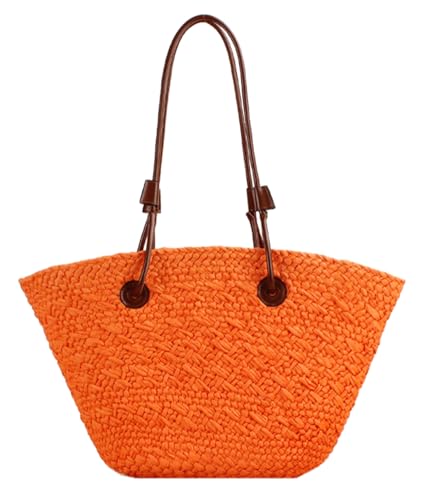
Women Straw Tote Bag Summer Beach Bags Luxury Handmade Shoulder Bag Woven Basket Handbags Large Straw Purses
Exquisite Craftmanship & Unique Design – The elegant tote straw bag is casual style with delicate handmade craftmanship,…
As an affiliate, we earn on qualifying purchases.
As an affiliate, we earn on qualifying purchases.

Newest Wooden Sofa Side Cabinet Corner Table – Designer Luxury, High – Gloss Finish, Customizable for Your Living Room A-100 * 33 * 65CM
Stylish Design: The 2024 new design brings a touch of modern luxury to your living room. The sleek…
As an affiliate, we earn on qualifying purchases.
As an affiliate, we earn on qualifying purchases.