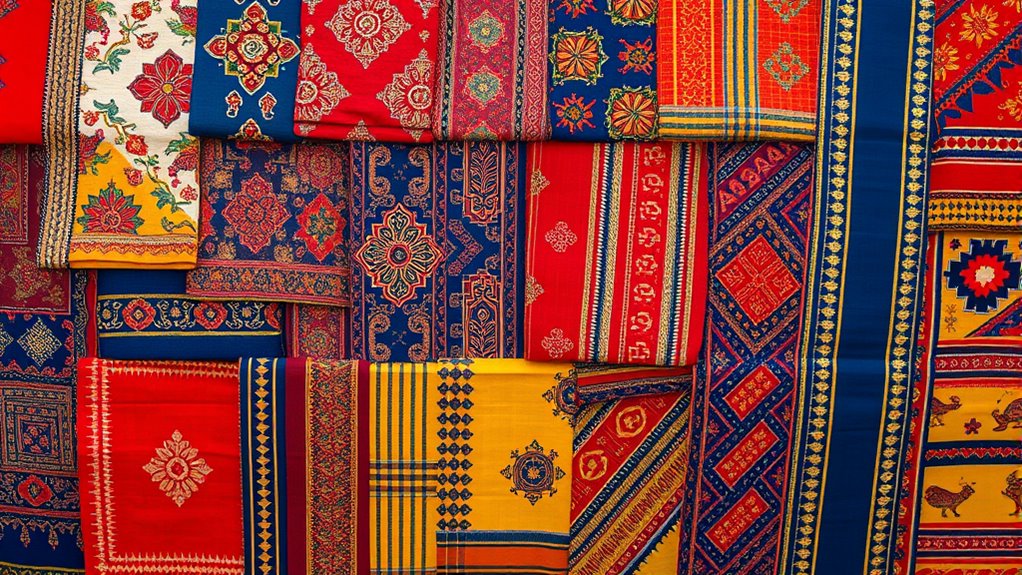

Traditional textiles around the world showcase your community’s identity, beliefs, and environment through beautiful patterns, colors, and weaving techniques. You’ll see how artisans use natural dyes and handcrafted methods to create meaningful designs that tell stories or symbolize social roles. These textiles embody centuries of culture, adapting over time while preserving core traditions. If you explore further, you’ll uncover the rich artistry and cultural significance woven into every fabric piece.

Get beauty and skincare favorites delivered free with Prime
- Fast, free delivery on millions of items
- Prime Video, Amazon Music and more included
- Member-only deals all year
Key Takeaways
- Traditional textiles serve as cultural artifacts reflecting community identity, beliefs, and environmental influences through patterns, colors, and weaving techniques.
- Distinctive weaving styles and techniques, such as ikat and backstrap looms, encode social and spiritual meanings unique to each culture.
- Natural dyeing methods using indigenous resources like indigo and cochineal preserve environmental harmony and cultural rituals.
- These textiles embody centuries of tradition, connecting modern communities to their historical and spiritual heritage.
- The craftsmanship and sustainable practices in traditional textile production highlight their cultural significance and artisanal value worldwide.

Have you ever wondered how traditional textiles reflect the culture and history of different communities? It’s fascinating to see how the intricate patterns, vibrant colors, and unique textures tell stories of a people’s identity, beliefs, and environment. Central to these textiles are the weaving techniques and dyeing methods that artisans have perfected over generations. These methods aren’t just about creating fabric—they’re about preserving traditions and expressing cultural values.
Traditional textiles reveal cultural stories through patterns, colors, and weaving techniques passed down through generations.
When you explore traditional weaving techniques, you’ll notice how each community develops its own distinctive style. Some use backstrap looms, which allow artisans to weave intricate patterns while sitting comfortably. Others employ complex techniques like ikat, where threads are tied and dyed before weaving begins, creating blurred, mesmerizing patterns. These weaving methods often carry symbolic meanings, representing social status, spiritual beliefs, or stories passed down through generations. The craftsmanship involved requires patience and skill, making each textile a work of art and a piece of living history.
Dyeing methods are equally important, shaping the identity of many traditional textiles. Natural dyes derived from plants, minerals, and insects are common in many cultures. For instance, the indigo dye used in West African textiles produces deep, rich blues, while cochineal insects yield vibrant reds in Latin American fabrics. Sometimes, artisans develop complex dyeing techniques like resist dyeing, where parts of the fabric are protected from dyes to create contrasting designs. These dyeing methods are often deeply rooted in local ecosystems and rituals, reflecting a community’s relationship with nature and their environment. They also demonstrate ingenuity, as artisans find ways to produce a broad palette of colors without modern synthetic dyes.
The combination of weaving techniques and dyeing methods creates textiles that are more than just clothing or decoration—they’re cultural artifacts. They embody centuries of tradition, adapting over time but still maintaining their core identity. When you see a traditional textile from a specific region, you’re witnessing a tangible expression of that community’s history, beliefs, and environment. Every pattern, color, and texture is a story waiting to be uncovered, connecting you to the people who crafted it and the culture they cherish. By understanding these techniques, you gain a deeper appreciation for the artistry and cultural significance woven into each piece of traditional fabric. Additionally, studying these dyeing techniques reveals how artisans use natural resources sustainably and ingeniously to create vibrant colors.
As an affiliate, we earn on qualifying purchases.
Frequently Asked Questions
How Do Traditional Textiles Influence Modern Fashion Trends Globally?
You see how traditional textiles influence modern fashion trends globally by inspiring fashion innovation and celebrating cultural identity. Designers often incorporate authentic patterns, techniques, and fabrics to create unique pieces that stand out. This blend of tradition and modernity not only preserves cultural heritage but also appeals to diverse audiences, making fashion more inclusive and expressive. Embracing traditional textiles helps you connect with global cultures while pushing creative boundaries.
What Are the Environmental Impacts of Traditional Fabric Production Methods?
Traditional fabric production methods can cause environmental pollution through the use of natural dyes and dyes, which may release harmful chemicals. You might also contribute to resource depletion, as these methods often rely heavily on water, land, and raw materials like cotton or silk. While culturally rich, these practices can strain ecosystems and ecosystems, emphasizing the need for sustainable practices that preserve both heritage and the environment.
How Are Indigenous Communities Preserving Their Textile Heritage Today?
Like a modern-day Odysseus, you witness indigenous communities actively preserving their textile heritage through traditional weaving techniques. They pass down skills, stories, and symbols, ensuring cultural preservation endures amidst change. By promoting indigenous weaving and supporting local artisans, you help sustain these rich traditions, honoring their history. Your involvement keeps their vibrant heritage alive, bridging the past and present for future generations to cherish and celebrate.
What Are the Symbolic Meanings Behind Specific Textile Patterns Worldwide?
You’ll find that specific textile patterns often carry deep symbolic motifs that represent cultural significance. For example, geometric designs may symbolize unity or protection, while floral patterns can denote fertility or beauty. These motifs serve as storytelling tools, passing traditions and beliefs through generations. By understanding the symbolic meanings behind these patterns, you gain insight into the values, history, and identity of each community, preserving their cultural heritage in every stitch.
How Can Traditional Textiles Be Adapted for Sustainable Modern Use?
You can adapt traditional textiles for sustainable modern use by incorporating upcycling techniques, transforming old fabrics into new, stylish items. Use eco-friendly dyes to minimize environmental impact and preserve vibrant colors. By blending traditional methods with contemporary designs, you create unique pieces that honor cultural heritage while promoting sustainability. This approach not only reduces waste but also celebrates craftsmanship, making traditional textiles relevant and eco-conscious in today’s fashion and home decor.
handwoven fabric with cultural patterns
As an affiliate, we earn on qualifying purchases.
As an affiliate, we earn on qualifying purchases.
Conclusion
As you explore traditional textiles worldwide, you realize how these fabrics connect us to history and culture in unexpected ways. It’s no coincidence that the same patterns and techniques often appear across distant regions, hinting at ancient exchanges and shared stories. By preserving these textiles, you help keep alive a rich heritage that, like a woven tapestry, links us all—reminding us that sometimes, the most meaningful connections happen through fabric and tradition.
As an affiliate, we earn on qualifying purchases.
As an affiliate, we earn on qualifying purchases.
Halloween Picks
halloween
As an affiliate, we earn on qualifying purchases.