Sartorial subcultures are more than just fashion statements; they’re ways to express your identity, values, and rebellion. From the sleek, individualistic style of Mods to the dark, emotional looks of Goths, each movement reflects social changes and personal stories. Punk fashion, with its DIY attitude, challenges norms and authority. Exploring these styles reveals how clothing acts as a powerful mirror of culture and society—if you continue exploring, you’ll uncover even more fascinating connections.
Key Takeaways
- Sartorial subcultures use clothing to express identity, beliefs, and resistance, reflecting broader cultural and social dynamics.
- The Mods of the 1960s showcased sleek, modern fashion as a rebellion against post-war austerity and traditional style.
- Goths adopt dark, dramatic attire to symbolize emotional depth, individuality, and nonconformity.
- Punk fashion emphasizes DIY, rebellious aesthetics like ripped fabrics and safety pins to challenge societal norms.
- Fashion evolves with societal changes, serving as a visual narrative of cultural values and historical contexts.
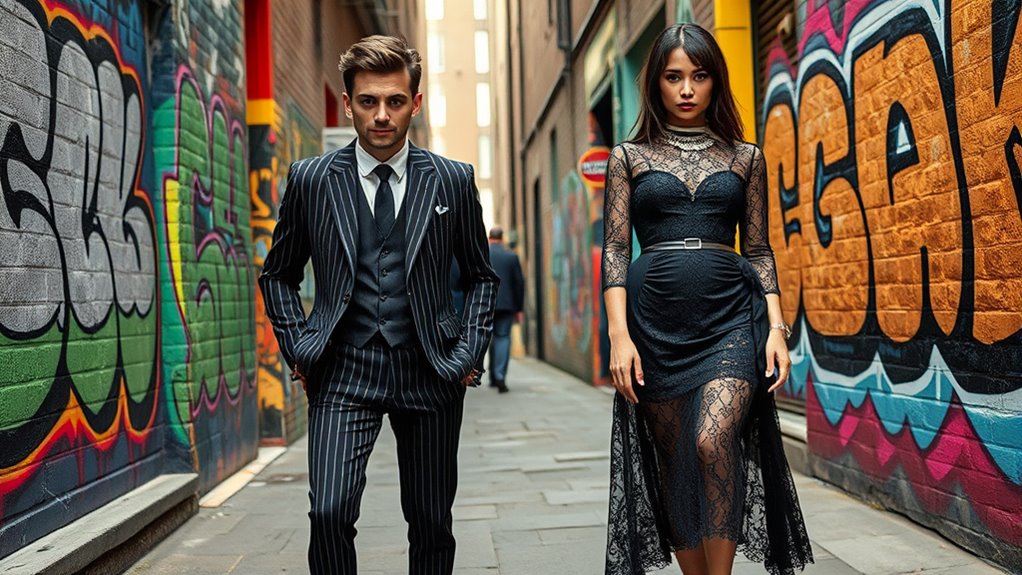
Sartorial subcultures thrive on the idea that clothing is more than just style—it’s a powerful form of self-expression and identity. When you explore these groups, you’ll see how fashion evolution reflects broader cultural shifts and personal values. Each subculture tells a story about its origins, beliefs, and resistance, making clothing a tangible symbol of cultural identity. For instance, the Mods of the 1960s embodied a sleek, modern aesthetic that challenged traditional British fashion, showcasing a desire for sophistication and progress. Their sharp suits, bold patterns, and scooter culture were more than trends—they represented a rebellion against post-war austerity and a quest for individuality within a rapidly changing society.
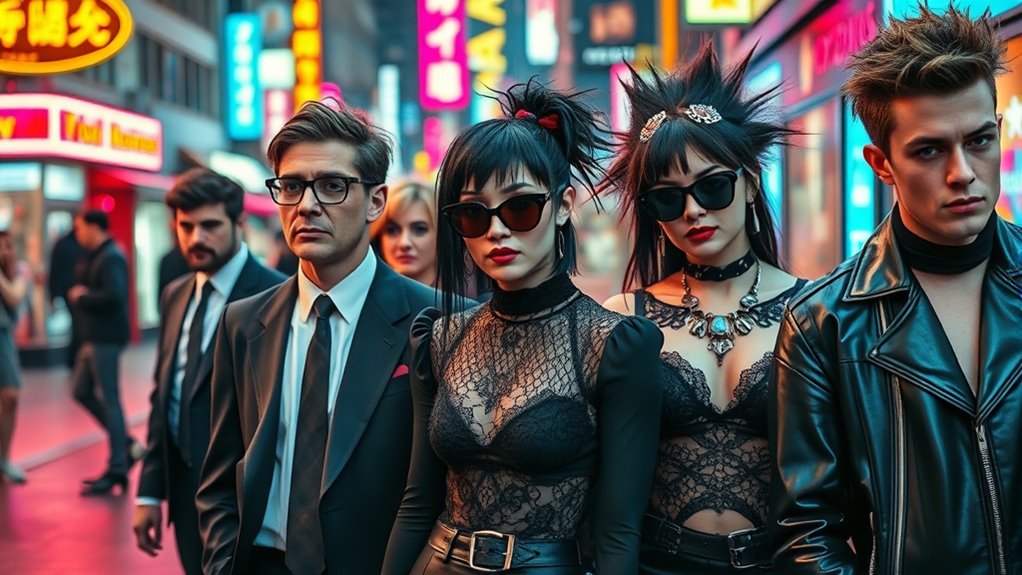
As you investigate more deeply, you’ll notice how these sartorial choices serve as markers of belonging. Goths, emerging in the late 20th century, adopted dark, dramatic clothing that symbolized a fascination with alternative worlds, individualism, and emotional depth. Their black attire, heavy makeup, and distinctive accessories became a way to stand apart from mainstream culture and express complex feelings that words often couldn’t capture. This fashion evolution illustrates how subcultures adapt and redefine cultural identity, turning clothing into a statement of nonconformity and emotional authenticity.
The punk movement, with its ripped fabrics, safety pins, and rebellious attitude, exemplifies another facet of sartorial subcultures. It’s not just about a chaotic aesthetic but about challenging societal norms and authority figures through fashion. Punk’s style was a deliberate rejection of polished mainstream trends, emphasizing DIY ethic and protest. By doing so, punks created a visual language that communicated their discontent and desire for change, reinforcing their cultural identity as rebels.
Across these examples, you see how clothing acts as a language of its own—shaping and reflecting cultural identity. Sartorial subcultures often emerge in response to social, political, or economic conditions, evolving over time as they adapt to new influences and ideals. Interestingly, these movements also demonstrate the power of curiosity in understanding cultural expressions, as exploring their origins reveals deeper insights into societal values and historical contexts. Whether it’s the flamboyance of the disco era or the minimalist rebellion of modern streetwear, each movement’s fashion choices serve as a mirror of their values and aspirations. So, when you observe these distinctive styles, recognize that they’re not just about aesthetics; they’re powerful statements about who people are and what they stand for. Clothing becomes a living expression of ongoing fashion evolution, connecting personal identity to broader cultural narratives.
Frequently Asked Questions
How Do Subcultures Influence Mainstream Fashion Trends?
Subcultures influence mainstream fashion trends by driving fashion innovation and fostering cultural exchange. You might notice how subcultural styles introduce new ideas, patterns, or accessories that eventually blend into popular culture. As you adopt these elements, you participate in a cycle of creativity and diversity, making fashion more dynamic. This ongoing exchange helps mainstream fashion stay fresh and reflective of different cultural influences, shaping trends that appeal to wider audiences.
What Role Does Music Play in Shaping Sartorial Subcultures?
Music plays a essential role in shaping sartorial subcultures by serving as a powerful symbol of identity. You’re drawn to specific genres because of their music symbolism, which influences your style choices and helps you express your stylistic identity. While the beats set the tone, your clothing becomes a visual language, creating a vivid connection between sound and style that defines your subcultural belonging and sets you apart from mainstream trends.
How Do Subcultures Maintain Their Identity Over Time?
You maintain your subculture’s identity by balancing identity preservation with stylistic evolution. You keep core elements that define your style, like specific clothing or attitudes, while embracing new influences to stay relevant. This continuous adaptation helps you connect with new generations and avoid stagnation. By evolving thoughtfully, you guarantee your subculture remains vibrant, authentic, and true to its roots over time.
Are Sartorial Subcultures Primarily a Youth Phenomenon?
You might think sartorial subcultures are just for teenagers, but that’s a bit of irony, isn’t it? The fashion industry loves to market youth, yet these styles often evolve with generational shifts, influencing adults too. While young people lead the way, many adults embrace these subcultures, showing that fashion isn’t just a fleeting phase but a way to express identity at any age.
How Do Regional Differences Affect Subcultural Style Expressions?
Regional differences greatly influence subcultural style expressions, as you’ll notice regional identities shape how individuals interpret fashion. You might find that cultural authenticity is prioritized differently across areas—what’s seen as authentic in one region may differ elsewhere. These regional nuances allow subcultures to adapt and evolve, making their styles unique and meaningful within local contexts. So, your style can reflect both your personal identity and regional cultural influences.
Conclusion
As you explore sartorial subcultures, you embrace individuality, express identity, and challenge norms. You step into a world where fashion becomes rebellion, art, and history all at once. You discover that clothing isn’t just fabric—it’s a statement, a story, a way to belong and stand apart. So, keep discovering, keep expressing, and let your style be your voice in the vibrant tapestry of subcultures. Your journey never truly ends; it only evolves.