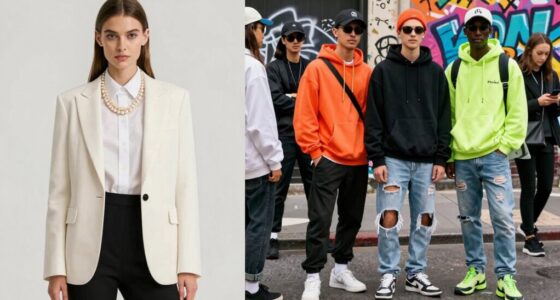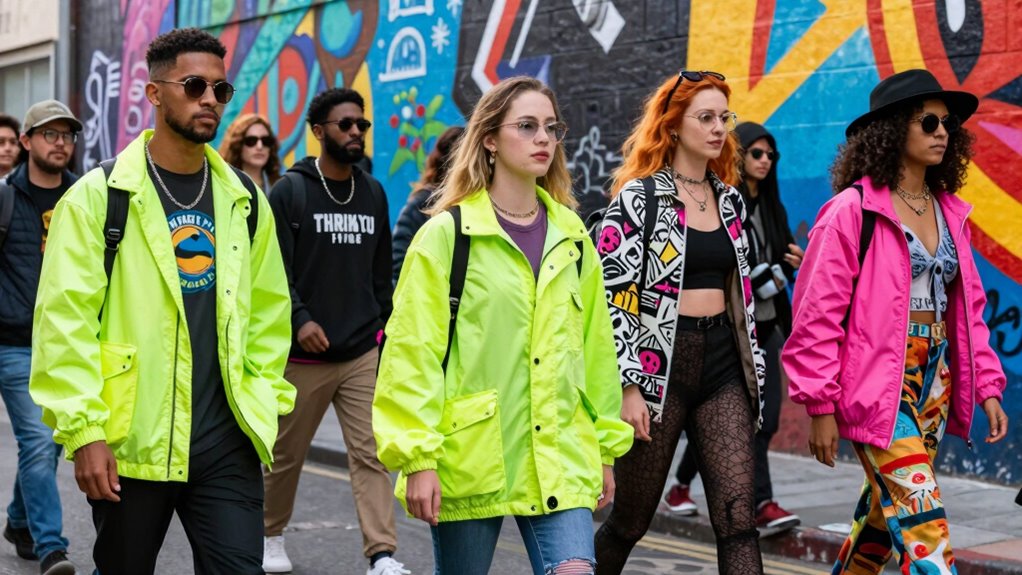
Fashion movements act as a visual mirror of social change, allowing you to see shifts in cultural values, activism, and collective identity. Your clothing choices can communicate pride, resistance, or a commitment to sustainability without uttering a word. As styles evolve, they reflect society’s priorities and struggles, turning fashion into an active tool for advocacy and dialogue. If you keep exploring, you’ll discover how these movements continue to shape and symbolize our evolving world.

Get beauty and skincare favorites delivered free with Prime
- Fast, free delivery on millions of items
- Prime Video, Amazon Music and more included
- Member-only deals all year
Key Takeaways
- Fashion movements visually symbolize societal shifts and cultural identities during periods of social change.
- Clothing choices during protests or festivals express resistance, pride, and shared community values.
- Eco-friendly and sustainable fashion reflects societal commitments to environmental responsibility.
- Fashion turns abstract social ideas into tangible symbols that influence public awareness and dialogue.
- Style as a form of visual language communicates political activism and cultural identities without words.
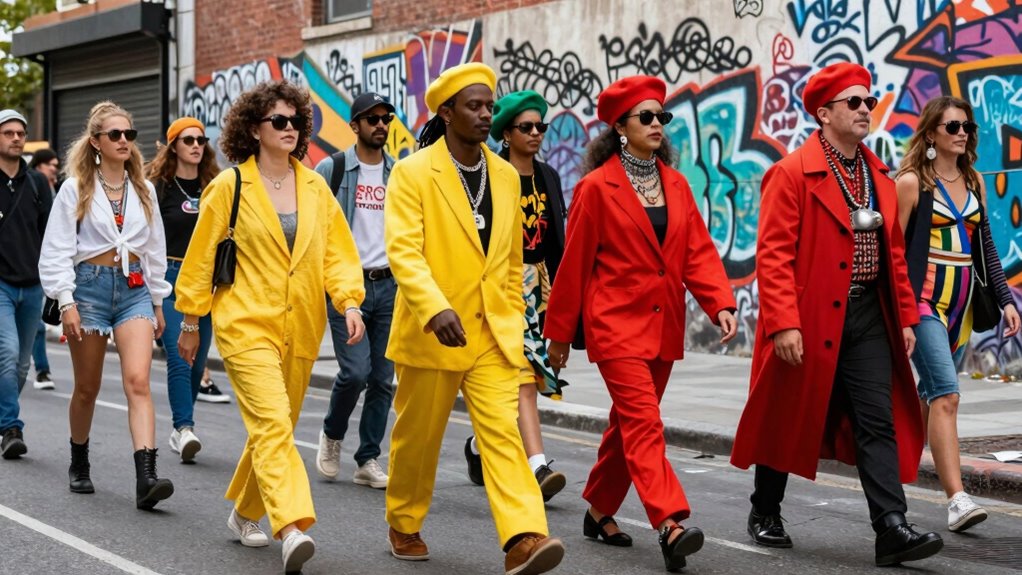
Have you ever wondered how fashion can influence society beyond just style? It’s more than clothing choices; it’s a powerful expression of cultural identity and a tool for political activism. Throughout history, fashion movements have served as visual statements that reflect societal shifts, challenge norms, and promote change. When you wear a particular style, you’re often signaling allegiance to a certain cultural or political perspective, making fashion an active participant in social discourse.
Fashion shapes society by expressing identity, challenging norms, and fueling social change through visual activism.
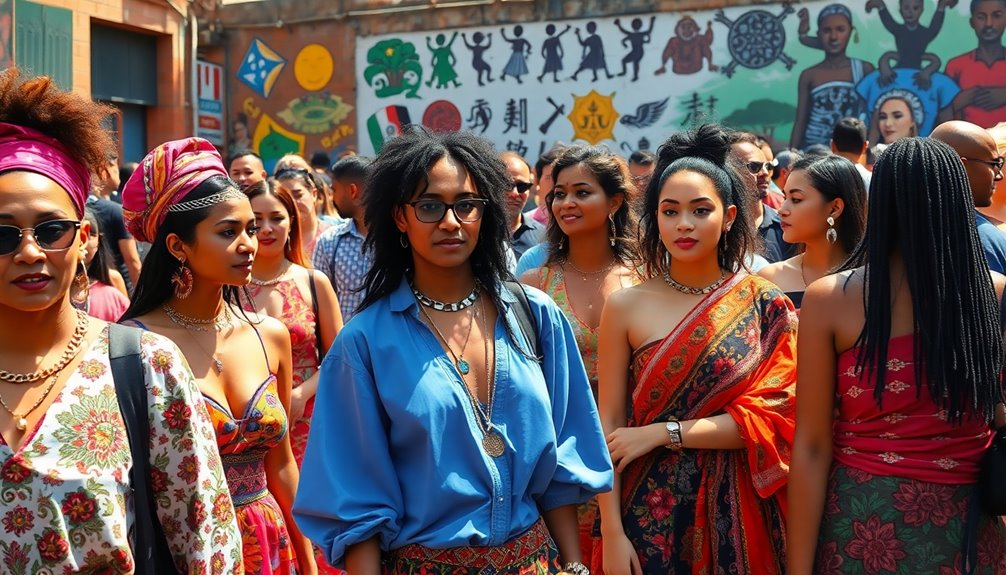
Cultural identity is deeply intertwined with fashion movements. When societies undergo transformations—whether through migration, globalization, or social upheaval—fashion becomes a way to assert or redefine cultural roots. For example, traditional garments worn during cultural festivals or protests serve as symbols of pride and resistance. They communicate a shared history and values, reinforcing community bonds. In times of social tension or oppression, fashion can become a form of silent protest, allowing individuals to express their cultural identity in subtle yet impactful ways that challenge dominant narratives. Resale value of fashion items can also influence how cultural symbols are preserved and shared over time. Additionally, sustainable and eco-friendly fashion choices are increasingly reflecting societal values around environmental responsibility. Incorporating awareness of sustainable fashion practices further emphasizes how societal values are embedded within fashion movements.
Fashion movements often act as catalysts for social change by making complex ideas more accessible and relatable. They turn abstract concepts into tangible symbols that resonate with the masses. When you participate in these movements through your fashion choices, you become part of a larger narrative that seeks to shape societal values. Whether it’s donning a T-shirt supporting a cause or adopting a style that challenges gender norms, your clothing can spark conversations, inspire others, and keep important issues at the forefront. Recognizing the cultural significance behind certain styles can deepen your understanding of their impact.
In essence, fashion is a dynamic reflection of society’s evolving values. It captures the spirit of an era and provides a visual language for expressing cultural identity and political activism. By understanding the power behind what you wear, you see how fashion movements are not just about trends—they are instrumental in shaping social change. Fashion choices can also serve as a form of cultural expression, allowing individuals to communicate their identities and beliefs without words. Your clothing choices can be a declaration, a protest, or a celebration, making fashion a vital part of societal progress.
Popular right now

Shark Navigator Robot Vacuum with Self-Empty Base, Dark Grey (RV2120AE)

Vitamix Propel Series 510 Professional-Grade Blender, 3 Programs, Black

iRobot Roomba 105 Vac Robot Vacuum
As an affiliate, we earn on qualifying purchases.
Frequently Asked Questions
How Do Fashion Trends Spread Globally so Quickly?
You see fashion trends spread quickly globally thanks to technological innovation like social media and instant communication, which allow ideas to travel fast. Cultural exchange also plays a role as people share styles across borders through travel, media, and influencers. This combination accelerates the adoption of new trends worldwide, making fashion a dynamic reflection of interconnected societies. You experience this every day as styles from different cultures blend seamlessly into your wardrobe.
Can Fashion Movements Influence Political Decisions?
Fashion movements can be powerful voices for change, like a ripple turning into a wave. You see, they influence political decisions through cultural symbolism, turning style into a statement of resistance. When people wear symbols of activism, it amplifies their message, shaping public opinion and pressuring leaders. So, your choice of clothing isn’t just about looks—it’s a form of political activism that can sway decision-makers and ignite social reform.
What Role Do Social Media Platforms Play in Fashion Change?
Social media platforms play a vital role in fashion change by accelerating the digital evolution and amplifying cultural influence. You can see trends spreading instantly across diverse communities, shaping what’s popular. These platforms empower you to discover, share, and influence styles rapidly, making fashion more accessible and democratic. As a result, social media transforms fashion movements into global phenomena, reflecting and fueling social change through real-time engagement and cultural exchange.
How Do Economic Shifts Impact Fashion Industry Trends?
Economic shifts greatly influence fashion industry trends, especially during times of market disruptions. You might notice that during economic downturns, consumers prioritize affordability and durability, leading brands to emphasize economic resilience. For example, a 2022 report showed a 15% increase in demand for budget-friendly fashion. These shifts force brands to adapt quickly, reflecting broader social changes and highlighting how economic resilience shapes the styles and priorities in fashion.
Are Fashion Movements More Driven by Consumers or Designers?
Fashion movements are more driven by consumer influence than designer innovation. You, as a consumer, shape trends through your preferences and purchasing choices, pushing designers to respond and adapt. While designers introduce new ideas, it’s your feedback and demand that genuinely steer the direction of fashion. This dynamic ensures that fashion reflects current social values and shifts, making consumer influence the primary force behind evolving trends.
Conclusion
Just as a river carves its path through the landscape, fashion movements shape society’s course, reflecting its evolving values and tensions. Each wave of change, like a ripple, influences future currents, forging new identities and breaking old barriers. By embracing these shifts, you become part of a flowing narrative, where style acts as both mirror and map. In this ongoing journey, your choices ripple outward, guiding society toward new horizons of expression and understanding.