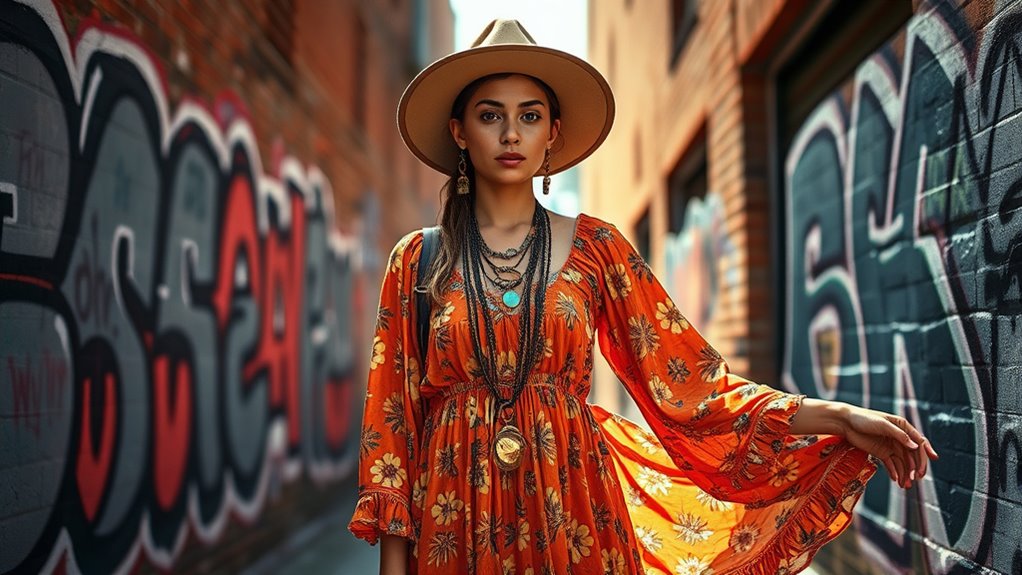

Your clothing choices speak volumes about your personal identity and cultural background. They help you craft a specific image, whether professional, creative, or rebellious, and act as a visual language connecting you to your community and values. Fashion also evolves as you grow, allowing you to express different facets of yourself over time. Exploring how your wardrobe communicates these messages can reveal deeper insights into your social interactions and cultural roots. Keep exploring to uncover more about how style shapes your story.
Key Takeaways
- Clothing communicates personal identity and cultural background, serving as a visual story of individual and community values.
- Fashion choices help craft specific images or personas, conveying traits like professionalism, creativity, or rebellion.
- Outfits influence social perceptions and interactions, shaping how others interpret and respond to individuals.
- Personal style evolves over time, reflecting growth, changing aspirations, and adaptation to new cultural influences.
- Clothing acts as a form of self-expression, connecting individuals to their cultural roots and reinforcing personal branding.

Have you ever wondered how what you wear shapes your sense of self? Clothing isn’t just about comfort or trends; it’s a powerful tool for expressing who you are and how you want others to see you. Your choices in fashion are deeply influenced by cultural factors that surround you—family traditions, societal norms, or regional styles all play a part in shaping your wardrobe. These cultural influences serve as silent messages, revealing your background and values without saying a word. When you select an outfit, you’re participating in a shared cultural language that connects you to your community, history, and social identity. At the same time, your clothing choices serve as a form of personal branding, helping you craft a specific image or persona you want to project to the world. Whether you aim to appear professional, rebellious, artistic, or approachable, your wardrobe acts as a visual tagline. You’re not just dressing for the day; you’re communicating your identity and values to others. This personal branding through fashion can be deliberate or subconscious, but it always influences how people perceive you. For instance, wearing a tailored suit might suggest confidence and professionalism, while casual, artistic attire could convey creativity and openness. These choices help shape social interactions, opening doors or creating barriers based on the messages your clothing sends. Your style can also evolve over time, reflecting changes in your personality, aspirations, or cultural influences. As you grow and explore new environments, your wardrobe adapts, reinforcing your personal narrative. Fashion becomes a dynamic act of self-expression, allowing you to navigate different social contexts with ease. Fundamentally, what you wear is a reflection of your identity—personal and cultural—woven into a visual story that others interpret. Recognizing this empowers you to be more intentional about your choices, knowing that your clothing communicates more than just trends; it speaks volumes about who you are. So, next time you pick out an outfit, think about the message you want to send. Your clothing is a crucial part of your identity, a way to connect with others, and a reflection of your cultural roots and personal branding. By understanding this, you can harness fashion as a tool to authentically express yourself and influence how the world perceives you.
Top picks for "fashion identity cloth"
Open Amazon search results for this keyword.
As an affiliate, we earn on qualifying purchases.
Frequently Asked Questions
How Does Clothing Influence First Impressions in Social Settings?
Clothing greatly influences first impressions because it acts as a form of communication, revealing your personality and attitude. When you dress appropriately and confidently, you send positive signals to others, shaping their perception of you. Fashion and perception are intertwined; your clothing choices can make you seem more professional, approachable, or creative. By understanding how clothing impacts social settings, you can use fashion to make a strong, favorable first impression.
What Role Does Cultural Heritage Play in Fashion Choices?
Your cultural heritage shapes your fashion choices by inspiring traditional attire and incorporating cultural symbolism. When you wear traditional clothing, you honor your roots and showcase your identity. Cultural symbolism in your outfits communicates values, history, and community connections. These elements influence how you present yourself, allowing you to express pride and preserve your heritage while connecting with others who share similar backgrounds.
Can Fashion Trends Impact Personal Confidence Levels?
You might find that fashion trends can boost your personal confidence because clothing influences your self-esteem. When you wear styles that resonate with your identity, you feel more empowered and authentic. Fashion and personal empowerment are closely linked, as choosing what to wear allows you to express yourself and feel in control. So, embracing trends that fit your personality can positively impact how you see yourself and boost your confidence.
How Do Social Media Platforms Shape Clothing Preferences?
Social media platforms shape your clothing preferences through viral trends and influencer impact. When influencers showcase new styles or viral trends gain popularity, you’re more likely to try them out to stay fashionable or fit in. Seeing others’ outfits inspires you to experiment with different looks, making social media a powerful tool in influencing your style choices. This constant exposure shapes your taste and keeps your wardrobe evolving.
What Psychological Effects Does Clothing Have on Self-Identity?
You might be surprised to learn that 65% of people say clothing considerably boosts their self-esteem. When you choose your outfit, it becomes a powerful tool for emotional expression and shaping your self-identity. Wearing clothes that reflect who you are can give you a self-esteem boost, helping you feel more confident and authentic. Your clothing choices directly influence how you see yourself and how others perceive you.
Conclusion
You now see how clothing acts as a powerful tool for expressing your social and personal identity. Did you know that 72% of people believe fashion influences how others perceive them? So, your wardrobe isn’t just about style—it’s a statement about who you are. By choosing your clothes intentionally, you can communicate confidence, creativity, or professionalism without saying a word. Embrace fashion as your personal voice and let it reflect your true self.