
TL;DR

Get beauty and skincare favorites delivered free with Prime
- Fast, free delivery on millions of items
- Prime Video, Amazon Music and more included
- Member-only deals all year
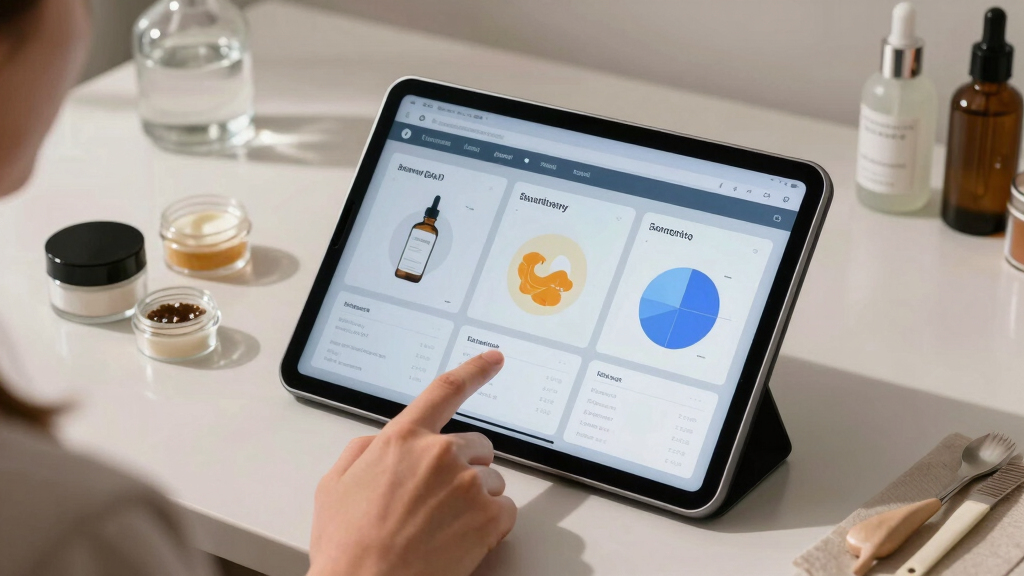
Glasspane has been presented as Day 11 of Thorsten Meyer AI’s 19-part Built in Public series. The open-source demo uses illustrative data to show how one infrastructure dataset can be shown through three role-aware views for executives, business managers and engineers.
Thorsten Meyer AI has published Glasspane, an open-source demo/MVP that uses mock infrastructure data to show how one dataset can be presented through separate executive, business manager and engineer views, a design aimed at making operational trust easier to verify for clients, auditors and internal leaders.
The project, released as Day 11 of the 19-part Built in Public series, is described as the first node in the portfolio’s Open / Reg family. Glasspane is licensed under AGPL-3.0 and is presented as self-hostable, including down to a local model, according to the source material.
The confirmed product state is limited: Glasspane is a demo/MVP, and the figures shown are illustrative mock data rather than live production telemetry. The example views show an executive lens with SLA, spend and commitments; a business manager lens with client health and team load; and an engineer lens with latency, incident and queue-depth data.
The author’s stated thesis is that many monitoring tools answer whether a system is up, while Glasspane is aimed at a different question: how an operator can prove system health to someone outside the technical team without relying on a private assurance or a static report.
Glasspane — one dataset, three views
Most tools answer “is it up?” Glasspane answers a harder one: how do you prove it’s fine to someone who isn’t you? Transparency itself, made the product.
Independent commentary, produced with AI assistance under human editorial oversight. The views are the author’s own and may change. Glasspane is open source under AGPL-3.0, provided “as is” without warranty; see the repository LICENSE. It is a demo / MVP — the views and figures shown run on illustrative, mock data and do not represent a live production deployment. AI interpretation of telemetry may contain errors and should be independently verified. Product and company names are trademarks of their respective owners; mention does not imply endorsement.
Trust Becomes A Product Surface
Glasspane matters because it treats verification as part of the product experience, not only an internal reporting task. For managed-service providers, enterprise operators and regulated teams, the ability to give clients, boards or auditors a read-only view of relevant system health could reduce repeated status explanations and make claims about reliability easier to check.
The approach also reflects a broader pressure on AI-assisted operations. If AI systems interpret telemetry, users may need more than a generated summary; they may need access to the underlying data and a clear account of how it is being framed for each role. Glasspane’s source material argues that trust in the data comes before trust in any AI reading of it.
As an affiliate, we earn on qualifying purchases.
Built In Public Day 11
Glasspane was introduced inside Thorsten Meyer AI’s operator portfolio as part of a 19-day Built in Public sequence. The source describes the portfolio as 18 products sharing a local-first and provider-agnostic foundation, with Glasspane opening the Open / Reg layer.
The demo’s central design choice is “one dataset, three views.” Rather than giving every stakeholder the same monitoring dashboard, it filters the same underlying source into separate lenses. The executive view emphasizes commitments and cost, the business view emphasizes clients and team load, and the engineering view keeps technical indicators visible.
The source also says the product is meant to surface failures, not only healthy status. That detail is central to the credibility claim: a transparency tool that hides its own weak points would undercut the trust it is trying to create.
role-based data visualization tools
As an affiliate, we earn on qualifying purchases.
As an affiliate, we earn on qualifying purchases.
Live Deployment Details Missing
It is not yet clear whether Glasspane is being used with live customers, audited environments or production telemetry. The source material identifies the current version as a demo/MVP and says the displayed data is mock data.
Details that remain open include the implementation path for access controls, how role permissions would be enforced in a production setting, how AI interpretations would be verified, and what integrations would be needed for real infrastructure data sources. The source also cautions that AI interpretation of telemetry may contain errors and should be independently checked.
infrastructure data analysis software
As an affiliate, we earn on qualifying purchases.
As an affiliate, we earn on qualifying purchases.
From Demo To Proof
The next test for Glasspane is whether the concept can move from illustrative dashboards to a working deployment using real operational data, permissioned views and verifiable audit trails. A production version would need to show how the same dataset remains consistent across roles while limiting what each user can see.
Further development may also clarify how the Open / Reg layer fits with the rest of the Thorsten Meyer AI portfolio and whether Glasspane becomes a standalone tool, a reference demo or part of a broader operating system for transparent infrastructure reporting.
open-source system monitoring tools
As an affiliate, we earn on qualifying purchases.
As an affiliate, we earn on qualifying purchases.
Key Questions
What is Glasspane?
Glasspane is an open-source demo/MVP from Thorsten Meyer AI that presents the same infrastructure dataset through three role-aware views: executive, business manager and engineer.
Is Glasspane showing live production data?
No. The source material states that the views and figures shown use illustrative mock data and do not represent a live production deployment.
Why does the one-dataset approach matter?
It is meant to keep different stakeholders aligned around the same source of truth while showing each role only the information needed to judge system health, cost, client status or technical performance.
What license does Glasspane use?
The source material says Glasspane is open source under the AGPL-3.0 license and provided as is without warranty.
What remains unknown about Glasspane?
It remains unclear when or whether Glasspane will be connected to live systems, how production-grade permissions will be handled, and how AI-generated interpretations of telemetry will be checked in practice.
Source: Thorsten Meyer AI
Columbus Day / Indigenous Peoples' Day Picks
long weekend sales
As an affiliate, we earn on qualifying purchases.