You see 3D printers entering your fashion prototype workflow because they let you create quick, precise, lightweight prototypes that cut costs and waste. They enable you to experiment with complex designs, customize fits, and develop innovative shapes faster than traditional methods. Plus, using sustainable materials aligns with eco-conscious trends. As you explore these benefits, you’ll discover how 3D printing is revolutionizing your design process and opening new creative possibilities.
Key Takeaways
- They enable rapid, precise, and lightweight prototyping, reducing time and costs compared to traditional methods.
- They support sustainable materials, aligning with eco-conscious design practices in fashion.
- They facilitate complex, innovative designs and customization for unique, avant-garde fashion pieces.
- They accelerate development cycles, allowing immediate modifications and faster iteration.
- They enhance collaborative workflows and experimental creativity in fashion design processes.
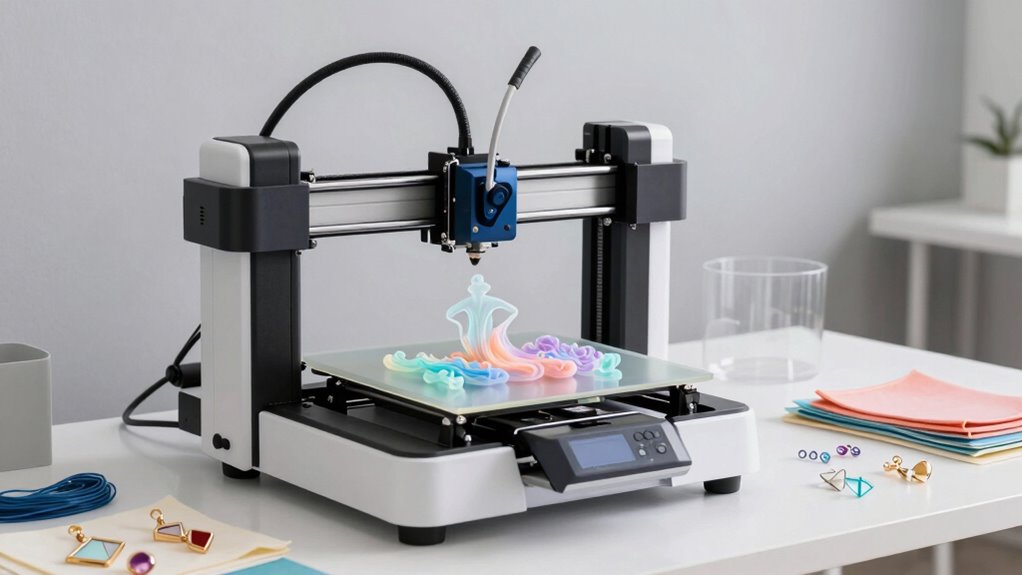
Have you ever wondered how 3D printing is transforming the fashion industry? It’s revolutionizing the way designers approach their work, especially when it comes to creating prototypes. With 3D printers, you can experiment with sustainable materials that reduce waste and environmental impact. Instead of relying on traditional manufacturing methods that often generate excess fabric and discarded samples, 3D printing allows you to produce precise, lightweight prototypes quickly. This capability is essential for rapid prototyping, enabling you to test designs, fit, and functionality without lengthy delays or hefty costs.
3D printing enables quick, precise, lightweight prototypes, reducing waste and costs in fashion design.
One of the key reasons 3D printers keep gaining ground in fashion is their ability to incorporate sustainable materials into the design process. You can choose bio-based plastics, recycled filaments, or other eco-friendly substrates that align with sustainable fashion practices. This shift toward greener materials isn’t just good for the planet; it also appeals to conscious consumers who value brands that prioritize environmental responsibility. When you use 3D printing for prototyping, you minimize waste, cut down on excess production, and streamline the development cycle, making your process more efficient and eco-conscious.
Rapid prototyping is another major driver behind the adoption of 3D printers in fashion workflows. Instead of waiting weeks for traditional samples to be made, you can produce functional prototypes within hours. This accelerated pace allows you to iterate faster, refine designs, and respond swiftly to feedback. If a particular shape or structure doesn’t work, you can modify the digital model and print an updated version almost immediately. This agility saves you time and money, giving you a competitive edge in a fast-evolving industry.
Moreover, 3D printing fosters innovation by enabling complex geometries and intricate details that would be difficult or impossible to achieve with conventional methods. You can experiment with avant-garde shapes or custom-fit accessories tailored perfectly to individual measurements. As a result, your prototypes become more than just representations—they serve as tangible expressions of your creative vision. digital fabrication also allows for the integration of collaborative workflows, further enhancing the industry’s flexibility and responsiveness. Incorporating metaphysical concepts like intention and energy into the design process can also inspire innovative ideas and align with conscious consumer values. Additionally, understanding the subconscious influences behind design choices can lead to more meaningful and resonant creations. Embracing sustainable design principles can further deepen the connection between your work and eco-conscious consumer preferences.
In essence, 3D printers keep entering fashion prototype workflows because they align perfectly with the industry’s need for sustainability, speed, and innovation. By integrating sustainable materials and embracing rapid prototyping, you can push the boundaries of design while reducing environmental impact. This technology empowers you to bring ideas to life more efficiently, ultimately transforming how fashion is conceived, developed, and presented.

ANYCUBIC Photon Mono 4, Resin 3D Printer with 7'' 10K Mono LCD Screen, Stable LighTurbo Light Source and 70mm/h Fast Printing, Print Volume 6.04'' x 3.42'' x 6.49''
【7'' 10K High Resolution】Photon Mono 4 boasts an impressive 105% increase in print precision compared to Mono 2….
As an affiliate, we earn on qualifying purchases.
As an affiliate, we earn on qualifying purchases.
Frequently Asked Questions
How Cost-Effective Are 3D Printers Compared to Traditional Fashion Prototyping Methods?
3D printers are often more cost-effective than traditional methods because they reduce tooling costs and accelerate the prototyping process. With a better cost comparison, you save money by avoiding expensive molds and lengthy fabrication times. You can quickly make adjustments and produce multiple iterations without significant additional expenses. Overall, 3D printing offers a more flexible, budget-friendly approach for developing and refining fashion prototypes efficiently.
What Materials Are Most Suitable for 3D Printing in Fashion Design?
Think of materials like flexible clay, shaping your designs with ease. Flexible materials like thermoplastics (e.g., TPU) and resin offer the perfect blend of material flexibility and design versatility for fashion. These materials allow you to craft intricate, customizable prototypes that move and feel like fabric. Their adaptability helps bring your creative visions to life, making your fashion pieces both innovative and comfortable.
How Does 3D Printing Impact the Sustainability of Fashion Production?
3D printing can boost sustainability in fashion by reducing waste through precise material use, and you can choose biodegradable materials to lessen environmental impact. Additionally, recycling initiatives encourage reusing and repurposing 3D printed pieces, cutting down on resource consumption. By integrating these practices, you help create a more eco-friendly fashion industry, minimizing waste and promoting responsible production.
Can 3D Printed Fashion Prototypes Be Customized for Individual Clients?
Absolutely, you can customize 3D-printed fashion prototypes for individual clients. With advanced personalization options, you’re empowered to create client-specific customization that perfectly fits their style and measurements. It’s like giving each person their own unique runway look, no matter how quirky. So, whether it’s a one-of-a-kind accessory or a tailored garment, 3D printing makes it easy to deliver bespoke fashion that truly reflects each client’s personality.
What Are the Limitations of 3D Printing in Creating Complex Fashion Designs?
You’ll find that 3D printing faces limitations with complex fashion designs due to design complexity and material flexibility. Intricate details can be challenging to reproduce accurately, especially with intricate textures or layered structures. Additionally, the range of materials available for 3D printing is still limited in flexibility, which can restrict the creation of flowing fabrics or lightweight, breathable garments. These factors can hinder the realization of highly elaborate, flexible fashion pieces.

Creality 2kg Black & White PLA 1.75mm Filament Bundle for 3D Printing with No-Tangling Strong Bonding and Overhang Performance, Accuracy +/- 0.02mm
Cost-Effective Filament Bundle: Get 2 "1kg" spools of PLA filament for the price of 1 with classic black…
As an affiliate, we earn on qualifying purchases.
As an affiliate, we earn on qualifying purchases.
Conclusion
So, as you embrace 3D printing in your fashion workflow, you’ll find it transforming your creative process into something almost otherworldly. This technology isn’t just a tool; it’s a revolutionary force that’s reshaping the industry faster than you can blink. With each prototype, you’ll push boundaries, turning ideas into reality with breathtaking precision. Staying ahead means fully integrating these innovations—because in the fast-paced world of fashion, 3D printing is your ultimate game-changer, propelling you into the future of design.

FLASHFORGE Adventurer 5M 3D Printer with Fully Auto Leveling, Max 600mm/s High Speed Printing, 280°C Direct Extruder with 3S Detachable Nozzle, CoreXY All Metal Structure, Print Size 220x220x220mm
One-Click Automatic Printing: Experience hassle-free 3D printing with the Adventurer 5M Series. Enjoy automatic bed leveling for flawless…
As an affiliate, we earn on qualifying purchases.
As an affiliate, we earn on qualifying purchases.

3D Printing for Artists, Designers and Makers
As an affiliate, we earn on qualifying purchases.
As an affiliate, we earn on qualifying purchases.