
Controlling humidity is key to protecting your fabrics and indoor air quality. Too much moisture can cause mold, musty odors, and fabric damage, while too little makes skin and respiratory issues worse. Proper humidity levels prevent mold growth and extend the life of your clothes, upholstery, and belongings. Using devices like dehumidifiers or hygrometers keeps moisture in check and creates a healthier, more comfortable environment. If you want to learn how to master humidity control, keep going.
Key Takeaways
- Proper humidity levels prevent mold growth that can damage fabrics and cause health issues.
- Controlling humidity extends the lifespan and preserves the quality of clothing, upholstery, and linens.
- Excess moisture accelerates fabric deterioration and causes musty odors and bacterial growth.
- Maintaining ideal humidity reduces respiratory and skin irritation risks linked to air quality.
- Using humidifiers or dehumidifiers ensures consistent moisture levels, protecting belongings and indoor health.
Have you ever noticed how your skin feels dry or clammy depending on the air around you? That’s a clear sign that humidity levels are either too low or too high, and it’s something you shouldn’t ignore. Controlling humidity isn’t just about comfort; it plays an essential role in maintaining good air quality and preventing mold growth in your home. When the air is too dry, your skin and respiratory system suffer, making you more prone to irritation and infections. Conversely, when it’s too damp, it creates an environment where mold and dust mites thrive, which can trigger allergies and respiratory issues.
Dry or clammy skin signals imbalanced humidity affecting your health and comfort.
You might not realize it, but high humidity makes it easier for mold to develop on walls, ceilings, and even inside your fabric items. Mold prevention is indispensable because once it takes hold, it becomes a persistent problem that’s tough to eradicate. Mold spores are tiny, airborne particles that can trigger asthma, allergies, or other respiratory problems, especially if you already have sensitivities. By maintaining an ideal humidity level—generally between 40% and 60%—you can greatly reduce the risk of mold growth and improve the overall air quality in your home. When air quality improves, you breathe easier, and your living environment becomes healthier.
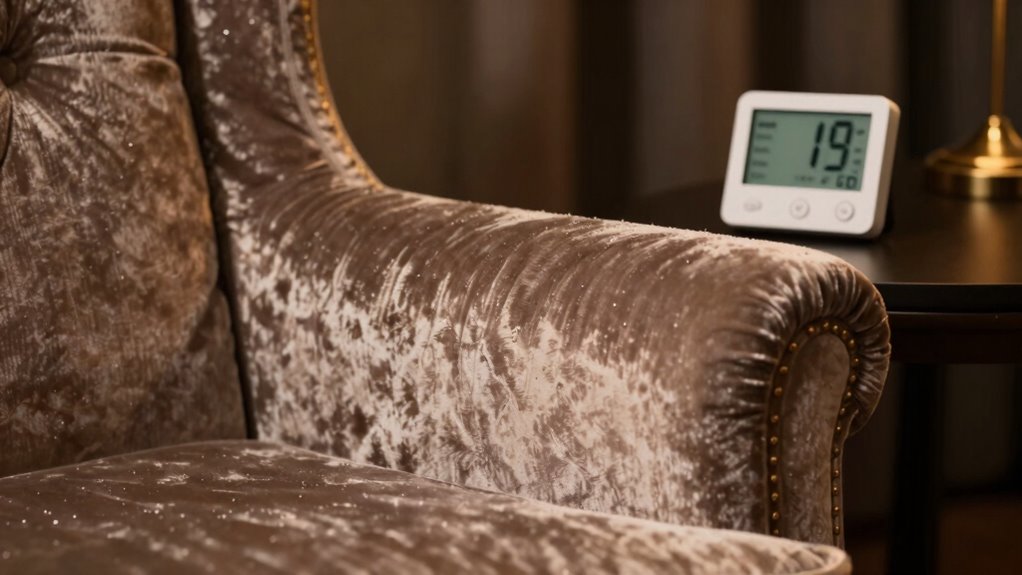
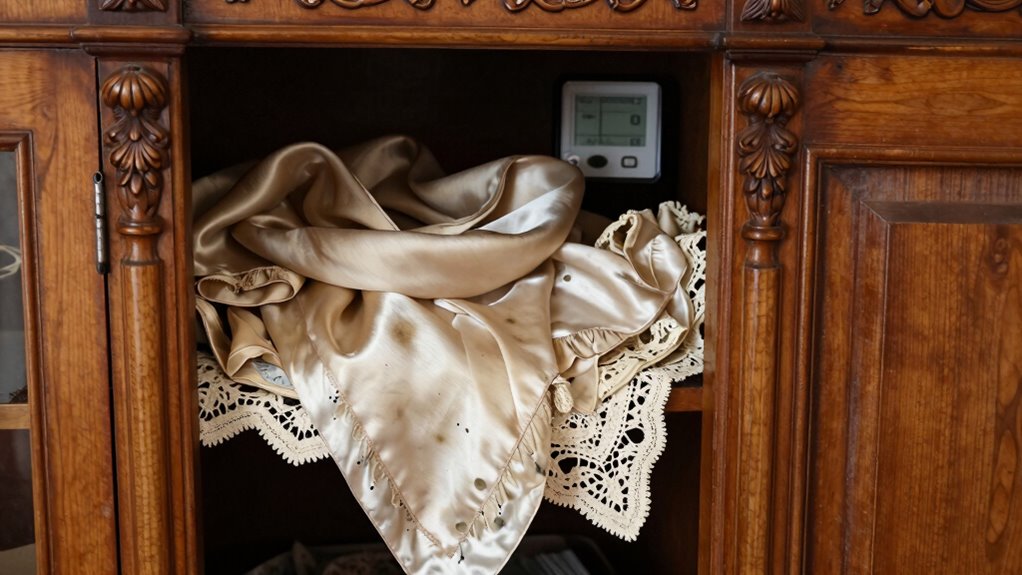
Controlling humidity also helps protect your fabrics, from clothing and upholstery to curtains and bedding. Excess moisture can cause fabrics to deteriorate faster, develop musty odors, or become a breeding ground for bacteria and mold. Keeping humidity in check extends the lifespan of your fabrics and keeps them smelling fresh. It’s a simple step that has a ripple effect on your health and the longevity of your belongings. Additionally, fabric deterioration can be accelerated by improper humidity levels, making it crucial to monitor and adjust your home environment accordingly. Proper humidity management not only preserves your belongings but also contributes significantly to overall indoor air quality.
Furthermore, understanding the importance of air quality and maintaining proper humidity levels can help prevent long-term health issues, especially for vulnerable populations like children and the elderly. Incorporating humidity control devices into your home setup can make managing moisture levels more efficient and effective. Using humidifiers and dehumidifiers** can help automate this process, ensuring that you maintain optimal levels without constant manual adjustments. To effectively manage humidity, you can use dehumidifiers in damp areas like basements or bathrooms, and humidifiers where air feels too dry. Ventilation is equally important; opening windows or using exhaust fans reduces excess moisture and improves air quality. Monitoring devices, like hygrometers, help you stay aware of your home’s humidity levels, so you can adjust your strategies accordingly. This proactive approach not only keeps mold at bay but also ensures that your indoor air** remains clean and safe to breathe.
In short, humidity control isn’t just a minor detail—it’s an indispensable part of maintaining a healthy, comfortable, and mold-free home. Paying attention to air quality and taking steps to prevent mold should be a priority for every fabric owner. It’s an easy, effective way to safeguard your health and preserve your belongings for years to come.
As an affiliate, we earn on qualifying purchases.
Frequently Asked Questions
How Does Humidity Specifically Affect Different Types of Fabrics?
Humidity directly impacts different fabrics by affecting their elasticity and color. High humidity can weaken fabric elasticity, making clothes lose their shape faster, while low humidity can cause fibers to become brittle. It also accelerates color fading, especially in delicate or brightly colored fabrics. By controlling humidity, you help preserve your fabrics’ elasticity and vibrant colors, ensuring they stay looking fresh and fitting well longer.
What Are the Best Tools for Measuring Indoor Humidity Levels?
You should use portable hygrometers and smart humidifiers to measure indoor humidity levels accurately. Portable hygrometers are easy to move around and give quick readings, helping you monitor humidity in different rooms. Smart humidifiers not only add moisture but often come with built-in sensors that automatically adjust humidity for ideal fabric preservation. Together, these tools keep your environment balanced, preventing damage caused by too much or too little moisture.
Can Excess Humidity Cause Irreversible Damage to Delicate Fabrics?
Excess humidity can cause irreversible damage to delicate fabrics by promoting moisture migration and fostering fabric mold. When humidity levels are too high, moisture seeps into fibers, weakening their structure and causing colors to fade. Over time, mold can develop, leading to staining and fabric deterioration. You’ll want to control humidity carefully to prevent these issues, preserving your fabrics’ beauty and integrity for years to come.
How Often Should Humidity Levels Be Adjusted for Optimal Fabric Preservation?
You should adjust humidity levels regularly, ideally maintaining them between 45-55%, to prevent mold and preserve fabric quality. Check your environment weekly, especially in changing seasons, to guarantee ideal air quality. Proper humidity control reduces mold prevention risks and keeps fabrics in good condition, preventing irreversible damage. Consistent adjustments help create a stable environment, safeguarding your textiles from moisture-related deterioration and maintaining a healthy, balanced air quality.
Are There Seasonal Considerations for Humidity Control in Fabric Storage?
During seasonal fluctuations, you need to adapt your storage environment. In winter, dry air can cause fabrics to crack, so increase humidity carefully. In summer, rising moisture levels threaten mold and mildew, so lower humidity. These adjustments protect your fabrics from seasonal changes, ensuring they stay preserved and undamaged. By closely monitoring your storage environment, you can prevent damage caused by the natural ebb and flow of humidity throughout the year.
automatic dehumidifier for basement
As an affiliate, we earn on qualifying purchases.
As an affiliate, we earn on qualifying purchases.
Conclusion
In the end, managing humidity isn’t just a fancy tip; it’s essential for your fabrics’ longevity. Think of it like a trusty steed—keeping moisture levels in check guarantees your clothes and textiles stay vibrant and intact, much like a well-tended knight’s armor. Don’t let neglect turn your wardrobe into a soggy, moth-ridden mess. Stay vigilant, control the humidity, and your fabrics will thank you, standing the test of time like a true hero of yore.
As an affiliate, we earn on qualifying purchases.
As an affiliate, we earn on qualifying purchases.