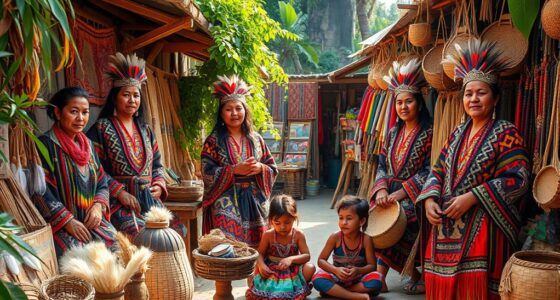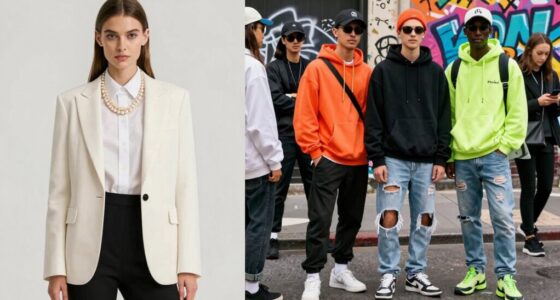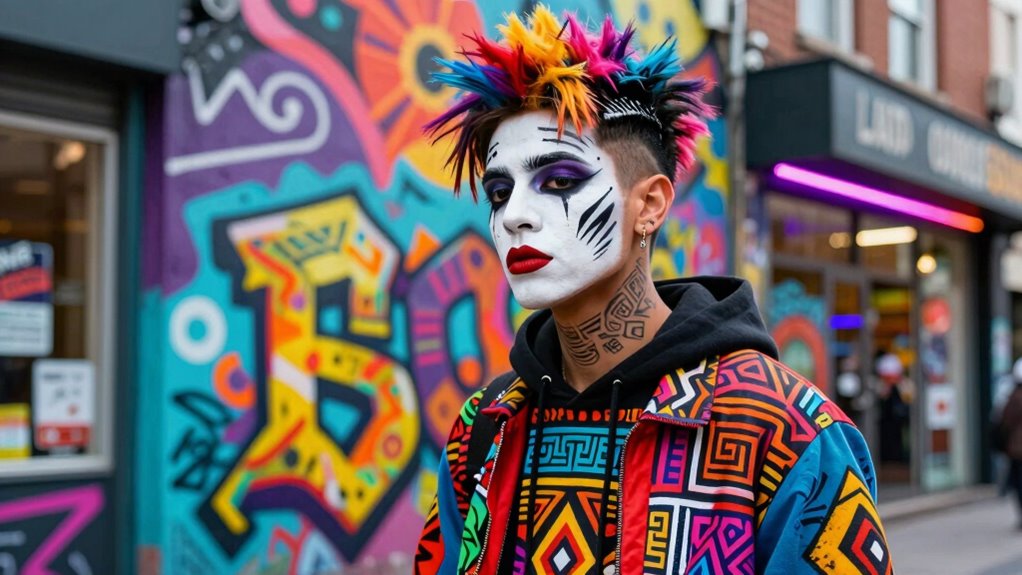

Graphic fashion has a rich history as a form of self-expression, rooted in cultural, political, and social movements. It evolved from traditional textiles and rebellious styles like punk to modern streetwear that emphasizes minimalism and storytelling. Technological advancements have made creating and sharing bold designs easier for everyone, turning fashion into a tool for activism and cultural pride. If you want to explore how these visual stories shape identities, there’s plenty more to discover.
Key Takeaways
- Graphic fashion originated from societal movements like activism, rebellion, and cultural pride, using visuals to communicate identity and messages.
- Techniques such as embroidery, screen printing, and collage enhanced visual storytelling, adding layers of meaning to designs.
- Technological advancements democratized design, allowing more individuals to create and share expressive graphic fashion.
- Historically, graphic fashion served as a tool for social commentary, political slogans, and community identity.
- Modern evolution continues to reflect social changes, empowering personal expression and participation in cultural dialogues through visual apparel.
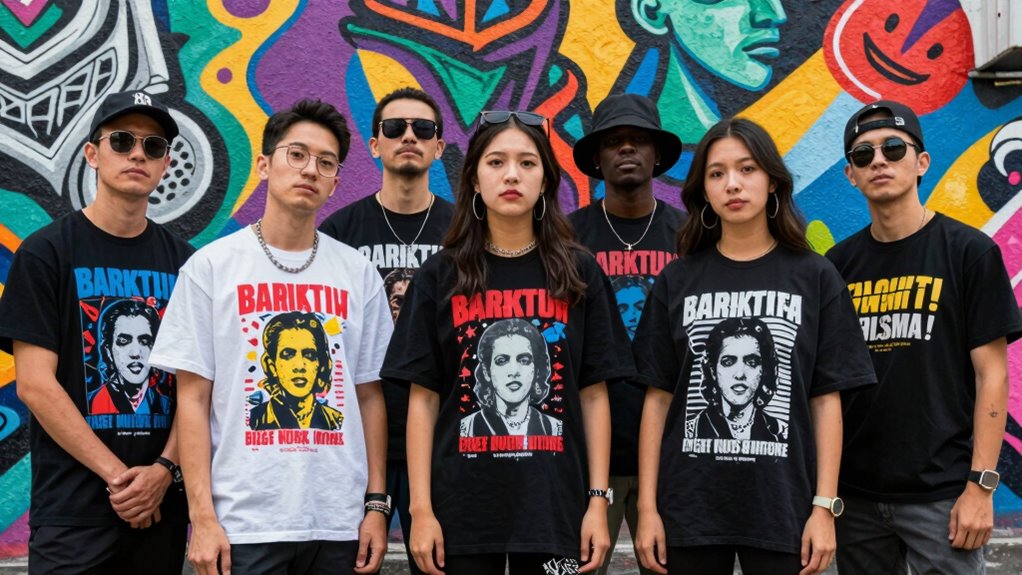
In a world where visuals speak louder than words, graphic fashion has become a powerful way to showcase your personality and beliefs. From bold prints to intricate designs, it’s a form of self-expression that captures attention and conveys messages without uttering a single syllable. The history behind this trend is rooted in a rich tapestry of cultural influences that have shaped its evolution over time. Different societies, movements, and eras have brought unique styles and motifs into the fold, allowing you to draw from a global palette of visual language. For example, the vibrant colors and symbolic patterns of African textiles, the rebellious graphics of punk rock, or the sleek, minimal lines of modern streetwear all contribute to this diverse visual vocabulary. These cultural influences don’t just decorate; they tell stories, challenge norms, and celebrate identities, giving you a way to express your heritage or beliefs through what you wear. Additionally, crochet styles for locs have emerged as a creative way to incorporate personal and cultural expression into hair fashion, blending traditional techniques with contemporary trends. The integration of artistic techniques like embroidery or digital illustration further enhances the storytelling potential within graphic fashion. Artists and designers experiment with various methods—screen printing, digital illustration, collage, embroidery, and even graffiti—to create striking visuals that resonate with individual identities. These techniques allow for layers of meaning, texture, and depth, making each piece a canvas for personal expression. Advances in technology have also played a significant role in democratizing access to graphic design tools, enabling more people to create and share their visual messages easily. This democratization of artistic techniques means you’re not limited to high fashion runways or exclusive boutiques; instead, you can craft or choose bold, meaningful designs that reflect your inner world and social commentary. As a result, visual storytelling has become an essential aspect of modern fashion, allowing wearers to communicate complex ideas instantly and powerfully. Throughout history, graphic fashion has been a tool for activism, rebellion, and cultural pride. Whether it’s a T-shirt emblazoned with a political slogan or a jacket covered in artwork representing your community, the visual language you wear speaks volumes. Its roots are deeply embedded in societal shifts and artistic innovation, making it more than just clothing—it’s a statement. As you embrace graphic fashion, you participate in a tradition of using visuals to challenge perceptions and communicate complex ideas quickly. It’s a dynamic interplay of cultural influences and artistic techniques, constantly evolving to mirror changing social landscapes. So, when you choose a graphic piece, remember that you’re not just making a style choice; you’re joining a long history of visual storytelling that empowers you to be seen and heard without saying a word.
As an affiliate, we earn on qualifying purchases.
Frequently Asked Questions
How Did Graphic Fashion Originate in Different Cultures Worldwide?
Graphic fashion originated in various cultures worldwide as a way to express cultural symbolism and identity. You’ll see roots in African textiles, where patterns convey social status, and in Asian art, influencing bold prints and motifs. Artistic influences from indigenous communities and modern movements also shape graphic styles. These cultural elements merge with contemporary trends, creating a rich tapestry of global self-expression through graphic fashion that tells stories and preserves traditions.
What Are the Key Symbols Used in Graphic Fashion Throughout History?
You’ll notice that iconic motifs and cultural symbols play a crucial role in graphic fashion throughout history. These symbols often represent identity, beliefs, or social messages. For example, religious icons, political emblems, and traditional patterns have all been used to make bold statements. By incorporating these symbols, designers communicate deeper meanings, allowing wearers to express their culture, values, or affiliations visually and powerfully through their clothing.
How Has Technology Influenced the Evolution of Graphic Fashion?
Technology has transformed graphic fashion like a brush reshaping a canvas. You now see digital printing making intricate designs quick and affordable, allowing you to customize your style effortlessly. Wearable tech pushes boundaries by merging fashion with functionality, turning garments into interactive statements. These innovations give you more creative freedom, letting you express yourself vividly while embracing modern advancements that shape the future of style.
Who Are the Most Influential Designers in Graphic Fashion History?
You should know that influential designers like Keith Haring and Jean-Michel Basquiat shaped graphic fashion through their use of urban aesthetics and cultural symbolism. Their bold, expressive artwork captured street culture and conveyed powerful messages, inspiring countless others. These designers blurred lines between art and fashion, transforming graphic elements into statements of identity and rebellion, and leaving a lasting impact on how self-expression is portrayed through graphic fashion today.
How Does Graphic Fashion Impact Contemporary Social Movements?
Imagine you’re wearing a graphic tee that sparks a movement, just like during the 60s protests. Graphic fashion today fuels social movements by showcasing fashion activism, making statements about cultural identity and societal issues. It empowers you to express solidarity, challenge norms, and amplify marginalized voices. Your clothing becomes a visual dialogue, influencing public perception and inspiring change, proving that what you wear can be a powerful tool for activism.
As an affiliate, we earn on qualifying purchases.
Conclusion
So, next time you choose a graphic tee or a bold print, remember you’re wielding more power than a thousand words—your wardrobe becomes a canvas of rebellion, artistry, and identity. It’s not just fashion; it’s a revolution etched in fabric, screaming your story to the world. Your style isn’t just seen—it’s felt, it’s heard, and it’s impossible to ignore. Wear your history with pride, because you’re not just dressing up—you’re defining the future of self-expression.
As an affiliate, we earn on qualifying purchases.
digital illustration software for fashion design
As an affiliate, we earn on qualifying purchases.
As an affiliate, we earn on qualifying purchases.