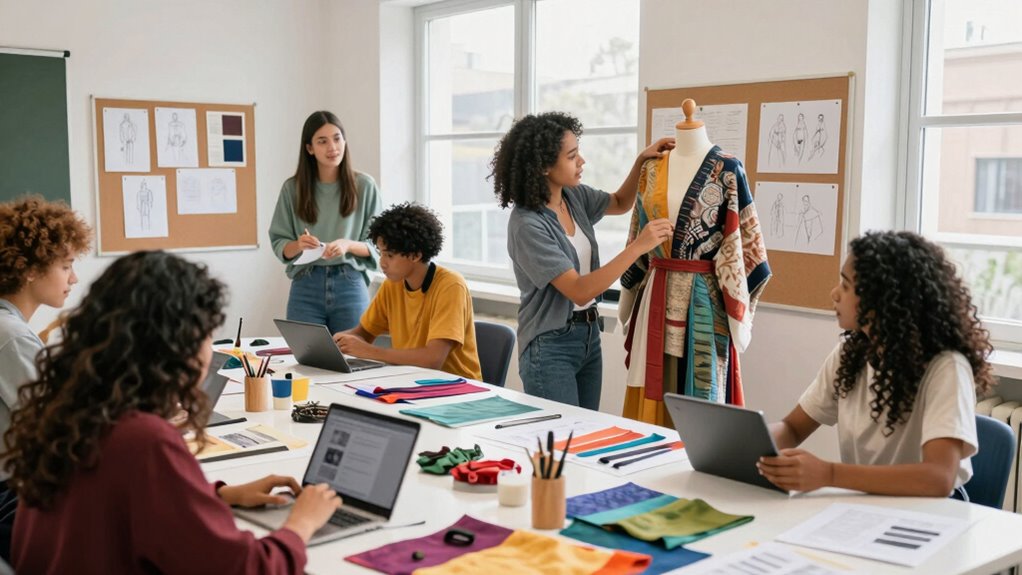

Fashion education goes beyond sewing to include sustainability, digital innovation, and business skills. You learn to choose eco-friendly materials, reduce waste, and incorporate new technology like 3D modeling. It also teaches you how to build a strong online presence and market your designs effectively. This holistic approach prepares you for a fast-changing industry where creativity, responsibility, and digital savvy are essential. Keep exploring to discover how these elements shape your future in fashion.

Get beauty and skincare favorites delivered free with Prime
- Fast, free delivery on millions of items
- Prime Video, Amazon Music and more included
- Member-only deals all year
Key Takeaways
- Modern fashion education emphasizes sustainability and responsible design alongside traditional sewing skills.
- Digital tools like CAD and 3D modeling are integral, enhancing creativity and reducing waste.
- Business skills such as e-commerce and social media marketing prepare students for industry success.
- A holistic approach combines craftsmanship, ethics, and technology to foster innovation.
- Critical industry understanding nurtures adaptable, forward-thinking fashion professionals.
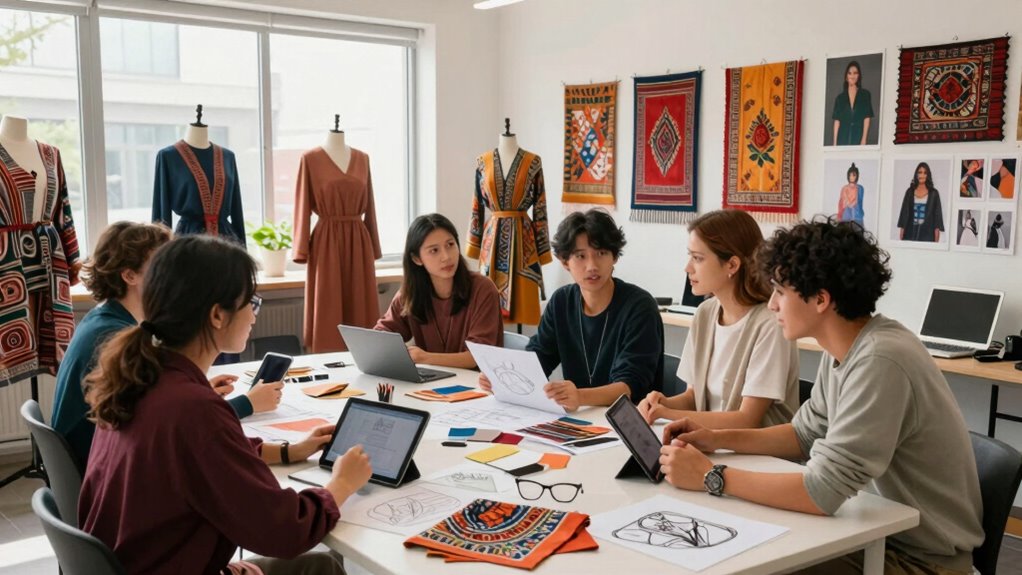
While sewing remains a fundamental skill in fashion, education in the industry has expanded far beyond just stitches and patterns. Today, understanding fashion means embracing a broader spectrum of knowledge that includes sustainable practices and digital innovation. As someone entering this field, you need to recognize that creating stylish, functional clothing isn’t just about craftsmanship—it’s about making responsible choices and leveraging technology to push boundaries.
Modern fashion education combines craftsmanship with sustainability and digital innovation for a responsible, forward-thinking approach.
Sustainable practices are at the core of modern fashion education. You’re encouraged to consider the environmental impact of your designs, from sourcing eco-friendly materials to minimizing waste during production. This shift reflects a growing awareness that the industry must reduce its carbon footprint and promote ethical labor. Learning about sustainable practices isn’t limited to theory; it involves hands-on experiences like experimenting with recycled fabrics, exploring zero-waste pattern cutting, and understanding lifecycle assessments. These lessons help you develop designs that are not only innovative but also environmentally conscious, preparing you to meet market demands for greener fashion.
Digital innovation also plays a pivotal role in shaping contemporary fashion education. You’re taught to harness tools like computer-aided design (CAD), 3D modeling, and virtual prototyping, which streamline the creative process and reduce material waste. These technologies allow you to visualize your ideas more accurately and make adjustments before any physical fabric is cut. Digital platforms also facilitate global collaboration, enabling you to connect with peers, mentors, and industry experts worldwide. This interconnectedness accelerates learning and innovation, giving you access to cutting-edge trends and techniques that keep your work relevant.
Furthermore, integrating digital innovation into your education involves understanding new business models like e-commerce, social media marketing, and digital branding. These skills are essential for navigating a rapidly evolving industry where online presence can make or break a brand. You learn to craft compelling digital campaigns, analyze consumer data, and understand the importance of storytelling in the digital age—all crucial for building a successful career.
In essence, modern fashion education isn’t just about sewing; it’s about cultivating a holistic understanding of how the industry operates today. You’re encouraged to think critically about sustainability, embrace digital tools, and develop a versatile skill set that prepares you for a future where innovation and responsibility go hand in hand. This comprehensive approach ensures you’re not only a skilled craftsperson but also a forward-thinking contributor to the ever-changing world of fashion.
As an affiliate, we earn on qualifying purchases.
Frequently Asked Questions
How Does Fashion History Influence Modern Design?
You see how fashion history influences modern design through historical inspiration and cultural influence. Designers draw from past eras, reinterpreting styles to create contemporary pieces that honor tradition. Cultural influences shape trends, blending different heritage elements into innovative designs. By understanding historical context, you can craft unique, meaningful fashion that resonates with diverse audiences and keeps evolving, proving that fashion history is an essential part of modern creativity.
What Role Does Sustainability Play in Fashion Education?
Sustainability in fashion education acts like a compass guiding you through ethical sourcing and the use of sustainable fabrics. You’re learning to craft future designs with respect for the planet, choosing materials that minimize harm and support fair labor. It’s about weaving responsibility into every stitch, ensuring your creations promote environmental health and social justice. As you master this, you help shape a fashion industry that’s both innovative and sustainable.
How Important Are Business Skills in a Fashion Career?
Business skills are vital in your fashion career. You need entrepreneurship skills to start and grow your venture confidently. Understanding marketing strategies helps you effectively promote your designs and reach your target audience. Without these skills, even the most talented designer might struggle to succeed. By mastering business essentials, you gain independence, increase your chances of success, and turn your creative passion into a sustainable, profitable career.
Can Fashion Education Lead to Careers Outside Design?
Yes, fashion education can lead to careers outside design. You might find yourself working in the fashion industry as a buyer, stylist, or marketer, or pursuing creative entrepreneurship by launching your own brand or consultancy. The skills you gain, like trend analysis, branding, and business strategy, open doors beyond traditional design roles. This versatility allows you to thrive in various fashion-related careers, leveraging your education for diverse opportunities.
What Digital Tools Are Essential for Today’s Fashion Students?
You might think sewing skills are enough, but today’s fashion students need digital tools like virtual fitting and 3D modeling. These technologies revolutionize how you visualize designs and interact with clients, making traditional sketches seem outdated. Embracing these tools not only enhances creativity but also prepares you for a tech-driven industry. So, if you’re serious about fashion, mastering virtual fitting and 3D modeling is absolutely essential—because the future waits for no one.
As an affiliate, we earn on qualifying purchases.
Conclusion
So, next time you think fashion school is just about sewing, remember it’s really about shaping your mind. While you might imagine yourself stitching seams, you’re actually weaving stories, ethics, and innovation into every thread. Ironically, the true fabric of fashion education isn’t found in the classroom—it’s in your ability to see beyond the needle. Because in the end, the real stitches are those that connect ideas, not just fabric.
As an affiliate, we earn on qualifying purchases.
As an affiliate, we earn on qualifying purchases.
Halloween Picks
halloween
As an affiliate, we earn on qualifying purchases.