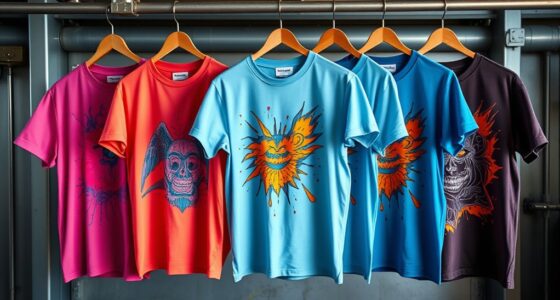
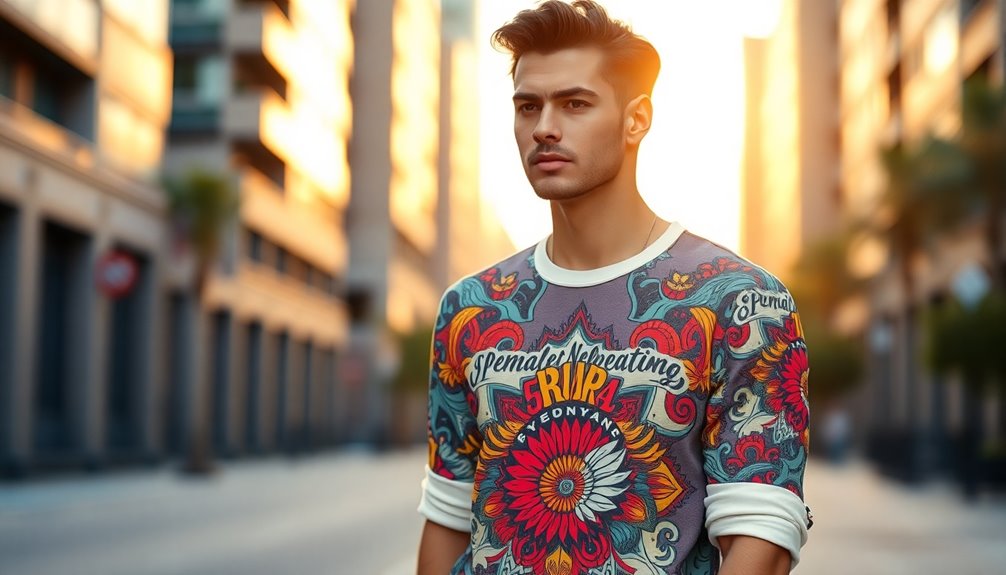
Warped text and abstract fonts push your design boundaries by transforming traditional letterforms into dynamic and eye-catching visuals. These distorted typography styles add depth, movement, and personality to your projects, making them stand out in crowded visual spaces. They’re perfect for creating a futuristic, organic, or chaotic look, enhancing emotional and conceptual expression. Exploring these techniques opens up new creative possibilities—if you keep exploring, you’ll discover how to harness their full potential.
Key Takeaways
- Warped and abstract fonts push creative boundaries, challenging traditional readability for bold, eye-catching designs.
- Distorted typography adds depth, movement, and personality, enhancing visual impact across digital and print media.
- Customizing fonts through warping allows for unique, memorable styles that evoke specific moods or conceptual themes.
- These design techniques are versatile, suitable for branding, posters, websites, and dynamic digital effects.
- Embracing warped text encourages innovative exploration, resulting in compelling visuals that stand out in crowded visual landscapes.

Warped text and abstract fonts have become popular design choices that challenge traditional readability while offering unique visual appeal. These styles are part of current typography trends that push the boundaries of conventional font design, encouraging creativity and innovation. When exploring warped text, you realize how distortion can add depth, movement, and personality to your projects. Whether you’re designing a poster, a website, or branding materials, manipulating fonts through warping makes your message stand out and captures attention in a crowded visual landscape. Additionally, understanding how contrast ratio affects visual clarity can help you optimize the legibility of distorted typography in various contexts.
Font customization plays a *vital* role in this trend. Instead of sticking to standard typefaces, you can alter fonts to fit your specific aesthetic, creating a more personalized and memorable experience for your audience. Warping allows you to stretch, bend, or skew text, giving it an organic or dynamic feel that traditional fonts simply can’t achieve. This level of customization means you’re not limited by predefined styles; you’re crafting something uniquely suited to your message and visual identity. It’s about breaking free from the rigidity of classic typography and experimenting with form to evoke emotion or convey abstract concepts more effectively.
Customizing fonts through warping creates unique, expressive visuals that break traditional design boundaries.
As you incorporate warped text into your designs, you start to see how it influences user perception. Abstract fonts, in particular, challenge viewers to interpret symbols and shapes, often encouraging a more engaged, contemplative response. These fonts don’t always prioritize readability but instead focus on visual impact, making them ideal for branding elements like logos or headlines where immediate recognition isn’t the primary goal. Instead, they create a mood or atmosphere that complements the overall design narrative.
In terms of application, warping and abstract fonts are versatile. They work well in digital media, where motion and transformation can enhance the effect, but they also translate effectively into print. When you customize fonts through warping, you can evoke futuristic, organic, or chaotic themes depending on your intent. This flexibility allows you to tailor your typography to match the tone of your project, whether it’s edgy, elegant, or experimental.
Ultimately, embracing warped text and abstract fonts means you’re engaging with design’s evolving landscape. These techniques challenge you to think creatively about how typography communicates. Instead of adhering to traditional rules, you’re exploring new territories where font customization and distortion combine to produce compelling, memorable visuals that leave a lasting impression.
![WavePad Audio Editing Software - Professional Audio and Music Editor for Anyone [Download]](https://m.media-amazon.com/images/I/B1fcLEGCs6S._SL500_.png)
WavePad Audio Editing Software – Professional Audio and Music Editor for Anyone [Download]
Full-featured professional audio and music editor that lets you record and edit music, voice and other audio recordings
As an affiliate, we earn on qualifying purchases.
As an affiliate, we earn on qualifying purchases.
Frequently Asked Questions
How Do Warped Text and Abstract Fonts Impact Readability?
Warped text and abstract fonts can reduce visual clarity, making it harder for you to quickly understand the message. They influence viewer perception by adding a creative or edgy feel, but too much distortion may cause confusion or frustration. You might find your eyes strain or struggle to interpret the text, especially if the design sacrifices readability for style. Use these fonts thoughtfully to balance artistic impact with effective communication.
What Software Tools Are Best for Creating Distorted Typography?
Did you know 75% of designers say distorted typography boosts visual engagement? For creating distorted typography, you should explore top typography software like Adobe Illustrator and CorelDRAW, which offer powerful font distortion tools. These tools let you manipulate text easily, adding creative flair to your designs. With their versatility and precision, you can craft eye-catching warped text that enhances your project’s impact and grabs viewers’ attention effectively.
Can Warped Text Be Used Effectively in Branding and Logos?
Yes, warped text can be very effective in branding and logos. It adds a unique visual identity, making your brand stand out and enhancing recognition. When used thoughtfully, distorted typography conveys creativity and innovation, helping your audience connect emotionally with your brand. Just guarantee the warped text remains clear and legible, so it strengthens your brand recognition without causing confusion or misinterpretation.
How Do Viewers Typically Interpret Abstract Font Designs?
You usually interpret abstract font designs through your visual perception and cognitive interpretation, which can evoke emotions or ideas. For example, a distorted logo might make you feel a sense of chaos or creativity. Your brain processes these visual cues quickly, often associating abstract shapes with brand personality or mood. So, viewers tend to see beyond the literal, engaging their imagination and emotional response to understand the message.
Are There Cultural Considerations When Designing Distorted Typography?
Yes, you should consider cultural symbolism and linguistic nuances when designing distorted typography. Different cultures may interpret shapes, symbols, or distortions uniquely, affecting how your design is perceived. You need to be mindful of cultural sensitivities to avoid misinterpretation or offense. By understanding these nuances, you can create more impactful, respectful designs that resonate universally, ensuring your abstract font communicates your intended message effectively across diverse audiences.

Synerlogic for Adobe Illustrator Quick Reference Keyboard Shortcut Sticker for Any MacBook or Windows PC
💻 ✔️ EVERY ESSENTIAL SHORTCUT – With the SYNERLOGIC Reference Keyboard Shortcut Sticker, you have the most important…
As an affiliate, we earn on qualifying purchases.
As an affiliate, we earn on qualifying purchases.
Conclusion
By exploring warped text and abstract fonts, you open a creative world that challenges traditional typography. Did you know that 65% of designers report using distorted fonts to evoke emotion and grab attention? Incorporating these unique styles can make your designs stand out and resonate more deeply with your audience. So, embrace the unconventional—distorted typography isn’t just eye-catching, it’s a powerful tool to communicate your message with impact and originality.
distorted typography fonts
As an affiliate, we earn on qualifying purchases.
As an affiliate, we earn on qualifying purchases.
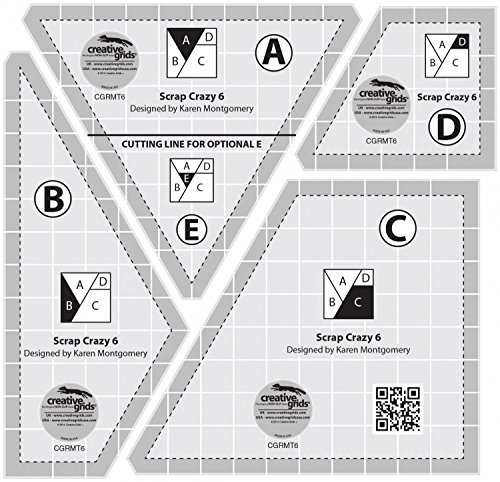
Creative Grids Scrap Crazy 6 Template Set Quilt Ruler – CGRMT6 – Made in USA, 6in x 9in, Non-Slip Grip Acrylic Quilting, Sewing, Crafting, Patchwork Ruler & Template
Made in the USA with high quality acrylic and precision measurements ensuring accuracy for your quilting, sewing, patchwork,…
As an affiliate, we earn on qualifying purchases.
As an affiliate, we earn on qualifying purchases.