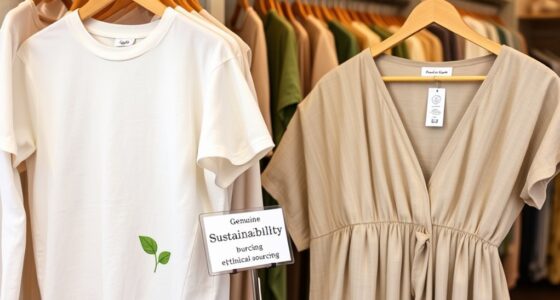

Future fabrics like lab-grown textiles and regenerative fibers are revolutionizing fashion by offering sustainable, ethical options that cut environmental impact. These innovations use cellular agriculture and biomanufacturing to create fibers with less water, land, and energy consumption. They’re reliable, scalable, and open new design possibilities, all while reshaping industry standards toward ecological health. To discover how these cutting-edge materials are transforming your wardrobe, explore further into this exciting shift in textile technology.
Key Takeaways
- Lab-grown and regenerative fibers reduce environmental impact by lowering water, land, and energy use in textile production.
- Advances in cellular agriculture enable sustainable, ethical fiber creation without harming animals or ecosystems.
- These fibers offer consistent quality and scalable supply, supporting brands’ sustainability and demand needs.
- Future textiles can incorporate smart features, natural dyes, and innovative designs for versatile, eco-friendly garments.
- Widespread adoption of lab-grown and regenerative fabrics promotes a cultural shift towards sustainable fashion industry practices.

Lab-grown textiles and regenerative fibers are transforming the fashion industry by offering sustainable alternatives to traditional materials. As a consumer or designer, you’re increasingly aware of the environmental footprint associated with conventional fabrics like cotton, wool, and polyester. These new materials prioritize sustainable sourcing, meaning they’re produced with minimal environmental impact, often using considerably less water, land, and energy. Thanks to technological innovations, scientists and companies are developing fibers that can be cultivated or engineered in labs, reducing reliance on farming or resource-intensive processes. This shift is not just about reducing pollution; it’s about rethinking how textiles are made from the ground up, ensuring they support ecological balance and resource efficiency.
Lab-grown and regenerative textiles offer sustainable, eco-friendly alternatives that reduce environmental impact and promote resource efficiency.
One of the key technological innovations driving this change is cellular agriculture, which allows fibers to be grown from cells in controlled environments. Instead of harvesting crops or raising livestock, you can now have textiles produced from cultivated cells that generate fibers identical to those found in natural materials. This approach eliminates many of the ethical concerns linked to traditional farming, such as animal welfare and land degradation. Additionally, advances in biomanufacturing enable the creation of regenerative fibers that actively promote environmental health. For example, some fibers are engineered to sequester carbon or improve soil quality if they’re returned to the earth, creating a circular lifecycle that benefits ecosystems.
You also benefit from these innovations because they promise more consistent quality and supply. Traditional textiles often depend on weather conditions, seasonal cycles, or geopolitical stability, which can lead to shortages or price fluctuations. Lab-grown and regenerative fibers provide a more reliable supply chain, helping brands meet demand while maintaining sustainability goals. furthermore, these innovations make it easier to scale production without the environmental costs typically associated with large-scale farming. As a result, you get access to fashionable, eco-friendly garments that don’t compromise your values or the planet.
The integration of sustainable sourcing with cutting-edge technology means future fabrics will be more accessible and versatile. Researchers are working on developing fibers that can be dyed with natural, non-toxic dyes or integrated with smart technology, such as sensors or UV protection. These advances open up new possibilities for design and functionality, giving you clothing that’s not only environmentally responsible but also innovative and high-performing. As the industry continues to evolve, it’s clear that lab-grown textiles and regenerative fibers aren’t just a trend—they’re reshaping the very foundation of how your clothes are made, making sustainability an integral part of every stitch.
lab-grown sustainable textiles
As an affiliate, we earn on qualifying purchases.
As an affiliate, we earn on qualifying purchases.
Frequently Asked Questions
What Are the Environmental Impacts of Lab-Grown Textiles?
Lab-grown textiles can substantially reduce environmental impacts by cutting down on synthetic pollution and resource consumption. You’ll find that they produce fewer greenhouse gases and require less water and land compared to traditional fabrics. Since they don’t rely on pesticides or extensive farming, they help preserve ecosystems. While some concerns about energy use remain, overall, lab-grown textiles offer a more sustainable option, helping you lower your carbon footprint and decrease environmental harm.
How Do Regenerative Fibers Compare in Durability to Traditional Fabrics?
Regenerative fibers often match or even surpass traditional fabrics in durability. You’ll find they offer excellent fiber longevity and tear resistance, making them suitable for everyday wear and long-term use. Unlike some conventional materials, regenerative fibers are designed to withstand wear and tear, so your clothing stays intact longer. This durability not only extends the lifespan of your garments but also supports eco-friendly choices by reducing the need for frequent replacements.
Are Lab-Grown Textiles Suitable for All Clothing Types?
Lab-grown textiles are quite versatile for various clothing types, offering impressive fashion versatility and style adaptability. You can incorporate them into everything from everyday wear to high-fashion pieces, thanks to their customizable properties. While they may not yet match all traditional fabrics in durability, ongoing innovations are improving their strength. So, you’ll find lab-grown textiles suitable for most clothing, allowing you to explore new fashion possibilities with confidence.
What Are the Cost Differences Between Traditional and Regenerative Fabrics?
You’ll find that the cost comparison between traditional and regenerative fabrics varies. Regenerative fibers often have higher initial costs due to newer technology and sustainable practices, but they can become more economically feasible over time as production scales up. Traditional fabrics are usually cheaper upfront, but their environmental costs and resource use might lead to higher expenses long-term. Overall, regenerative fabrics are gaining ground as a sustainable, economically viable option.
How Scalable Are These New Textile Production Methods?
You’ll find that scaling lab-grown textiles and regenerative fibers faces challenges like increasing production efficiency and overcoming scalability issues. While these methods have great potential, expanding them to meet mass-market demand takes time and innovation. You might encounter hurdles in sourcing raw materials and optimizing processes, but ongoing research aims to improve scalability, making these sustainable options more accessible and cost-effective for widespread use.

Regenerative Fashion
As an affiliate, we earn on qualifying purchases.
As an affiliate, we earn on qualifying purchases.
Conclusion
As you embrace the future of textiles, remember that lab-grown fabrics and regenerative fibers are revolutionizing your wardrobe with sustainability and innovation. Think of it as a modern Renaissance, blending cutting-edge science with age-old craftsmanship. By choosing these advanced materials, you help craft a greener world—no DeLorean needed. So, step into this new era and wear your eco-consciousness proudly, knowing you’re part of a movement that’s shaping tomorrow’s fashion, today.

SMART FAB ROLL 48X40 RED
Sold As 1 Roll.
As an affiliate, we earn on qualifying purchases.
As an affiliate, we earn on qualifying purchases.

Jacquard iDye for Natural Fabrics .49 Oz – Olive
iDye comes in a dissolvable packet, so there are never any messy powders to handle: simply dissolve the…
As an affiliate, we earn on qualifying purchases.
As an affiliate, we earn on qualifying purchases.