
Accessorizing with 3D-printed jewelry lets you explore endless customization options, from unique textures and colors to intricate designs that traditional methods can’t achieve. It offers lightweight, durable pieces made from advanced materials like titanium or sustainable plastics, supporting eco-conscious choices. This technology also allows you to express your personality through personalized, one-of-a-kind accessories. As you uncover more benefits, you’ll see how 3D printing is truly transforming how you create and style jewelry.
Key Takeaways
- 3D printing enables highly personalized jewelry designs tailored to individual style and preferences.
- It allows for intricate, complex motifs and delicate structures impossible with traditional manufacturing.
- Rapid prototyping accelerates the creation of unique accessories, fostering creative experimentation.
- Sustainable production methods reduce waste and support eco-friendly, eco-conscious accessorizing choices.
- Customization in texture, color, and finish offers versatile options for expressing personal identity through jewelry.

In recent years, 3D-printed jewelry has revolutionized how you accessorize, offering unique designs that were once impossible to create by traditional methods. This technological leap has opened up a world of possibilities, empowering you to explore bold, intricate, and highly personalized pieces. At the core of this innovation lies material innovation, which continuously expands the range of options available for jewelry creation. From lightweight plastics to metals like titanium and gold, the development of new materials means your jewelry can be both durable and striking. These advanced materials also allow for customization in texture, color, and finish, giving you the freedom to match your accessories perfectly to your style or mood.
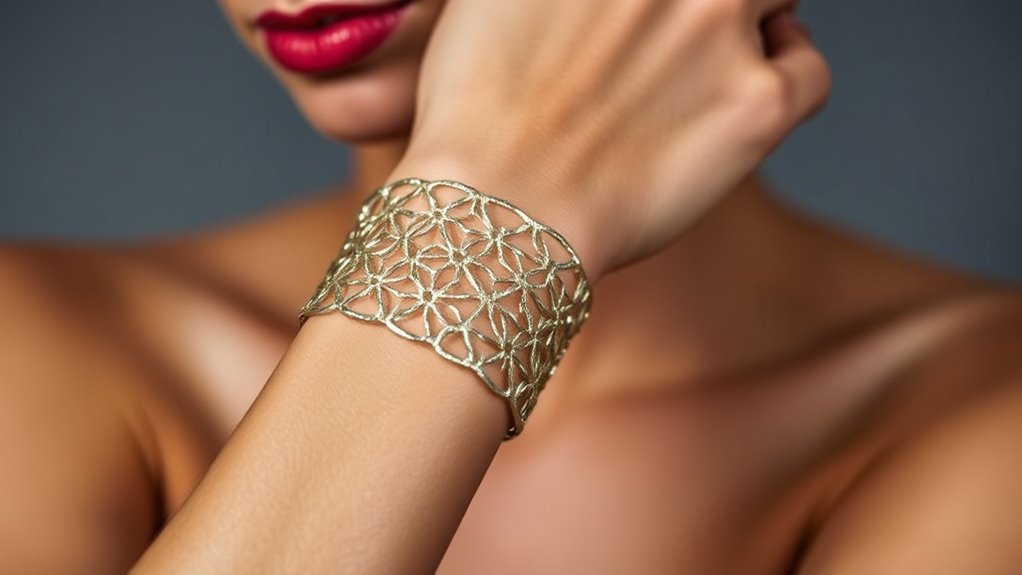
Design versatility is another game-changing aspect of 3D-printed jewelry. Traditional jewelry-making often limits design complexity because of manual craftsmanship constraints or manufacturing processes. With 3D printing, you can push those boundaries. You have access to complex geometries, intricate motifs, and delicate structures that would be almost impossible to produce by hand or with conventional techniques. Whether you want a sleek, minimalist pendant or a highly detailed, sculptural statement piece, 3D printing makes it feasible. This technology also enables rapid prototyping, so you can see your ideas come to life quickly, refine them, and produce variations effortlessly. It’s like having your own jewelry design studio at your fingertips, where experimentation is limited only by your imagination.
The combination of material innovation and design versatility means you’re no longer restricted by the traditional constraints of jewelry production. You can incorporate unconventional elements, layered textures, and complex patterns into your pieces. additionally, the ability to customize every aspect—from size and shape to color and finish—ensures your jewelry is truly one-of-a-kind. This level of personalization resonates with your desire for unique accessories that stand out and reflect your personality.
Furthermore, the sustainability aspect of 3D printing appeals to eco-conscious consumers like you. Additive manufacturing reduces waste considerably compared to traditional methods, making it a more environmentally friendly option. You can also choose sustainable materials, further minimizing your ecological footprint.
In essence, material innovation and design versatility are transforming jewelry from static adornments into dynamic expressions of your individuality. With 3D printing, you’re empowered to craft and wear pieces that are as unique as you are, pushing the boundaries of traditional jewelry design and embracing a future where personalization and creativity reign supreme.
Top picks for "accessoriz print jewelry"
Open Amazon search results for this keyword.
As an affiliate, we earn on qualifying purchases.
Frequently Asked Questions
How Durable Is 3d-Printed Jewelry Compared to Traditional Pieces?
You might wonder how durable 3D-printed jewelry is compared to traditional pieces. Generally, 3D-printed jewelry can resist metal fatigue better if made with high-quality materials, but surface wear may occur more quickly, especially if the surface isn’t polished well. While it’s quite sturdy, it’s essential to examine these factors, as traditional jewelry often offers longer-lasting durability against daily wear and tear.
Are 3d-Printed Jewelry Pieces Hypoallergenic?
If you’re wondering whether 3D-printed jewelry is hypoallergenic, it depends on the materials used. Some 3D-printed pieces are made with skin-sensitive, allergy-risk materials like certain plastics or resins, which might cause irritation for those with sensitive skin. However, many manufacturers now use hypoallergenic metals like titanium or stainless steel in their designs, reducing allergy risks. Always check the material details to guarantee comfort and safety.
What Materials Are Commonly Used in 3d-Printed Jewelry?
You’ll find a wide variety of materials used in 3D-printed jewelry, offering you excellent design flexibility. Common options include plastics like nylon and resin, which are lightweight and versatile, as well as metals such as titanium, stainless steel, and gold alloys for durability and luxury appeal. Some designers also experiment with composite materials, allowing you to customize your jewelry pieces to fit your style, comfort, and occasion.
Can 3d-Printed Jewelry Be Customized for Individual Designs?
You can definitely customize 3d-printed jewelry for individual designs. This technology allows you to create personalized pieces that reflect your style and preferences. With 3d printing, you get unique craftsmanship, ensuring each item is one-of-a-kind. You can choose specific shapes, patterns, and details, making your jewelry truly personalized. This flexibility makes 3d-printed jewelry an exciting option for those seeking custom accessories that stand out.
How Eco-Friendly Is the Production Process of 3d-Printed Accessories?
Think of 3D printing as a modern Prometheus—innovative but with room for improvement. Its eco-friendliness depends on recycling initiatives and energy consumption. While some printers use sustainable materials and recycle waste, others demand high energy, increasing environmental impact. You can reduce your footprint by choosing brands that prioritize eco-conscious practices. Overall, 3D-printed accessories can be greener, especially when conscious choices are made, making your style both unique and sustainable.
Conclusion
So, why not embrace the future of fashion? With 3D-printed jewelry, you become the artist of your own style, crafting pieces as unique as you are. Imagine a world where every accessory tells your story, where innovation dances with self-expression. Don’t just follow trends—set them. Step into this new frontier, and let your creativity shine. After all, in this age of endless possibilities, your style is the canvas—what will you create?