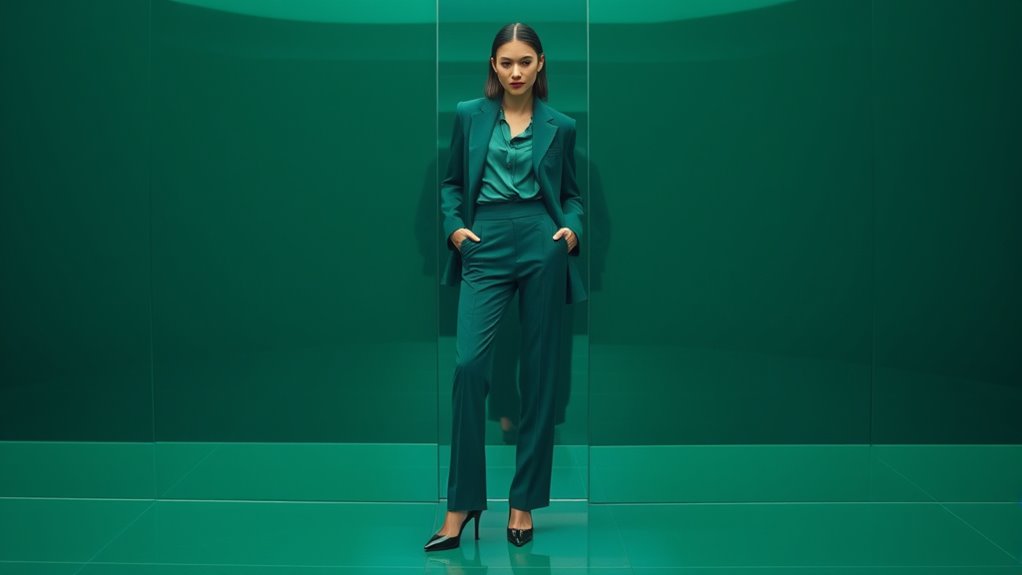

To build a monochrome outfit, pick a color you love and select pieces in various shades, textures, and fabrics within that hue. Mix silky, matte, or chunky textures to add depth and visual interest. Layer your pieces thoughtfully, maybe with a coat or scarf in the same color family, to create a polished look. Small accessories in matching or neutral tones can elevate your style further. Keep exploring the details to craft a truly refined monochrome ensemble.

Get beauty and skincare favorites delivered free with Prime
- Fast, free delivery on millions of items
- Prime Video, Amazon Music and more included
- Member-only deals all year
Key Takeaways
- Choose a dominant color palette and incorporate varying shades and tones for depth and interest.
- Mix different fabrics and textures within the same color to add visual dimension and prevent flatness.
- Select accessories like belts, jewelry, and bags in matching or neutral tones to enhance cohesion.
- Layer pieces thoughtfully, such as outerwear or scarves, to create dimension while maintaining color harmony.
- Ensure proper fit and proportion for a polished, sophisticated monochrome look suitable for any occasion.

Have you ever wondered how to create a sleek, polished look effortlessly? Monochrome dressing might be your new best friend. It’s all about choosing a single color palette and building your outfit from there, resulting in a refined, cohesive appearance. The key to mastering this style is in the details—specifically, how you approach accessory pairing and fabric textures. When you carefully select accessories that complement your base color, you elevate your look without overwhelming it. For example, if you’re wearing an all-beige ensemble, add a tan leather belt, gold jewelry, or a matching handbag to enhance the outfit’s sophistication. These small touches tie the look together and show intentional styling.
Master monochrome style with thoughtful accessories and textured fabrics for a polished, sophisticated look.
Next, consider fabric textures to add depth and visual interest. Mixing different textures, such as a silky blouse with matte trousers or a chunky knit sweater with smooth leather shoes, prevents your outfit from appearing flat. Texture contrast creates a subtle play of light and shadow, making your monochrome look lively and engaging. It’s a simple technique that adds complexity without breaking the harmony of the single-color scheme. When selecting fabrics, think about balance—pair soft, flowy materials with more structured pieces to maintain elegance and shape. Additionally, practicing attention to detail is essential for elevating monochrome outfits from simple to sophisticated.
The beauty of monochrome dressing also lies in its versatility. You can dress it up for formal occasions by layering tailored pieces in the same hue or keep it casual with relaxed, comfortable fabrics. Whichever style you choose, pay attention to fit and proportion. A well-fitted monochrome outfit looks intentional and polished. If you’re comfortable with bold simplicity, try monochrome head-to-toe; if not, break it up with subtle accessories or varying textures within the same color family.
Layering is another way to add dimension to your monochrome look. Think of a monochrome trench coat over a matching top and trousers or a tonal scarf that adds a splash of contrast while staying within the same color palette. Layering creates visual interest and allows you to adapt your outfit to different settings or weather conditions without losing its sleek aesthetic. Remember, monochrome dressing isn’t about strict uniformity but about creating harmony through thoughtful choices.
In the end, monochrome dressing is a powerful way to express confidence and style with simplicity. By paying attention to accessory pairing and fabric textures, you transform a basic color scheme into a sophisticated, eye-catching look. It’s a technique that’s easy to learn but difficult to tire of, making it perfect for everyday wear or special occasions. With practice, you’ll find yourself effortlessly assembling outfits that are both elegant and true to your personal style.
Frequently Asked Questions
How Do I Add Variety to Monochrome Outfits?
To add variety to monochrome outfits, you can incorporate color blocking by mixing different shades of the same color for visual interest. Try pattern mixing with subtle prints or textures to break up the solid look without losing the monochrome vibe. Accessorize with contrasting jewelry or shoes to create focal points. These tricks keep your outfit fresh and dynamic while staying within your chosen color scheme.
What Accessories Work Best With Monochrome Looks?
You should choose accessories that complement your monochrome look by focusing on jewelry pairing and footwear coordination. Opt for statement jewelry, like bold necklaces or earrings, to add visual interest, or keep it minimal for a sleek vibe. Match your shoes to the outfit’s tone or add a subtle contrast. This way, your accessories enhance the monochrome style without overwhelming it, creating a cohesive and polished appearance.
How Can I Avoid Looking Dull in Monochrome Dressing?
You can easily avoid looking dull in monochrome dressing by embracing color blocking and layering techniques. Add subtle variations in shades or textures within the same color to create visual interest. Incorporate statement accessories or a pop of contrasting color to break the monotony. Play with different fabrics and patterns, and don’t shy away from mixing matte and shiny finishes—these tricks keep your outfit lively and engaging.
Which Fabrics Are Most Flattering for Monochrome Outfits?
You should choose fabrics with interesting textures and finishes to elevate your monochrome outfits. Satin, silk, and velvet add a luxurious shine, while matte fabrics like cotton or linen create a subtle contrast. Mixing different fabric textures prevents your look from appearing flat and dull. Opt for high-quality materials that drape well and reflect light beautifully, helping you achieve a flattering and sophisticated monochrome ensemble.
How Do I Choose the Right Shade for My Skin Tone?
Picture a sunset, warm or cool, guiding your choice. To pick the right shade, consider your skin’s undertone—warm tones glow with golden hues, while cool undertones shine with blues and greens. Match the color temperature of your outfit to your undertone for harmony. Test shades against your jawline to see which enhances your natural glow, making you feel confident and radiant in your monochrome look.
Conclusion
So, you’ve mastered the art of monochrome dressing—proof that sticking to one color can make you stand out effortlessly. Ironically, while it may seem simple, pulling off a monochrome look takes confidence and precision. But don’t worry, if you ever feel overwhelmed, just remember: blending in with a single hue is the new way to stand out. Who knew that simplicity could be so daring?
Fall Picks
fall essentials
As an affiliate, we earn on qualifying purchases.