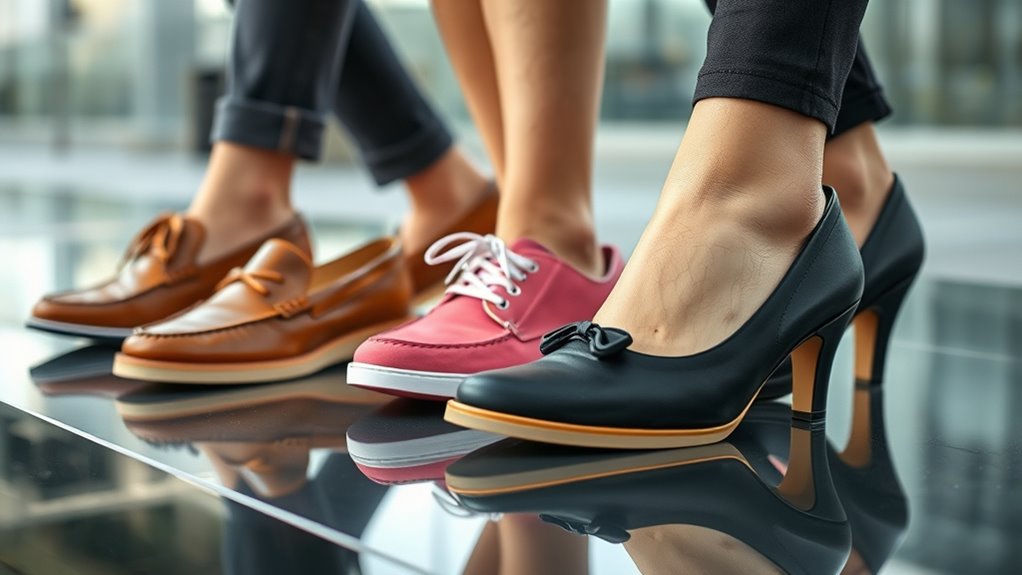

To choose shoes that balance comfort and style, look for those made from sustainable, ergonomic materials like organic cotton, recycled rubber, or plant-based leather. These materials mold to your feet and support natural movement, reducing fatigue and foot issues. Opt for designs with cushioned insoles, wide toe boxes, and proper arch support, ensuring lasting comfort. If you want to discover more ways to select stylish yet comfortable footwear, there’s plenty more to explore.
Key Takeaways
- Prioritize shoes made from sustainable, natural materials like organic cotton or plant-based leathers for comfort and eco-friendliness.
- Choose ergonomic designs with proper arch support, wide toe boxes, and cushioned insoles to enhance comfort and foot health.
- Opt for versatile styles that can be dressed up or down, ensuring both fashion and practicality.
- Ensure a proper fit by trying on shoes later in the day when feet are swollen and considering adjustable features.
- Support brands committed to sustainable and ergonomic practices for durable, stylish, and comfortable footwear.

Ever wondered how to make your favorite shoes last longer or fit better? One of the best ways is to pay attention to the materials and design behind them. Shoes made from sustainable materials aren’t just good for the planet—they often offer better durability and comfort. Look for options crafted from organic cotton, recycled rubber, or plant-based leathers. These eco-friendly choices tend to be softer initially, molding to your feet over time, which enhances fit and comfort. Plus, choosing sustainable materials supports brands committed to reducing environmental impact, so you get style and conscience in one package.
Another essential factor is ergonomic design. Shoes built with ergonomic principles prioritize your foot’s natural shape and movement. They’re designed to provide ideal arch support, heel stability, and flexibility, reducing strain and preventing common foot issues like bunions, plantar fasciitis, or blisters. When shopping, pay attention to how the shoe’s structure supports your foot’s anatomy. An ergonomic design ensures that your weight is evenly distributed, which helps avoid discomfort during long walks or all-day wear. When your shoes fit well and are supportive, you’re less likely to experience fatigue or pain, making them a smarter investment for both comfort and health.
Choosing shoes with ergonomic design also means considering the shape and construction. Look for shoes that follow the natural contours of your feet rather than forcing them into a narrow or overly stiff shape. Features like cushioned insoles, wide toe boxes, and padded collars enhance comfort and accommodate your foot’s movements. Some brands even incorporate orthotic-friendly designs, allowing you to add custom inserts if needed. When combined with sustainable materials, these shoes not only feel good but also align with eco-conscious values, making them a responsible choice. Additionally, selecting shoes with ergonomic design can significantly improve overall foot health and reduce fatigue during extended wear.
Frequently Asked Questions
How Can I Tell if Shoes Will Be Comfortable After Buying?
To tell if shoes will be comfortable after buying, check the shoe fit by ensuring there’s enough room in the toe box and that they feel snug but not tight. Pay attention to sole flexibility; shoes should bend easily at the ball of your foot, indicating good movement. Always try shoes on later in the day when your feet are swollen, and walk around to feel how they support your steps.
What Materials Are Best for Both Style and Comfort?
You should choose shoes made from soft, breathable materials like leather or suede for comfort and style, aligning with current fashion trends. Look for materials with good durability, such as high-quality leather or sturdy synthetic options, ensuring your shoes last longer. Avoid flimsy fabrics that may wear out quickly. Prioritize materials that balance aesthetic appeal and long-term wear, so your shoes stay fashionable and comfortable through everyday use.
How Often Should I Replace My Everyday Footwear?
You should replace your everyday footwear every 6 to 12 months, depending on shoe rotation and sole durability. Regularly rotating shoes helps prevent excessive wear, extending their lifespan. Keep an eye on the soles; if they’re noticeably worn or uncomfortable, it’s time for a new pair. Proper shoe care and timely replacements guarantee you stay comfortable and avoid foot problems, making your footwear both stylish and supportive.
Are Custom Insoles Worth the Investment?
Think of custom insoles as a tailored suit for your feet—definitely worth the investment. They offer orthotic benefits and personalized support, transforming your shoes into a comfort haven. If you experience foot pain, discomfort, or want to prevent future problems, these insoles can be your secret weapon. While they might seem pricey, their ability to improve your stride and reduce aches makes them a smart, lasting choice for happier feet.
How Can I Prevent Blisters With New Shoes?
To prevent blisters with new shoes, start by choosing the right sock thickness—you want a snug fit without excess pressure. Always allow a proper break-in period; wear your shoes gradually around the house before hitting the streets. Use blister prevention products like moleskin or gel pads in problem areas, and keep your feet dry and well-moisturized. These steps help your feet adjust comfortably and avoid painful blisters.
Conclusion
Now that you’ve uncovered these footwear secrets, your shoe game is about to soar like a well-choreographed dance. Remember, comfort and style aren’t enemies but dance partners, guiding you through every step with grace. With these hacks, you’ll stride confidently, turning heads and feeling fabulous. So lace up with purpose, and let your shoes tell a story of effortless elegance and unmatched comfort—because your feet deserve nothing less than perfection on this stylish journey.