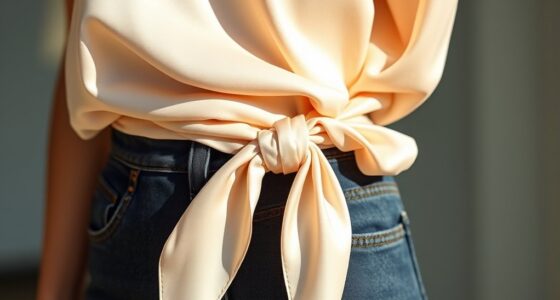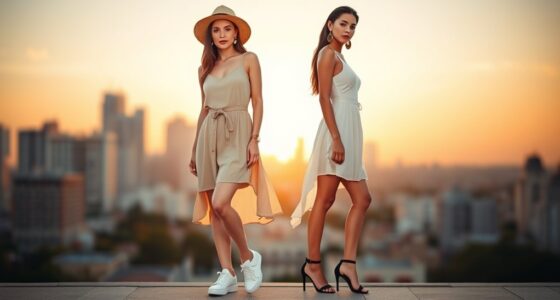
To wear belts effectively, choose the right material for your style—leather for formality, fabric for casual looks, or metal for statement pieces. Measure your waist or hips, adding about two inches for a comfortable fit, and select a size that feels right. Position waist cinchers at your natural waist, and place hip belts lower on your hips to create different silhouette effects. Getting these details right can instantly elevate your outfit — keep exploring to master the perfect belt style for every look.
Key Takeaways
- Choose the right belt material and size by measuring your waist or hips, adding about 2 inches for comfort.
- Position waist cinchers at the natural waist for a defined silhouette, and place hip belts lower on the hips for a relaxed look.
- Select belt widths to suit your outfit—narrow for an hourglass effect at the waist, wider for balancing oversized tops on the hips.
- Ensure proper belt placement to enhance body shape and outfit style, considering occasion and desired silhouette.
- Match belt style and placement with your clothing for a polished and comfortable appearance.
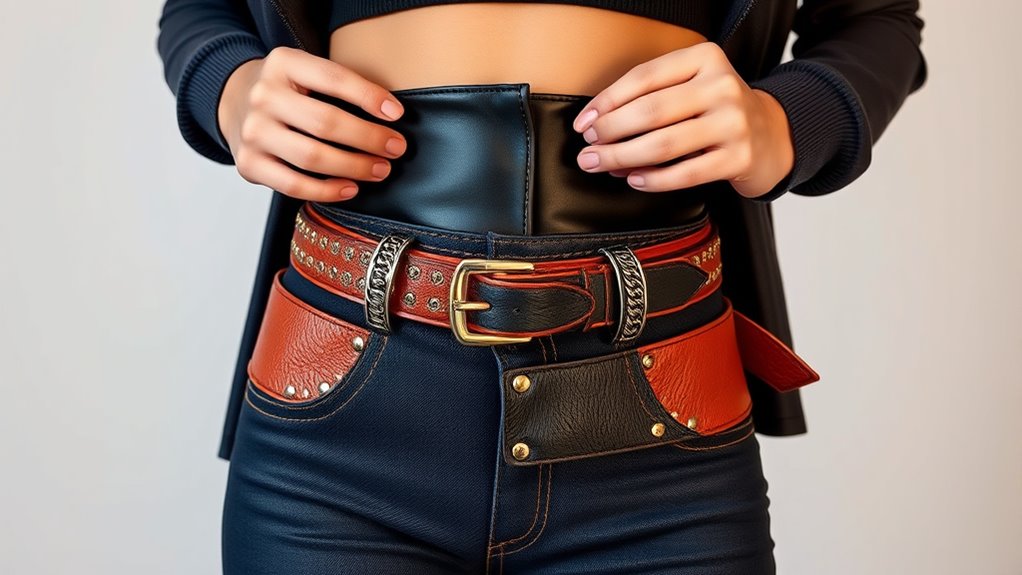
Belts are a versatile accessory that can instantly elevate your look, but knowing how to wear them correctly makes all the difference. When choosing a belt, consider the belt material, as it impacts both style and durability. Leather belts are classic and durable, perfect for formal settings, while fabric or canvas belts add a casual touch. Metal or chain belts can serve as statement pieces, and synthetic materials offer affordability and variety. The material choice influences how the belt interacts with your outfit and how comfortable you’ll feel wearing it throughout the day.
Choosing the right belt material enhances style, durability, and comfort for every occasion.
Equally important is belt sizing. An ill-fitting belt can ruin the overall appearance, so take the time to find the right size. To determine your belt size, measure around your waist or hips where you’d typically wear a belt. Add about 2 inches to this measurement for a comfortable fit, or choose a size that matches your existing belt. Remember, belts usually come in standard sizes, so check the sizing chart carefully. A belt that’s too tight can cause discomfort and create bulges, while a loose belt may look sloppy and fail to serve its purpose of keeping your outfit in place.
Once you know your size, focus on how you wear the belt. For waist cinchers, you want the belt to sit comfortably at your natural waist, accentuating your curves without digging into your skin. If you’re wearing a high-waisted skirt or pants, position the belt just above your hips, making sure it’s snug but not constricting. Hip belts, on the other hand, sit lower and are often wider or more decorative. They add a stylish flair to dresses or tunics and should be snug enough to stay in place without slipping.
The placement of your belt also affects your overall silhouette. For example, a narrow belt at your waist can create an hourglass effect, while a wider belt on your hips can add balance to an oversized top or dress. When choosing the style, keep in mind the occasion and your body shape. If you want to define your waist, opt for a belt that sits at your narrowest point. For a relaxed, bohemian vibe, a looser, wider belt around your hips can work beautifully. Additionally, understanding belt materials can help you select the best option for different outfits and comfort needs.
Ultimately, wearing a belt correctly involves more than just putting it on; it’s about selecting the right material, sizing it properly, and positioning it to complement your outfit and body shape. With these considerations in mind, you’ll be able to use belts to enhance your style effortlessly.

XZQTIVE 3 Pack Women Belts For Jeans Dresses Pants Ladies Leather Waist Belt with Gold Buckle
XZQTIVE’s casual leather belt is made of quality leather material which is soft, light weight and touch smooth,…
As an affiliate, we earn on qualifying purchases.
As an affiliate, we earn on qualifying purchases.
Frequently Asked Questions
What Is the History Behind Belt Fashion Trends?
You should know that belt symbolism has historically represented status, power, and fashion evolution. In ancient times, belts signified rank, while during the Renaissance, they became decorative. Over centuries, belts evolved from functional items to fashion statements, reflecting societal changes. Today, they symbolize personal style and identity, blending function with fashion. Your choice of belt can showcase your personality and connect you to a rich history of fashion evolution.
How Do I Choose the Right Belt Width for My Body Shape?
To choose the right belt width for your body shape, consider your proportions and style goals. If you have a slender waist, opt for a narrower belt to create a sleek look. If you’re curvier, wider belts can balance your silhouette and add definition. For hourglass figures, a medium width emphasizes curves without overwhelming. Always try on different widths to see what complements your body shape and enhances your outfit effortlessly.
Can Belts Be Worn With Formal and Casual Outfits Simultaneously?
Can belts be worn with formal and casual outfits simultaneously? Absolutely! Think of belt versatility as a bridge that connects different styles. By selecting the right belt, like a sleek leather piece for formalwear or a woven belt for casual looks, you can effortlessly blend outfit coordination. This way, your belt becomes a versatile accessory, seamlessly elevating both your dressy and laid-back ensembles.
Are There Specific Belt Styles Suitable for Different Seasons?
Yes, there are belt styles suitable for different seasons. In warmer months, opt for belts made of breathable fabrics like leather or woven materials, and choose lighter or brighter colors that coordinate with your seasonal wardrobe. During colder seasons, go for thicker, textured fabrics like suede or wool, and select darker or richer hues to match your winter outfits. Always consider seasonal fabrics and belt color coordination to enhance your look year-round.
How Do I Properly Care for and Maintain Leather Belts?
Did you know that leather belts can last up to 10 years with proper care? To keep yours in top shape, regularly apply leather conditioning to prevent drying and cracking. Store your belt in a cool, dry place, preferably hanging or flat, to maintain its shape. Avoid excessive moisture and direct sunlight, which can damage the leather. Proper maintenance guarantees your belt stays stylish and durable for years to come.

JASGOOD Men Canvas Belt Web Fabric Casual Work Belt with Black D Ring Set of 2(Black+Gray,Fit Waist Size 34-39 Inch)
Double Rings Buckle Belt: This canvas belt use black rings buckles sewn well on the belt strap,which is…
As an affiliate, we earn on qualifying purchases.
As an affiliate, we earn on qualifying purchases.
Conclusion
Don’t shy away from experimenting with different belts—you might find your new signature style. Even if you think belts are only for certain outfits, try pairing them with unexpected pieces like dresses or oversized shirts. Belts aren’t just functional; they’re a great way to elevate your look and showcase your personality. So go ahead, embrace the belt trend confidently—once you get the hang of it, you’ll wonder how you ever styled without one!
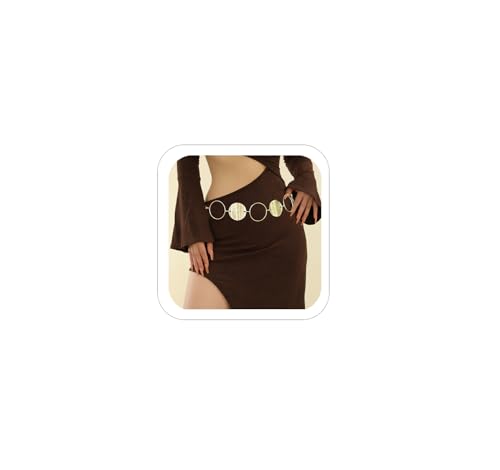
Gold Silver Circle Chain Belt chain belts for Women Curved Disc Waist Chain Chunky Metal Belt Body Chain Festival Waist Jewelry 45 inch (Gold-45inch)
PREMIUM DESIGN: Fashionable circle link chain belt in stunning gold-tone finish, perfect for making a bold fashion statement…
As an affiliate, we earn on qualifying purchases.
As an affiliate, we earn on qualifying purchases.
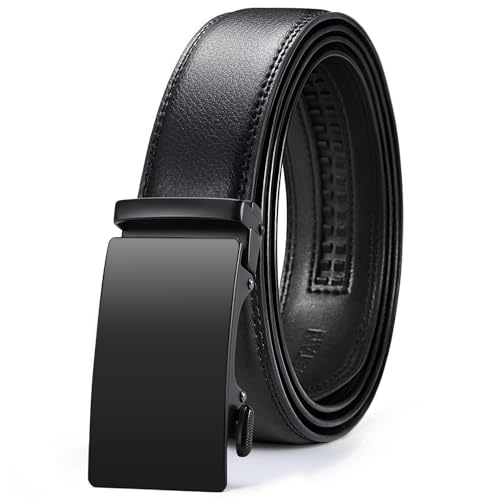
VATAN Men's Belt Leather Ratchet Belt for Men Dress Casual Every Day with Adjustable Buckle, Trim to Fit
EASY AND CONVENIENT TO USE: Slide leather belt into the buckle and pull the belt through, the buckle…
As an affiliate, we earn on qualifying purchases.
As an affiliate, we earn on qualifying purchases.