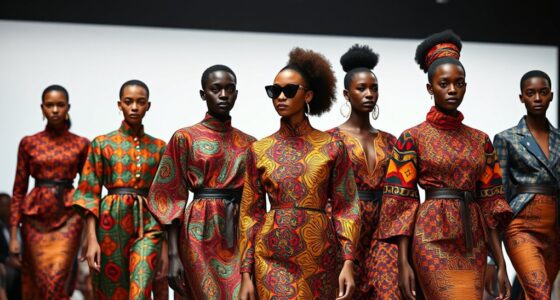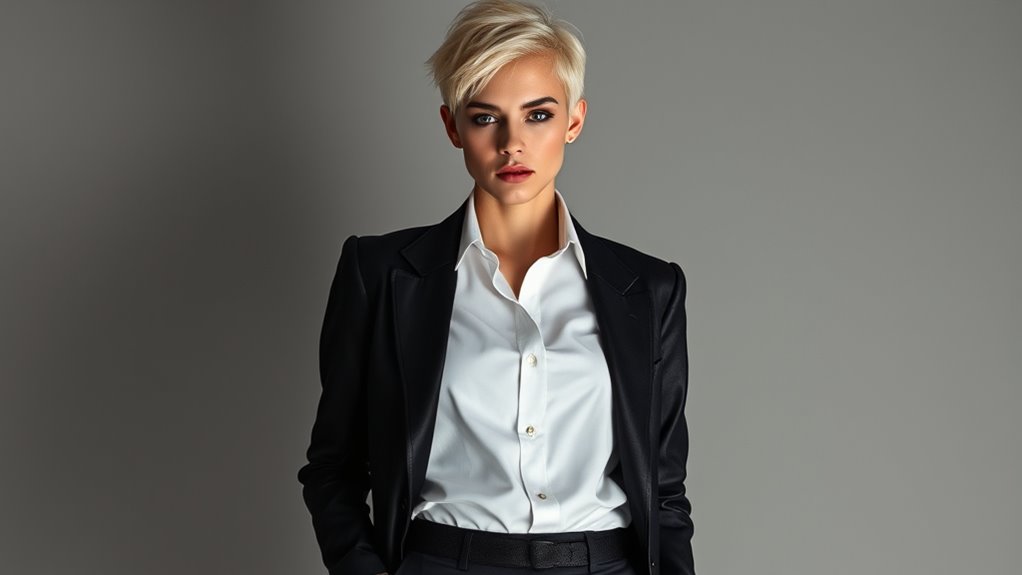

Throughout history, fashion has shifted from strict gender roles to embrace more fluid, androgynous styles. In the past, societal expectations dictated what men and women could wear, reinforcing social hierarchies. Today, designers and wearers explore gender-blurring clothing that celebrates individual expression and diversity. Movements for equality have fueled this evolution, making fashion a tool for challenging old stereotypes. If you keep exploring, you’ll discover how these changes continue to shape modern style and identity.
Key Takeaways
- Historically, fashion strictly defined gender roles, with men and women wearing distinct, socially enforced clothing styles.
- The 20th and 21st centuries saw a shift toward gender fluidity, blending masculine and feminine elements in fashion.
- Movements advocating for equality and acceptance have driven the rise of gender-blending styles on runways and streetwear.
- Contemporary fashion emphasizes personal expression, encouraging individuals to challenge traditional gender norms through clothing choices.
- The evolving relationship between society and fashion reflects ongoing efforts to promote diversity, authenticity, and inclusivity in gender presentation.
Have you ever wondered how gender influences fashion choices? Throughout history, clothing has often reflected societal expectations linked to gender norms. In many cultures, strict rules dictated what men and women could wear, reinforcing ideas about masculinity and femininity. These historical gender norms kept men in suits, trousers, and other traditionally “masculine” garments, while women wore dresses, skirts, and softer fabrics that emphasized delicacy and ornamentation. This rigid division was less about personal expression and more about maintaining social structures. Fashion was a way to visibly communicate one’s gender and reinforce the roles assigned by society.
Historically, clothing reflected societal gender norms, reinforcing ideas about masculinity and femininity to maintain social roles.
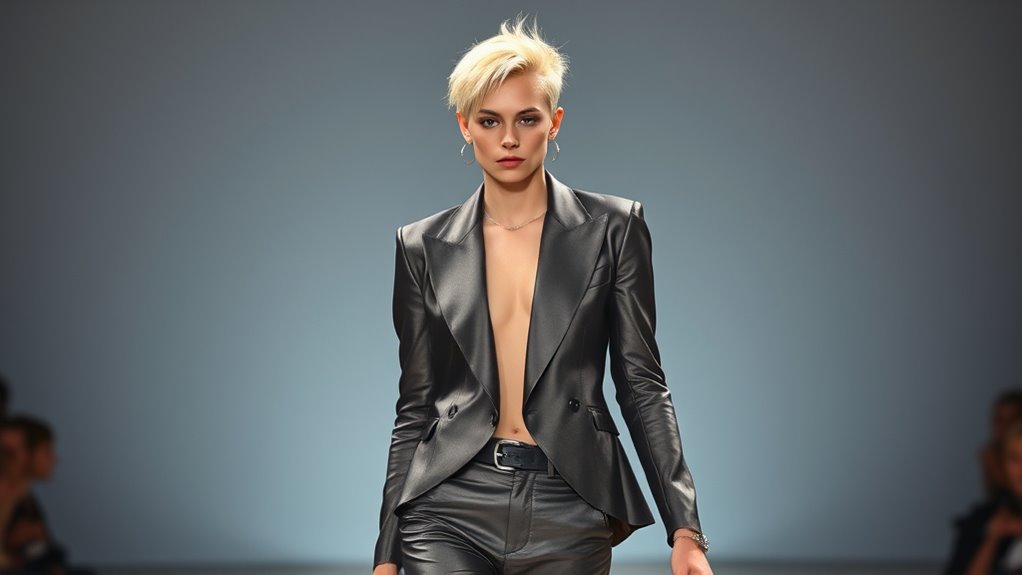
But things have shifted over time. In recent decades, modern gender expression has become increasingly fluid, challenging those rigid boundaries. You might notice how contemporary fashion now embraces androgynous styles, blending traditionally masculine and feminine elements. Designers and consumers alike are exploring ways to express identity beyond the constraints of binary gender norms. This shift is rooted in a broader understanding that clothing is a form of personal expression, not a strict reflection of biological sex. As a result, more people feel free to experiment with styles that defy traditional categories, wearing what makes them feel authentic rather than what society expects.
The move toward gender-fluid fashion is also driven by cultural and social movements advocating for equality and acceptance. You see it in runway shows, streetwear, and everyday wardrobe choices that combine different elements—like a blazer paired with soft, flowing fabrics or trousers styled with delicate accessories. This evolution signals a desire to break free from the stereotypes that historically defined gender roles. It’s about creating a space where everyone can express their individuality without judgment or restriction.
Today, modern gender expression in fashion is less about fitting into a predefined mold and more about celebrating diversity. It encourages you to see clothing as a tool for self-discovery and authenticity. As societal attitudes continue to evolve, the lines between traditionally masculine and feminine styles will keep blurring, fostering a more inclusive understanding of identity. You’re part of this ongoing conversation, where fashion becomes a powerful way to challenge old norms and embrace new possibilities. This ongoing shift demonstrates how fashion as personal expression continues to evolve alongside societal values. In this way, the history of gender and fashion is not just about what people wore, but about how society’s perceptions of gender continue to change and expand, giving everyone the freedom to style themselves as they see fit.
Frequently Asked Questions
How Has Gender Fluidity Influenced Contemporary Fashion Brands?
Gender fluidity has profoundly influenced contemporary fashion brands by encouraging them to embrace diverse gender identities and promote fashion inclusivity. You’ll notice brands creating unisex collections, blurring traditional gender lines, and celebrating individual expression. This shift allows you to explore styles beyond conventional binaries, making fashion more accessible and authentic for everyone. As a result, brands foster a more inclusive environment where all identities can be celebrated through innovative, gender-fluid designs.
What Cultural Factors Contributed to the Rise of Androgynous Styles?
You see that cultural perceptions, historical influences, and social movements all contributed to the rise of androgynous styles. As society challenged traditional gender roles, people began questioning stereotypes, embracing fluid identities, and seeking self-expression through fashion. Historical influences like the punk movement and LGBTQ+ activism pushed boundaries, making androgyny more accepted. This cultural shift empowered you to explore styles beyond binary norms, fostering a more inclusive, diverse fashion landscape.
Are There Specific Designers Known for Pioneering Gender-Neutral Fashion?
You’ll recognize designers like Yves Saint Laurent, who popularized unisex clothing and challenged traditional gender norms through his fashion activism. Other pioneers include Gucci and Telfar, both known for creating inclusive, gender-neutral collections. These designers push boundaries by embracing gender-fluid styles, advocating for equality and self-expression. Their innovative work continues to inspire mainstream fashion, making unisex clothing a essential part of contemporary style and social progress.
How Do Societal Attitudes Towards Gender Impact Fashion Trends?
Societal attitudes towards gender markedly influence fashion trends. When gender stereotypes loosen, you’ll see more gender-neutral styles in fashion marketing, making clothing accessible to everyone. As society becomes more accepting of diverse gender expressions, designers push boundaries, encouraging you to break traditional norms. This shift helps you express your authentic self, fostering inclusivity. Your choices in fashion reflect and shape evolving societal views on gender, promoting greater acceptance worldwide.
What Future Developments Are Expected in Gender and Fashion?
The future of fashion is a canvas awaiting your bold strokes of innovation. You’ll see fashion innovation blend seamlessly with gender expression, breaking down barriers and rewriting norms. Expect clothing to become more fluid and expressive, like a chameleon shifting hues to match your identity. As society embraces diverse identities, fashion will evolve into a powerful tool for authentic self-expression, empowering you to wear your true colors proudly and unapologetically.
Conclusion
You now see how gender and fashion intertwine, breaking down barriers and rewriting norms. From androgynous styles to gender-fluid expressions, you realize that fashion is a powerful tool for self-discovery and acceptance. Embracing these trends shows that clothes are just clothes—it’s the person wearing them that truly matters. Remember, sometimes the most meaningful changes happen when you step outside your comfort zone and dare to be yourself. The world’s waiting for your unique style to shine.