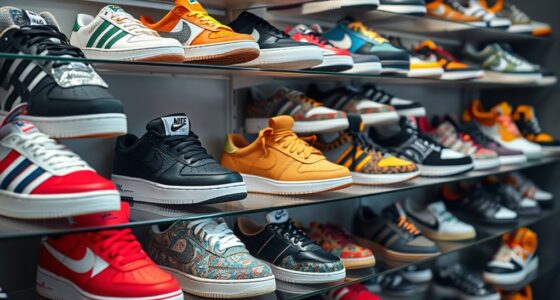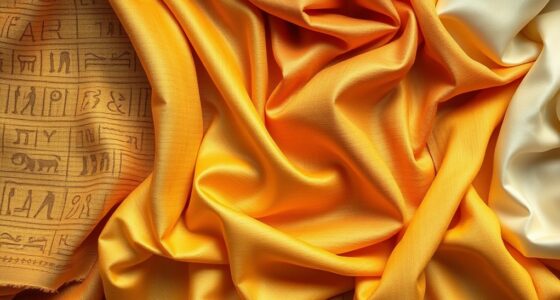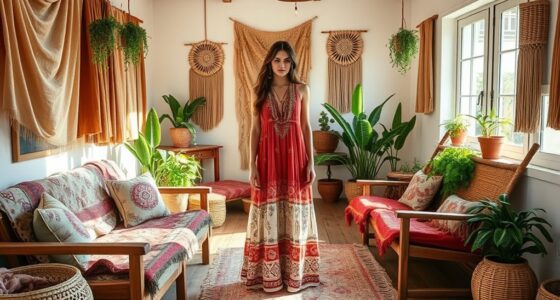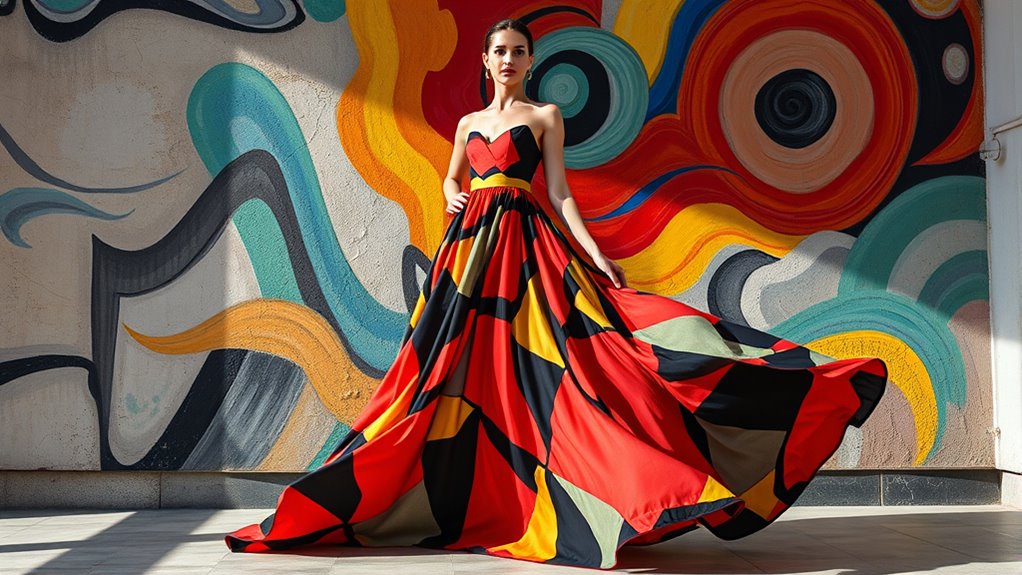

You can see how fashion and art movements constantly influence each other, with designers drawing inspiration from styles like Cubism, Surrealism, and Pop Art. These movements shape clothing through bold colors, geometric shapes, and experimental materials, turning fashion into a form of wearable art. The relationship creates a lively dialogue that challenges traditional boundaries and fosters innovation. Keep exploring to discover how this ongoing exchange continues to transform the way we see and wear art.
Key Takeaways
- Art movements like Cubism and Surrealism have directly influenced clothing designs through geometric shapes and unconventional materials.
- Fashion serves as a canvas for artistic inspiration, incorporating patterns, colors, and textures from various art movements.
- Designers collaborate with artists to merge visual art concepts into wearable creations, fostering a dialogue between mediums.
- Historical art styles such as Art Deco and Punk shape fashion identities, reflecting cultural and political messages.
- The ongoing relationship encourages innovation, pushing boundaries between visual art and fashion as a form of artistic expression.
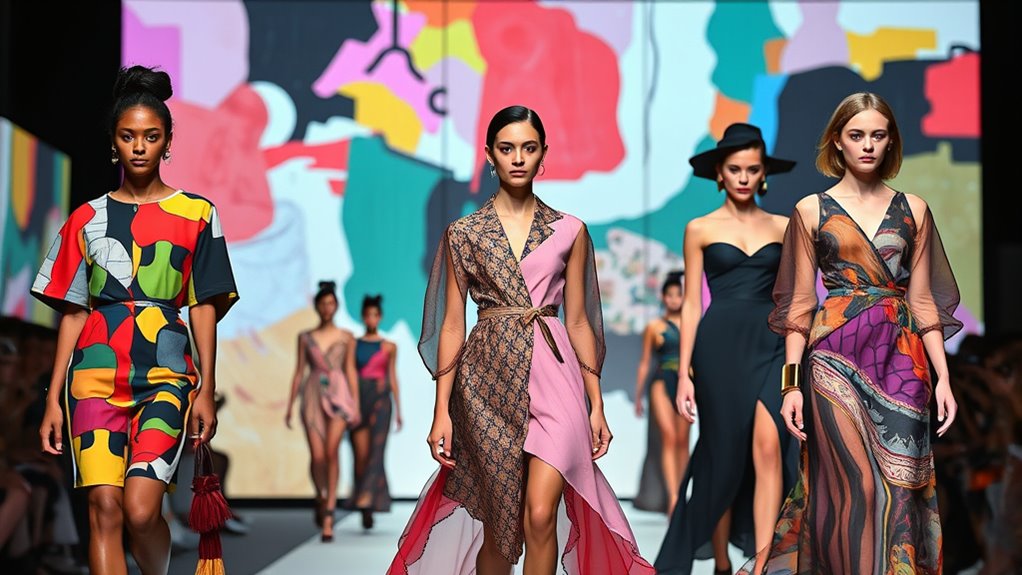
Have you ever wondered how fashion and art movements influence each other? It’s fascinating to see how these two worlds intertwine, shaping cultural trends and inspiring creative expression. This relationship is rooted in historical influences that have been passed down through the decades, each era leaving its mark on both fashion and art. When you look back at the early 20th century, for example, movements like Cubism and Surrealism didn’t just stay on canvas—they spilled over into clothing designs, encouraging designers to experiment with geometric shapes and unexpected materials. These stylistic collaborations bridge the gap between visual art and wearable art, allowing each to enhance the other’s impact. As a result, fashion becomes a canvas in its own right, reflecting the revolutionary ideas of artists and movements that came before.
Throughout history, designers have drawn inspiration from famous art movements to craft innovative collections. Think of how the bold colors and abstract forms of Fauvism influenced fashion in the early 1900s, or how Pop Art’s vibrant imagery found its way onto runways in the 1960s. These influences aren’t accidental; they’re deliberate stylistic collaborations that consciously merge artistic concepts with fashion aesthetics. When you wear a piece inspired by a particular movement, you’re not just dressing up—you’re participating in a dialogue that spans generations. Fashion designers often incorporate elements like patterns, textures, and color palettes from art movements, creating a visual dialogue that celebrates shared creative ideals. This cross-pollination keeps the creative spirit alive, constantly pushing boundaries and redefining what clothing can be. Recognizing the impact of art movements on fashion highlights how interconnected these creative domains truly are.
Fashion draws from art movements, merging styles to inspire and redefine wearable creativity across generations.
Another compelling aspect of this relationship is how art movements help shape the identity of fashion itself. For instance, the Art Deco movement’s emphasis on luxury and geometric elegance heavily influenced 1920s and 1930s couture, establishing a glamorous style that still resonates today. Similarly, the rebellious spirit of Punk in the 1970s found expression in both visual art and fashion, emphasizing anti-establishment attitudes through ripped fabrics, safety pins, and DIY aesthetics. These stylistic collaborations not only reflect the social and political climates of their times but also show how fashion acts as a visual language that communicates cultural shifts. By studying these connections, you gain insight into how art movements serve as both inspiration and critique, shaping fashion’s evolution while making it a living, breathing form of artistic expression.
In essence, the relationship between fashion and art movements is a dynamic, ongoing conversation. It’s a testament to how creativity flows across different mediums, influencing what we wear and how we see the world. Whether through historical influences or stylistic collaborations, this synergy continues to inspire designers and challenge perceptions, making fashion a powerful extension of art’s transformative power.
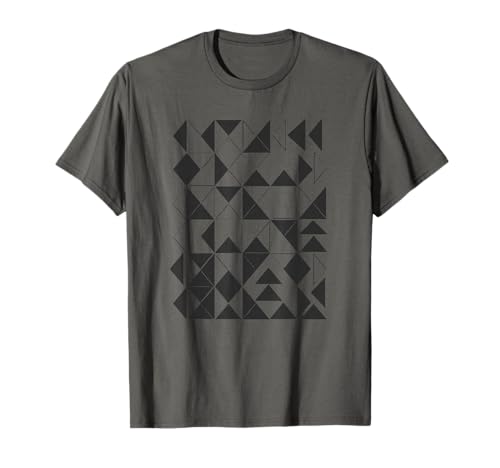
Artsy Modern Abstract Art Lines Shape Geometric Block Print T-Shirt
Geometric Abstract Art design. Unique artistic line and geometric triangle shapes abstract art graphic design.
As an affiliate, we earn on qualifying purchases.
As an affiliate, we earn on qualifying purchases.
Frequently Asked Questions
How Do Fashion Designers Incorporate Abstract Art Into Their Collections?
You see fashion designers incorporate abstract art into their collections by drawing abstract inspiration from shapes, lines, and textures. They often use bold brushstrokes or geometric patterns to create visually striking pieces. Additionally, they focus on color palette integration, selecting hues that evoke the emotion and energy of abstract art. This blend results in unique, expressive garments that reflect artistic creativity and push fashion boundaries.
What Role Do Art Movements Play in Shaping Streetwear Trends?
You notice streetwear’s vibrant murals and bold graphics, inspired by art movements like graffiti and pop art. These movements shape your style through cultural symbolism and stylistic inspiration, turning city streets into wearable galleries. As you embrace this fusion, you connect with a bigger cultural dialogue, where art influences fashion’s raw, expressive energy. This blend creates trends that celebrate creativity, rebellion, and the rich history embedded in each piece you wear.
Can Fashion Influence the Development of New Art Styles?
Yes, fashion can influence the development of new art styles through fashion innovation and cultural expression. When you push creative boundaries with clothing, you inspire artists to experiment with new ideas, colors, and forms. Your unique style becomes a canvas for cultural storytelling, sparking fresh artistic movements. By embracing innovative fashion, you actively shape the evolution of art, blending aesthetic boundaries and encouraging cultural dialogue.
How Have Historical Art Movements Impacted Modern Fashion Photography?
You’re witnessing history’s greatest art movements exploding into modern fashion photography! Surrealist inspiration transforms shots into dream worlds, while color theory guides every hue for maximum impact. Past movements like Cubism and Impressionism revolutionize composition and mood, making every photo a masterpiece. These influences turn simple images into powerful, timeless statements, showing how history’s artistic genius shapes today’s visual stories in fashion photography.
In What Ways Do Fashion Exhibitions Showcase Connections With Art Movements?
You see fashion exhibitions showcase connections with art movements through displays of fashion and sculpture that highlight historical influences. They often emphasize textile innovation, revealing how designers incorporate artistic techniques. These exhibitions allow you to explore how fashion mirrors and adapts art movements, blending creative disciplines. You’ll notice curated pieces that reflect artistic styles, emphasizing the dialogue between fashion and art, and showcasing the evolution of textile techniques inspired by cultural and artistic shifts.

Fashion & Surrealism
Used Book in Good Condition
As an affiliate, we earn on qualifying purchases.
As an affiliate, we earn on qualifying purchases.
Conclusion
As you explore the dance between fashion and art movements, you realize they’re like two painters sharing a canvas. Each influences and colors the other’s world, creating a vibrant masterpiece of creativity. When you embrace this connection, you see how clothing becomes more than fabric — it’s a living expression of artistic evolution. So, keep blending these worlds; together, they paint a future where style and art forever inspire each other’s journey.

Pop Art Colorful Womens T-Shirt
Noire&Parisien is a fashion collection digital design clothing & artist graphic tees design brand for womens & mens…
As an affiliate, we earn on qualifying purchases.
As an affiliate, we earn on qualifying purchases.
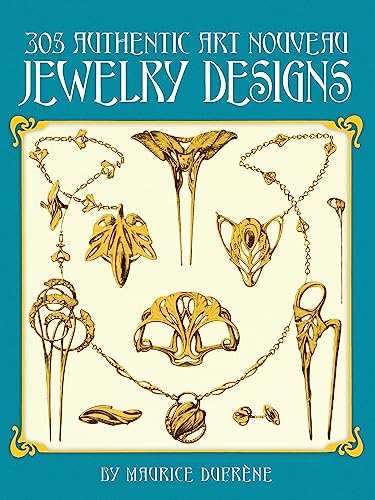
305 Authentic Art Nouveau Jewelry Designs (Dover Jewelry and Metalwork)
As an affiliate, we earn on qualifying purchases.
As an affiliate, we earn on qualifying purchases.