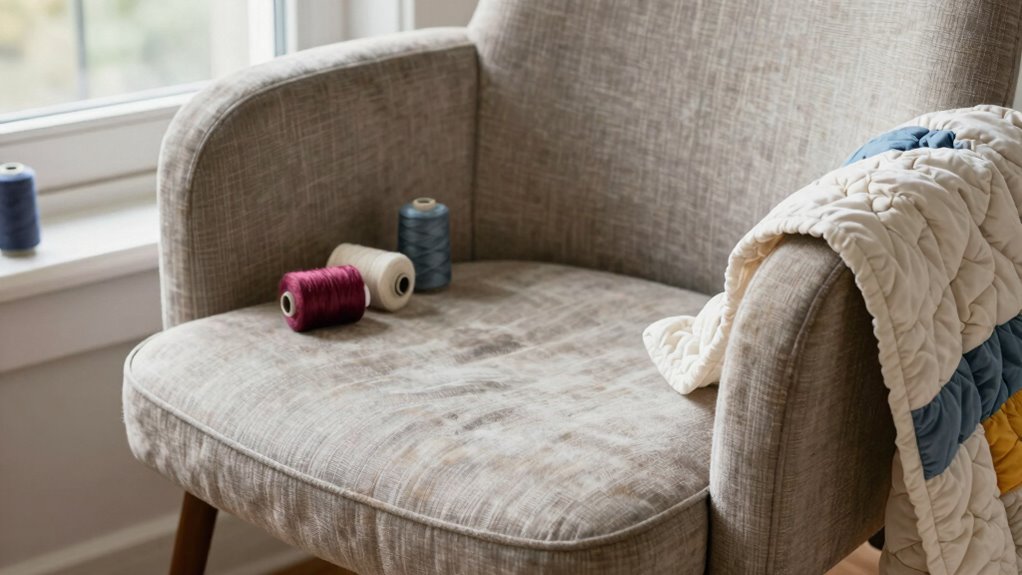

Finding the right sewing chair for long crafting sessions means balancing comfort over hours of sitting, height adjustability that matches your sewing table, and convenient storage for tools and notions. After comparing ten popular models, the Reliable SewErgo 200SE stands out as the best overall pick thanks to its true ergonomic design and posture support built for extended use. If you want built-in storage, the Arrow H6880 hydraulic chair delivers smooth height adjustment with a roomy under-seat drawer, while the Lessmore Pattern Beige chair offers wheels, back support, and storage at a friendlier price. The main tradeoff in this category is ergonomic support versus storage and style — the most comfortable chairs rarely store the most gear. Read on for the full breakdown of each model and who it suits best.

Get beauty and skincare favorites delivered free with Prime
- Fast, free delivery on millions of items
- Prime Video, Amazon Music and more included
- Member-only deals all year
Complete the kit


Key Takeaways
- The Reliable SewErgo 200SE was the only model judged primarily as an ergonomic office-grade chair, which is why it beat storage-focused competitors for marathon sessions despite having no under-seat drawer.
- All four Arrow models share the same hydraulic lift and drawer platform, so choosing between them is mostly about fabric print and price rather than function — the H6880 and Crown Ruby Red differ mainly in aesthetics.
- The Lessmore lineup repeats across colorways (Beige, Grey, Pink), meaning shoppers should compare features like wheel quality and back support rather than getting swayed by color options.
- Wood-frame chairs like the Ultrahome and Lessmore Wood models trade rolling mobility and hydraulic adjustment for a classic look and solid durability — better for occasional sewists than all-day crafters.
- Back support quality varied more than any other feature: models marketed identically ranged from a simple padded bar to a contoured, height-adjustable backrest, which is the single biggest comfort differentiator for long sessions.


More Details on Our Top Picks
Arrow H6880 Adjustable Hydraulic Sewing and Craft Chair with Storage, SEW Now SEW Wow Print
This model earns the top spot because it balances hydraulic height adjustment, targeted lumbar support, and hidden under-seat storage in one package — the three things that matter most when you’re still sewing four hours into a project. Compared with the Lessmore chair, the H6880 gives you a published 18–22 inch height range and a stated 250-pound weight capacity, which makes sizing it to your sewing table far less of a guess. The playful printed upholstery also makes it feel like a sewing-room statement piece rather than repurposed office furniture. The tradeoffs are real: you have to assemble it yourself, and unlike the Reliable SewErgo 200SE, it’s built around a rolling five-star base, so pedal control comes from your posture rather than a planted foundation.
Pros:- Hydraulic height range of 18–22 inches matches most sewing table heights
- Targeted lumbar support reduces fatigue during long sessions
- Hidden storage compartment keeps notions off the work surface
- Five-star 360° swivel base with smooth-rolling casters for machine-to-ironing-board movement
Cons:- Assembly is required out of the box
- Maximum recommended weight of 250 pounds excludes larger users
Best for: Dedicated sewists and quilters who want all-day lumbar support, mobility between machines, and a stated weight capacity they can trust
Not ideal for: Buyers who dislike furniture assembly or need a chair rated above 250 pounds
Our verdict“If you want one chair that does support, storage, and mobility well without going premium, this is the pick to beat.”
Lessmore Adjustable Height Sewing and Crafting Chair with Wheels, Back Support, and Under-Seat Storage, Pattern Beige
This Lessmore chair makes sense for crafters setting up a sewing space for the first time, because it delivers the core trio of features — adjustable height, wheels, and under-seat storage — in a light 10-pound package you can reposition whenever your room layout changes. Compared with the Arrow H6880, you give up the hydraulic lift, lumbar targeting, and a published weight rating, but the patterned beige upholstery is arguably more décor-friendly than a busy print. The back support here is basic rather than contoured, so marathon quilters will notice the difference by hour three. It also shares the wheeled-base trait of the Arrow chairs, meaning it moves when you press a pedal — something the Reliable SewErgo 200SE specifically solves with fixed footers.
Pros:- Light 10-pound frame is easy to move or store
- Under-seat storage keeps small notions within reach
- Adjustable height lets you match different table and machine setups
- Wheels make it easy to glide between cutting table and machine
Cons:- No published weight capacity or assembly details
- Back support is basic, without the lumbar contouring of the Arrow chairs
Best for: Beginners and casual crafters building a first sewing corner on a budget
Not ideal for: Heavy users or anyone who wants a certified weight capacity — none is listed
Our verdict“A sensible, low-commitment entry chair for hobbyists, as long as you accept the unspecified weight rating.”
Arrow Sewing Adjustable Hydraulic Sewing and Craft Chair with Under-Seat Storage, Baroness Black
This is essentially the grown-up sibling of the Arrow H6880: same hydraulic 18–22 inch range, same targeted lumbar support, same hidden storage, but wrapped in durable black fabric that disappears into a shared office or living space instead of announcing itself as craft furniture. The non-marking casters are a quiet upgrade over generic wheels — they protect hardwood and vinyl floors if your sewing corner doubles as a family room. Where it falls behind the H6880 is transparency: Arrow lists the warranty and height range but omits a weight capacity here, so heavier users should default to the H6880’s clearly stated 250-pound rating. And like the Lessmore chair, it rolls freely, which trades pedal stability for glide-between-stations convenience.
Pros:- Neutral black fabric suits any décor without the novelty print
- Non-marking casters protect hard flooring
- Same 18–22 inch hydraulic adjustment and lumbar support as the flagship Arrow
- Hidden storage compartment keeps clutter off the sewing table
Cons:- Only one year of warranty coverage
- No stated weight capacity, unlike the Arrow H6880
Best for: Sewists who work in a multi-use room and want full chair functionality in understated black
Not ideal for: Users who need a documented weight capacity before buying
Our verdict“Choose this over the printed H6880 when you want identical function in a quieter, more versatile look.”
Reliable SewErgo 200SE Ergonomic Sewing Sewing Chair, Adjustable Height, Grey
When a crafting session stretches past a few hours, seat contour matters more than gimmicks, and this is where the SewErgo 200SE pulls ahead. Its waterfall seat edge reduces pressure behind the knees, the contoured cushion and cloth-covered backrest support a natural posture, and the stable glide footers keep the chair planted while you work a sewing pedal — a direct contrast to the rolling Lessmore and Arrow chairs, which can creep as you sew. It also arrives fully assembled, so unlike the H6880 there’s nothing to build. The catch is mobility: casters aren’t included despite the listed component, so if your workflow means rolling between a machine, cutting table, and ironing board, the Arrow Baroness or H6880 will suit you better.
Pros:- Waterfall seat edge and contoured cushion relieve pressure during marathon sessions
- Stable footers prevent the chair from sliding while operating a foot pedal
- Arrives fully assembled with three adjustable features
- Canadian-made build quality with a stated 250-pound capacity
Cons:- No rolling casters included, limiting movement around the room
- 250-pound maximum weight capacity
Best for: Long-session sewists and anyone with knee or lower-back sensitivity who prioritizes seated comfort over mobility
Not ideal for: Crafters who constantly roll between stations — the fixed glide base keeps you in one spot
Our verdict“If your sewing sessions run long and you mostly stay at one machine, this is the most posture-friendly seat in the lineup.”
Ultrahome Wood Sewing Chair with Storage, Adjustable Height, Black
For crafters who want furniture rather than office equipment, this wooden sewing chair brings a traditional studio aesthetic that no rolling task chair in this lineup matches. The built-in storage follows the same under-seat logic as the Lessmore and Arrow models, but the solid wood construction reads as a piece you’d keep for years — and the adjustable height lets you fine-tune your position at a table or machine. The honest tradeoff is data: unlike the Reliable SewErgo 200SE, there’s no stated weight capacity, no dimensions, and no specified storage volume, so you’re buying partly on faith. It’s also strictly stationary, which means pedal stability is excellent but multi-station crafting means standing up and carrying things, unlike the caster-equipped Arrow H6880.
Pros:- Solid wood construction with a timeless sewing-studio look
- Adjustable height for a customized working position
- Built-in storage keeps notions organized
- Ergonomic shaping aimed at longer crafting sessions
Cons:- No published weight capacity or dimensions
- Storage capacity is unspecified
- Indoor use only, with no rolling mobility
Best for: Traditionalists and quilters who value a warm, wood-accented craft room and don’t need to roll between stations
Not ideal for: Anyone who needs verified dimensions and weight capacity before purchasing
Our verdict“A charming, stationary choice for a dedicated craft room, provided the missing specs don’t bother you.”
Lessmore Adjustable Sewing and Crafting Chair with Wheels and Storage, Pink
At just 10 pounds, this is the lightest option in the lineup, and that alone shapes who it suits. Compared with the Pink Power Sewing Chair, which offers a hydraulic lift, a 300-lb capacity, and an adjustable backrest, this model is the simpler, cheaper entry point — you get wheels, a gas-style height adjustment, and a handy under-seat storage nook, but not much in the way of proven ergonomic engineering. The tradeoff is real: there’s little verified feedback on padding or long-term durability, so marathon quilters should think twice. This pick makes the most sense for a casual crafter setting up a first sewing corner who wants mobility and storage without a big commitment.
Pros:- Extremely lightweight at 10 pounds for easy repositioning
- Under-seat storage keeps notions within arm’s reach
- Adjustable height accommodates different table setups
- Wheels let you glide between machine, ironing board, and cutting table
Cons:- No published weight capacity, which makes durability a gamble
- Comfort over long sessions is unverified with minimal user feedback
Best for: Casual or beginner crafters who want an affordable, lightweight, mobile chair for occasional sewing sessions
Not ideal for: Heavy quilters or anyone doing multi-hour sessions daily — comfort and durability are unproven
- Color:Pink
- Dimensions:23 x 23 x 30 inches
- Weight:10 pounds
- Manufacturer:Lessmore
- Model:YX-1111
- Features:Adjustable height, wheels, back support, under-seat storage
Our verdict“A low-risk starter chair for light crafters — serious daily sewists should pay more for proven lumbar support.”
Lessmore Adjustable Height Sewing and Crafting Chair with Wheels, Back Support, and Under Seat Storage, Grey
This grey sibling of the Lessmore Pink model is essentially the same formula — wheels, back support, hidden storage — in a finish that disappears into a grown-up craft room instead of shouting hobby space. Compared with the Arrow H8150, it lacks the hydraulic seat, published 18″–22″ height range, and 250-lb rated base, so it feels less like a precision tool and more like a flexible everyday utility chair. The standout outcome here is neutral aesthetics plus mobility: it works equally well parked at a sewing cabinet or rolled to a desk. The drawback is informational — no listed weight capacity or dimensions means you’re buying on faith regarding fit and sturdiness.
Pros:- Neutral grey finish blends with most craft room décor
- Wheels plus back support support movement and posture during multi-task sessions
- Under-seat storage keeps clutter off the work surface
- Doubles as a general-purpose rolling desk chair
Cons:- No published weight capacity or detailed dimensions
- Wheeled base may frustrate crafters who prefer rock-solid stationary seating
Best for: Crafters who want a versatile, neutral-toned rolling chair that doubles as general desk seating
Not ideal for: Buyers who need guaranteed specs — without a stated weight limit or seat dimensions, larger users can’t verify fit
- Brand:Lessmore
- Color:Grey
- Product Type:Sewing and Crafting Chair
- Height Adjustment:Adjustable
- Mobility:Wheels
- Back Support:Yes
- Storage:Under Seat Storage
- Recommended Use:Sewing, Quilting, Crafting
Our verdict“The safest aesthetic choice in the Lessmore range, best for multi-purpose rooms where the chair needs to look at home beyond the sewing table.”
Arrow Sewing H8150 Adjustable Height Hydraulic Sewing and Craft Chair with Under Seat Storage, Crown Ruby Red Fabric
This is the pick I’d point serious sewists toward first. Unlike the Lessmore grey and pink models, which leave comfort specs vague, the H8150 documents exactly what matters for marathon crafting: a hydraulic seat spanning 18″ to 22″, targeted lumbar support aimed at sewing posture, and floor-safe heavy-duty casters on a five-star 360° swivel base. The Crown Ruby Red upholstery gives it personality without the toy-like feel of the pink options. Compared with the Pink Power chair, its backrest isn’t height-adjustable, but the lumbar contour is purpose-built for sewing rather than generic. The one real limitation is the 250-lb maximum weight rating, which trails Pink Power’s 300 lbs and excludes some buyers.
Pros:- Targeted lumbar support designed specifically for sewing posture
- Hydraulic height adjustment from 18″ to 22″ for precise table matching
- Non-marking heavy-duty casters on a smooth 360° swivel base
- Durable upholstered fabric backed by a 1-year limited warranty
Cons:- 250-lb weight capacity is lower than competing models
- Backrest is not independently height-adjustable unlike the Pink Power chair
Best for: Dedicated quilters and sewists logging multi-hour sessions who need documented lumbar support and precise table-height matching
Not ideal for: Users over 250 pounds — the stated capacity rules it out regardless of its other strengths
- Brand:Arrow Sewing Cabinets
- Model Number:H8150
- Seat Height Range:18″ to 22″
- Maximum Weight Recommendation:250 pounds
- Base:Five-star 360° swivel base
- Castors:Heavy-duty, non-marking
- Color:Crown Ruby Red
- Warranty:1 year limited warranty
Our verdict“The most complete long-session package here — buy it if you’re under the weight limit and sew often.”
Lessmore Wood Sewing Chair with Built-in Storage
The odd one out in this lineup, and deliberately so. Where the Arrow H8150 and Pink Power chairs chase ergonomic adjustability, this wooden model chases permanence — a stationary, classic chair whose built-in compartments organize threads, needles, and tools while its fixed height is designed to align with standard sewing machine tables. Compared with the Ultrahome Wood Sewing Chair, it covers similar traditional territory but arrives with a worryingly thin 1-month warranty and no published dimensions or weight capacity. There’s no swivel and no wheels, so it’s not for crafters who orbit their room. This pick makes the most sense for someone furnishing a traditional sewing room who values furniture-grade looks over adjustability.
Pros:- Furniture-grade wood construction with classic styling
- Built-in storage compartments for threads, needles, and tools
- Ergonomic back support designed for extended sewing
- Height aligned to typical sewing machine tables
Cons:- Only a 1-month manufacturer warranty — the shortest in the roundup
- No published dimensions or weight capacity
- Fixed height and no mobility features compared with wheeled rivals
Best for: Traditionalists furnishing a classic sewing room who want furniture-style looks plus tool storage in one piece
Not ideal for: Crafters who move between stations — no wheels, no swivel, and no height adjustment limit flexibility
- Brand:Lessmore
- Model Number:YX-1124
- Material:Wood
- Included Components:Chair
- Indoor/Outdoor Usage:Indoor
- Age Range:Adult
- Warranty:1 month manufacturer warranty
Our verdict“Choose this for looks and storage-first practicality, not for ergonomic flexibility — and know the warranty is nearly nonexistent.”
Pink Power Sewing Chair with Wheels and Adjustable Back Support – Hydraulic Armless Crafting Chair
If fine-tuning your posture is the priority, this chair offers the most granular adjustments in the batch: a backrest that shifts 9″–13″ and a hydraulic seat spanning 19″–23″, so you can dial in exactly where lumbar support lands. Compared with the Arrow H8150, it wins on both adjustment range and a higher 300-lb weight capacity, though Arrow counters with a longer warranty and more refined upholstery. The armless design is a genuine feature for sewing — elbows stay free for guiding fabric — but it’s a dealbreaker for anyone who rests on armrests between seams. Concealed under-seat storage rounds out a package built for people who sew for hours and tweak their setup constantly.
Pros:- Adjustable backrest height (9″–13″) for customized lumbar positioning
- Hydraulic seat height (19″–23″) matches most sewing tables
- Highest weight capacity in this batch at 300 lbs
- Armless design keeps elbows unobstructed for fabric handling
Cons:- Available only in pink, limiting décor compatibility
- No armrests may cause fatigue for crafters who rest their arms
Best for: Ergonomically-minded sewists and heavier users who want fully adjustable lumbar positioning and a higher weight rating
Not ideal for: Crafters who want armrests for resting between tasks, or anyone who dislikes pink — there’s no alternative colorway
- Backrest Height Adjustment:9″ – 13″
- Seat Height Adjustment:19″ – 23″
- Weight Capacity:300 lbs
- Armrests:None (armless)
- Storage:Concealed under-seat storage
- Wheels:Yes
Our verdict“The best choice if adjustable lumbar placement and a higher weight limit matter more than color options or armrests.”

How We Picked
I evaluated every chair through one specific lens: how it performs during multi-hour crafting sessions, not how it looks in a product photo. That meant prioritizing seat padding density and shape, back support quality, height adjustability range relative to typical sewing table heights (roughly 28–30 inches), and whether the chair lets you pivot and roll between machine, ironing board, and cutting mat without standing up. Storage capacity and aesthetics were treated as secondary benefits — valuable, but never enough to outweigh comfort failures.
The ranking order reflects a simple hierarchy: chairs with genuine ergonomic engineering ranked above storage-focused models, which ranked above decorative wood chairs. Within tied groups, I separated models by build materials, warranty-backed components like hydraulic lifts, wheel quality on carpet versus hard floors, and weight capacity. Where two products were functionally identical — as with the Lessmore colorways — I noted that directly so readers don’t waste time comparison-shopping interchangeable options.
Factors to Consider When Choosing Sewing Chair For Long Crafting Sessions
Before choosing a specific model, it helps to understand what actually makes a sewing chair comfortable for hours at a time — and where buyers most often go wrong. These are the factors I weighed most heavily, and the mistakes I saw repeated across the category.Seat Height Range and Your Table
The most common mistake buyers make is assuming any adjustable chair will fit their sewing surface. Most sewing and cutting tables sit between 28 and 30 inches high, which means you need a chair that adjusts up to roughly 21–23 inches of seat height to maintain a neutral elbow position at the machine. Hydraulic lifts, like those on the Arrow models, typically offer a wider and smoother range than friction-adjust or spin-lock mechanisms found on budget chairs. If you work at a standard desk-height table rather than a dedicated sewing table, a lower range is fine — but measure before buying, because a chair that tops out too low forces hunched shoulders within an hour. Also check whether the height adjustment works under your seated weight, since some mechanisms require you to stand.
Back Support: Where Cheap Chairs Fall Apart
For sessions longer than two hours, back support matters more than seat cushioning, and it’s the feature manufacturers most often fake with a decorative pad. Look for a backrest that is both height-adjustable and contoured, not just a horizontal cushion bolted to the frame. The Reliable SewErgo takes this seriously with an office-chair-grade backrest, while several lower-ranked models offer only a fixed lumbar bar that supports one specific body size. If you’re under 5’4″ or over 6′, fixed backrests are especially risky because they can’t be positioned at your lumbar curve. A good test question: can the backrest be repositioned or reclined? If the answer is no, that chair is built for short tasks, not marathon quilting.
Wheels, Casters, and Your Floor Type
Sewing is a mobile activity — you move from machine to iron to cutting station constantly, and rolling between them saves real energy over a long day. But caster quality varies enormously, and the wrong wheels make a rolling chair worse than a static one. Hard nylon casters roll well on carpet but can scratch hardwood; soft rubber casters protect hard floors but bog down on thick pile. Several models in this roundup ship with generic dual-wheel casters that struggle on craft-room rugs, which is worth checking before purchase. If your craft space has mixed flooring, look for larger diameter wheels, which handle transitions between rug and hard floor far better than small ones. And if you mostly stay parked at one machine, a wheel-less wood chair like the Ultrahome becomes a more reasonable choice.
Storage: Useful Convenience or Gimmick?
Under-seat drawers are the signature feature of dedicated sewing chairs, and they’re genuinely useful — but only if the drawer is deep enough for what you actually use. Shallow trays fit bobbins and seam rippers but not scissors, patterns, or a rolled ruler, so check interior dimensions rather than trusting the word ‘storage’ in the product name. Another overlooked tradeoff: a full drawer under the seat adds weight and bulk, which can interfere with foot pedal placement or your natural leg position at the machine. Some sewists end up preferring a slim chair plus a separate rolling caddy, which holds far more and keeps the chair light. Storage is a nice bonus, but it should never be the reason you accept a mediocre seat.
Armless Design and Why It Matters at the Machine
Every chair in this roundup is armless, and that’s not a coincidence — arms physically block you from sitting close enough to a sewing machine or embroidery hoop to work comfortably. Arms also prevent the side-to-side shifting you naturally do during long sessions, which contributes to stiffness. The tradeoff is that armless chairs give your shoulders no rest point, so upper back support from the backrest becomes even more critical. If you plan to use the same chair for general desk work or hand-sewing while watching tutorials, think about whether you’ll miss arms during non-machine tasks. Some sewists solve this with a small separate cushion or pillow for elbow support during handwork, rather than compromising on the chair itself.
Upholstery, Padding Breakdown, and Longevity
Fabric choice affects both comfort and lifespan more than most buyers expect. Patterned and printed upholstery, like the Arrow SEW Now SEW Wow or Crown Ruby Red fabrics, hides thread lint and wear far better than solid light colors, which show every fiber within days. Foam density is the hidden durability factor: low-density foam feels plush in month one but compresses permanently by month six, leaving you sitting on essentially a hard pan. You can’t always find density specs, so weight capacity serves as a rough proxy — chairs rated for higher weights generally use firmer, longer-lasting foam. Vinyl and polyurethane wipes clean easily but gets sticky and sweaty over long sessions, while woven fabric breathes better but traps lint. For all-day crafters, breathable woven fabric with a darker or busy pattern is usually the smarter long-term bet.
Frequently Asked Questions
Is a hydraulic lift actually better than a regular adjustable sewing chair?
For long sessions, yes, and the difference is bigger than it sounds. A hydraulic lift lets you fine-tune seat height in small increments while seated, which matters because the ideal height shifts slightly depending on whether you’re at the machine, pressing, or hand-finishing. Friction and spin-lock mechanisms, common on budget and wood-frame chairs, adjust in coarse steps and often require standing up to change. Hydraulic cylinders also tend to hold their height better over years of daily use, whereas mechanical mechanisms can slip gradually. The Arrow chairs in this lineup all use hydraulic lifts, which is part of why they rank above the fixed-height wood models for serious crafting hours.
Can I just use a regular office chair for sewing instead?
You can, and many sewists do — but there are two real compromises. First, most office chairs have arms, which block you from getting close to the machine and force a hunched reach that hurts over hours; you’d need an armless office chair to avoid this. Second, office chairs rarely offer under-seat storage, so your tools end up scattered across the table or a separate cart. The advantage of office chairs is superior ergonomic engineering at the same price, which is exactly why the Reliable SewErgo — essentially an ergonomic task chair tailored to sewing — ranks as the top pick here. If you already own a good armless ergonomic chair, adding a rolling storage caddy beside it arguably beats buying a dedicated sewing chair.
How important are wheels if my sewing space is small?
Surprisingly, wheels matter more in small spaces, not less. In a compact craft room you’re likely pivoting between a machine, an iron, and a cutting area within arm’s reach, and rolling a few feet saves standing up dozens of times per session. What changes in small spaces is the wheel type: tight rooms often mean rolling over rug edges and flooring transitions, so larger-diameter casters perform noticeably better than the small stock wheels on budget models. The one exception is a dedicated corner where you sit at a single machine and never move — there, a stationary wood chair like the Lessmore Wood model is perfectly fine and often sturdier. Also confirm the chair’s five-point base fits your floor space; some bases are wider than they appear in photos.
Are the Lessmore chairs in different colors actually different products?
Mostly no, and knowing this saves real comparison time. Lessmore’s Pattern Beige, Grey, and Pink models share the same core build — adjustable height, wheels, back support, and under-seat storage — with the differences coming down to upholstery color and occasionally minor trim details. The functional comparisons you should actually make are between product lines: Lessmore’s wheeled crafting chairs versus its wood-frame storage chair, which lacks wheels and hydraulic adjustment entirely. If you’ve decided on a Lessmore crafting chair, pick the colorway that matches your space and stop comparing — the seating experience will be nearly identical. The same logic applies to the Arrow lineup, where the H6880, Baroness Black, and Crown Ruby Red share one platform in different fabrics.
What’s the single feature I shouldn’t compromise on for long sessions?
Back support that adjusts to your body. Seat cushions can be upgraded with an aftermarket pad, wheels can be swapped, and storage can be replaced with a side caddy — but a fixed, poorly positioned backrest can’t be fixed without replacing the chair. Over multi-hour sessions, a backrest that misses your lumbar curve forces your spine to do all the stabilizing work, and that’s what ends crafting days early. Look for height-adjustable or contoured backrests like the SewErgo’s, and be skeptical of models where the back support is just a slim pad on a fixed post. If your budget forces a choice between a thick seat cushion and an adjustable backrest, take the backrest every time.
Conclusion
The right choice here depends entirely on how you craft. For the best overall experience during long sessions, the Reliable SewErgo 200SE is the clear pick — it’s the only model engineered like a proper ergonomic chair rather than a decorated task stool. For best value, the Lessmoore Grey or Pattern Beige crafting chair delivers wheels, back support, and storage together at a price that undercuts the Arrow lineup while covering the comfort basics.
Best premium goes to the Arrow H6880, which pairs a smooth hydraulic lift with genuine storage and a fun print — worth it if your craft room is a space you want to enjoy visually, too. For beginners or casual sewists, the Lessmore Wood Sewing Chair with Built-in Storage is a low-commitment entry point that handles occasional projects without the cost of a hydraulic platform. And for specific needs: choose the Arrow Crown Ruby Red if style is part of the hobby for you, or the Pink Power hydraulic chair if you want adjustable back support plus mobility on a smaller budget. Whatever you pick, measure your table height first and prioritize the backrest — those two decisions will shape every crafting session that follows.
Fall Picks
fall essentials
As an affiliate, we earn on qualifying purchases.