
TL;DR

Get beauty and skincare favorites delivered free with Prime
- Fast, free delivery on millions of items
- Prime Video, Amazon Music and more included
- Member-only deals all year
A July 1, 2026 ISR Briefing dispatch from Thorsten Meyer AI examined Wide-Area Motion Imagery, a surveillance method that can record and track movement across several square kilometers. The report says the technology’s reach depends on AI processing and layered radar support, while its use raises unresolved oversight and privacy questions.
Thorsten Meyer AI published a July 1, 2026 ISR briefing on Wide-Area Motion Imagery, saying the technology can watch and archive movement across a city-sized area while also facing hard limits in weather, airspace, data processing and oversight. The report matters because WAMI’s ability to rewind recorded movement can support investigations, but it can also enable retroactive tracking of ordinary people.
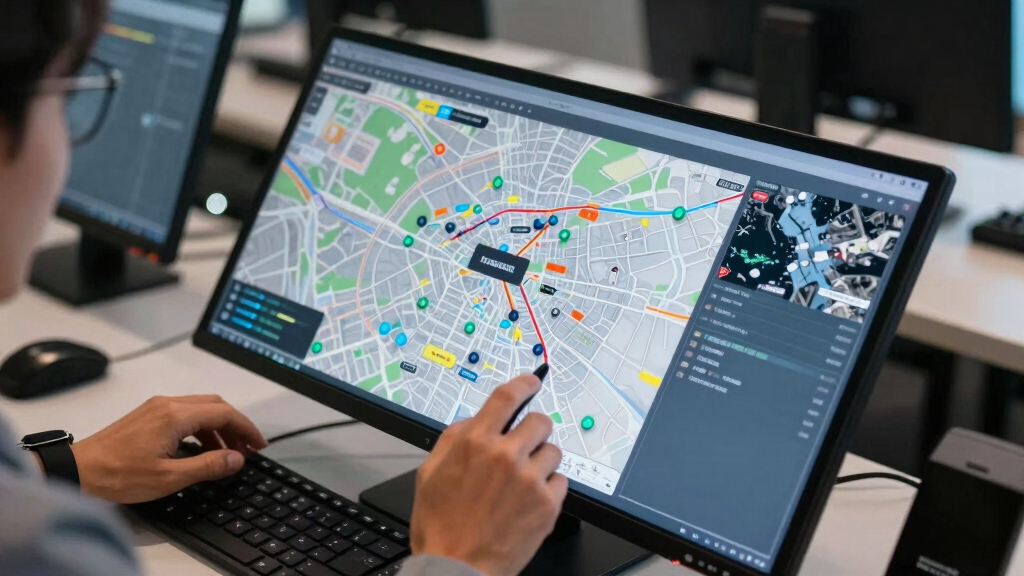
The briefing describes Wide-Area Motion Imagery, or WAMI, as an airborne optical surveillance system that differs from ordinary full-motion video. Instead of focusing on one narrow field of view, a WAMI payload can combine many sensors into a single large frame and track multiple moving vehicles and pedestrians across several square kilometers.
The report says WAMI’s key operational value is not just live observation but its recorded archive. If an incident is identified after the fact, analysts can rewind the imagery and follow a vehicle or person backward to an origin point or earlier contacts, according to the briefing’s account of the technology.
The source material cites public reporting on DARPA’s ARGUS-IS, which used 368 five-megapixel cameras to form a roughly 1.8-gigapixel image. From around 17,500 feet, the briefing says, such systems have been described as reaching about 13 centimeters per pixel at the center. The report also says the data volume is too large for ordinary live viewing or full downlinking, making close-to-sensor AI processing a requirement rather than an optional feature.
The eye over the city: how Wide-Area Motion Imagery works — and where it goes blind
A normal drone sees through a soda straw. WAMI watches an entire city at once, tracks every mover, and records it all for forensic rewind. Immense reach — with hard limits that make radar and AI its necessary partners.
- City-scale motion, fine detail
- Forensic rewind
- Cloud / smoke / dark degrade it
- Needs a platform loitering overhead
sensing
+ AI
- Sees through cloud & total dark
- Tasked over denied airspace
- Persistent, wide-area from orbit
- Sovereign · on-prem · air-gap
The same archive that traces a bomber to a safe house can trace anyone home — retroactively, without prior suspicion. Baltimore’s secret 2016 deployment led to a 2021 federal ruling that persistent aerial tracking violated the Fourth Amendment. The security value is real; so is the mass-surveillance risk. Who owns the sensor, the archive, and the AI is the accountability question.
WAMI’s power is the archive and the AI reading it; its weakness is weather, airspace, and oversight. The mature posture isn’t optical-vs-radar or capability-vs-liberty — it’s layered sensing (optical WAMI + all-weather SAR), AI-enabled exploitation, and sovereign, auditable control of the whole chain. WAMI shows what a persistent eye can do with clear skies and owned airspace; for the cloud, the night, and the denied area, the radar layer is where the resilient coverage lives.
City-Scale Tracking Raises Stakes
The briefing’s central point is that persistent surveillance changes the scale of what an observer can know. A narrow drone feed can follow one target; a WAMI archive can reconstruct many movements before and after an event. That can help investigators trace attacks, border crossings or other incidents, but it also creates a record that could be used to follow people not suspected of wrongdoing.
The report says WAMI also depends on a broader sensing chain. Optical systems can be degraded by cloud, smoke, darkness and airspace constraints, while radar systems such as Synthetic Aperture Radar can operate through cloud and at night. The briefing argues that resilient coverage comes from combining optical WAMI, radar, AI analysis and auditable control of data and models.
high resolution wide-area surveillance drone
As an affiliate, we earn on qualifying purchases.
As an affiliate, we earn on qualifying purchases.
Baltimore Ruling Shapes Oversight
The briefing points to Baltimore’s 2016 aerial surveillance deployment as a major governance reference point. That program later became the subject of a federal court challenge, and in 2021 the Fourth Circuit ruled that persistent aerial tracking violated the Fourth Amendment.
That legal history is relevant because WAMI’s archive can be used after an event, not only during live monitoring. The briefing frames the unresolved accountability questions around who owns the sensor, who controls the archive, who operates the AI tools and what rules govern access to past movement data.
“A normal drone sees through a soda straw. WAMI watches an entire city at once.”
— Thorsten Meyer AI ISR Briefing
AI-powered city monitoring camera system
As an affiliate, we earn on qualifying purchases.
As an affiliate, we earn on qualifying purchases.
Oversight Rules Remain Unsettled
It is not yet clear from the briefing how widely current WAMI-style systems are deployed, what specific retention periods apply to their archives, or how consistently operators use warrants, access logs or audit controls. The report also does not establish a single technical standard for AI accuracy in detecting and tracking movers across large scenes.
Some claims in the briefing are framed as the author’s analysis, including the view that optical WAMI plus all-weather radar is the mature operational model. The underlying capabilities are supported by cited defense and research sources, but the policy balance between security value and mass-surveillance risk remains disputed.
large-scale aerial imagery analysis software
As an affiliate, we earn on qualifying purchases.
As an affiliate, we earn on qualifying purchases.
Policy Must Catch Technology
The next issue is whether governments and operators define clear rules for collection, retention, search, sharing and AI use before city-scale archives become routine. The briefing points toward a model based on layered sensing, sovereign data control and auditability, but it does not report a new binding standard.
Further developments to watch include court rulings, procurement decisions, public disclosure rules and technical limits on how long movement archives can be stored or queried. For readers, the near-term question is not only what WAMI can see, but who is allowed to look back.
As an affiliate, we earn on qualifying purchases.
Key Questions
What is Wide-Area Motion Imagery?
Wide-Area Motion Imagery is an airborne surveillance method that uses multiple cameras and processors to observe movement across a large area, rather than focusing on one narrow view.
What was the news development?
The development was a July 1, 2026 ISR briefing from Thorsten Meyer AI assessing WAMI’s capabilities, limits and governance risks.
Why does WAMI need AI?
The briefing says WAMI produces too much imagery for human teams to watch live or for ordinary full downlinking, so AI is needed near the sensor to detect and track movement.
Why is the technology controversial?
Its archive can help trace suspects after an incident, but it can also enable retroactive tracking of people who were not previously under suspicion.
What limits WAMI systems?
According to the briefing, optical WAMI can be limited by weather, smoke, darkness, airspace access and oversight rules, which is why the report discusses radar as a supporting layer.
Source: Thorsten Meyer AI
Columbus Day / Indigenous Peoples' Day Picks
long weekend sales
As an affiliate, we earn on qualifying purchases.