TL;DR

Get beauty and skincare favorites delivered free with Prime
- Fast, free delivery on millions of items
- Prime Video, Amazon Music and more included
- Member-only deals all year
Dermaself and a five-student Alta Scuola Politecnica team developed two research technologies for selfie-based AI skin analysis: image normalisation and 3D facial anonymisation. The work is intended to improve comparability between images and explore ways to retain skin detail while reducing identity signals; the source does not report independent validation or commercial release.
Dermaself and a multidisciplinary team from Alta Scuola Politecnica have developed two research approaches intended to support selfie-based AI skin analysis: a pipeline to standardise image conditions and a 3D-based method designed to alter facial identity signals while retaining skin detail. The project could address two practical concerns for digital skin analysis—variation between smartphone photographs and the privacy risks of using identifiable facial images—but the source does not provide validation results or say when the technologies will be deployed.
The project involved five master’s students from Politecnico di Milano and Politecnico di Torino, the universities behind Alta Scuola Politecnica. The students worked with Dermaself and were guided by Professor Elisabetta Raguseo, director of Alta Scuola Politecnica, and Professor Federica Arrigoni of Politecnico di Milano. Their work drew on computer vision, image processing and privacy-related research.
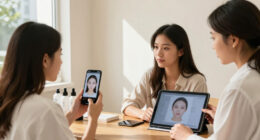
The first technology addresses differences in selfies caused by lighting, exposure and smartphone camera processing. The proposed process guides users on positioning, distance and lighting during image capture, then applies a hybrid pipeline combining AI-based illumination correction with conventional image-processing methods. The project describes the result as a more standardised image representation for analysis across devices and settings; it does not provide numerical performance results.
The second approach uses a proprietary 3D computational framework to reconstruct facial information and change the representation’s biometric signature. According to the project description, the aim is to preserve skin characteristics—including redness, pigmentation, lesions, spots and texture—rather than remove image detail through blurring or masking. The source describes the approach as research and does not report independent testing, a quantified privacy guarantee or clinical validation.
Making Skin Images More Consistent and Private
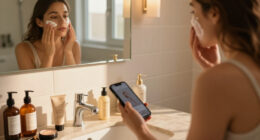
Smartphone selfies are convenient inputs for digital skin analysis, but the same image contains both visible skin information and biometric features that may identify the person. Image variation can make comparisons harder, while identifiable images raise privacy concerns for businesses and researchers handling image collections. The two strands of this project address those issues separately: normalisation targets differences in capture conditions, and facial anonymisation aims to reduce identity information without discarding details relevant to skin assessment.
For Dermaself, the research is intended to complement its existing platform, which analyses visible skin characteristics from selfies and links results to products in a brand’s or retailer’s catalogue. The company says the tools could support more consistent image capture across online and in-person customer experiences. If the privacy approach performs as intended, it could also make it easier to work with skin-image datasets for research and AI development. Those are potential applications, not outcomes established by the material provided.
As an affiliate, we earn on qualifying purchases.
How the Research Fits Dermaself’s Platform
Dermaself offers selfie-based skin analysis that can be incorporated into e-commerce, retail settings and brand events. Its system assesses visible skin characteristics and can connect the analysis to products selected from a company’s own catalogue. The Alta Scuola Politecnica project was framed as an added research layer for that ecosystem, rather than a report that the company has replaced its existing analysis system.
The project focuses on a tension specific to facial-image analysis: removing or concealing identity can also erase visual information that a skin-analysis system may need. The team’s 3D approach is presented as an alternative to simple masking or blurring, while the normalisation work addresses the separate problem of images that differ because of capture conditions. The source says the technologies were conceived to complement Dermaself’s capabilities, but does not detail how they would be integrated into a product or workflow.
“A smartphone selfie contains two different types of information: visible characteristics of the skin and biometric features that can identify the person in the image.”
— Project description
privacy-preserving facial anonymisation device
As an affiliate, we earn on qualifying purchases.
As an affiliate, we earn on qualifying purchases.
Testing, Privacy Guarantees and Rollout
The source does not state when the work was completed or published, provide test data, or describe comparisons against existing anonymisation methods. It also does not report whether the resulting images have been evaluated by dermatology professionals or whether the system’s skin assessments remain equally accurate after transformation.
Other open questions include how effectively the 3D method resists biometric identification, what privacy protections apply to original images, and whether the approach has been tested across different devices, skin tones and capture environments. The source does not say whether the technologies are available to customers, undergoing further development, or being considered for commercial deployment. Claims about retained skin detail and reduced biometric signatures should therefore be understood as descriptions of the research’s aims, not as demonstrated performance guarantees.
AI skin analysis selfie normalization tools
As an affiliate, we earn on qualifying purchases.
As an affiliate, we earn on qualifying purchases.
Further Validation Before Wider Use
The source identifies no scheduled launch, trial or next publication. The next relevant developments would be disclosure of technical evaluation results, including image consistency across devices and the accuracy of skin analysis after anonymisation, alongside testing of the method’s privacy protections. Information on integration with Dermaself’s customer-facing services would also clarify whether the work will move from research into deployment.
Until those details are available, the project is best understood as a collaboration exploring two potential additions to AI skin analysis, rather than a confirmed product release. Dermaself and the academic team’s further announcements, if any, will be needed to establish the technologies’ readiness and intended use.
3D facial reconstruction for skin health
As an affiliate, we earn on qualifying purchases.
As an affiliate, we earn on qualifying purchases.
Key Questions
What did Dermaself and Alta Scuola Politecnica develop?
They researched image normalisation for smartphone skin-analysis selfies and a 3D-based facial anonymisation approach intended to preserve skin detail while changing identity-bearing information.
Has the technology been released?
The source does not say that either technology has been released or specify a commercial launch date. It describes research intended to complement Dermaself’s existing AI skin-analysis ecosystem.
How is the facial anonymisation approach meant to work?
The project describes a proprietary 3D computational framework that alters the facial representation’s biometric signature while aiming to retain visible skin characteristics. The source provides no independent results or quantified privacy guarantee.
Who took part in the project?
Five master’s students from Politecnico di Milano and Politecnico di Torino worked with Dermaself. Professors Elisabetta Raguseo and Federica Arrigoni guided the work.
Source: rss
Halloween Picks
halloween
As an affiliate, we earn on qualifying purchases.