
TL;DR
Thorsten Meyer AI has narrowed its earlier support for owning AI infrastructure, arguing that most organizations gain more from using the strongest available model with multi-vendor fallback protections. It says sovereign systems remain justified for organizations constrained by national security, data residency or sector-specific laws, while several figures supporting its case await independent verification.
Thorsten Meyer AI has narrowed its five-week argument for organizations to own their AI infrastructure, concluding in a July 16 analysis that most companies should instead use the best-performing model available and maintain vendor fallbacks. The publication still supports sovereign systems for organizations facing binding legal or security restrictions, creating a sharper division between required control and discretionary spending.
The analysis says the performance gap between leading proprietary models and sovereign or self-hosted alternatives can outweigh the benefits of infrastructure ownership. It cites Inkling at 77.6% on SWE-bench against Fable 5 at 95.0%, alongside a 63.8% versus 89.5% comparison on Terminal-Bench. The publication describes those figures as drawn from vendor tables and Artificial Analysis, but says they are self-reported and awaiting replication.
The dispatch also argues that qualification programs, dedicated computing clusters and sovereign cloud requirements carry substantial costs. It cites a tenfold compliance difference between France’s SecNumCloud framework and ISO 27001, annual staffing costs of $75,000 to $100,000, and a large penalty for idle infrastructure. These figures come from the publication’s earlier reporting and named sources, but the new dispatch does not reproduce their full calculations.
For companies without a legal barrier to foreign-hosted AI, the publication recommends placing a multi-provider router in front of external models. Such a system can redirect requests during outages, policy restrictions or price changes. Thorsten Meyer AI estimates this approach could provide 90% of the desired resilience at about 2% of the cost of deeper sovereign infrastructure, though that estimate is presented as the publication’s judgment rather than an independently established measurement.
Against sovereignty: the strongest case for just using the best model
This publication has spent five weeks arguing one thing — and every piece converged. That should bother you. It bothers me. When eight analyses reach the same verdict, you’re not running an analysis. You’re running a thesis, and the evidence has started arriving pre-sorted.
So here’s the case against — argued properly, with the same evidence, turned around. Not a strawman erected to be knocked down. The version a smart CTO would put to me across a table, and which I have not yet answered in public. The claim: for almost everyone, sovereignty is an expensive hedge against a risk they’ve mispriced — and the rational move is to use the best model and get on with it.
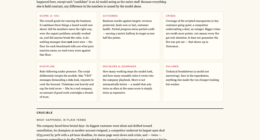
Defence · classified · national health data · DORA-bound finance. The foreign-legal-order risk isn’t theoretical and isn’t insurable by other means — it’s a legal gate. No benchmark opens it. Your alternative isn’t a worse model; it’s no deployment at all.
Statistically, you are. You have a reasonable, politically legible, entirely unbudgeted feeling — and an industry built to monetize it. The capability compounds, the tax is real, the opportunity cost is brutal, and 18 days is survivable.
I’ve spent five weeks arguing you should own your stack. The strongest case against says: for most of you, that’s an expensive way to be worse, sold by people whose real product is a feeling. And that case is mostly right. What survives is smaller and sharper — everything above the router line (the qualification programme, the owned cluster, the custom pre-training run, the €11B data centre) you should buy only if a law requires it, never because a narrative does. A router is the sovereignty most people actually need. 90% of the resilience for ~2% of the cost — and it would have made 12 June a non-event. So run the honest test: are you bound, or are you performing?
Governance Spending Faces a New Test
The revised position shifts the governance decision from a broad preference for control to a narrower question: is sovereignty legally required, or is ordinary business resilience enough? For many technology leaders, that distinction could affect model accuracy, deployment speed and infrastructure budgets.
The publication argues that money spent qualifying weaker models or building dedicated systems can delay product delivery while competitors use more capable services. It also warns that broad demand for sovereignty may encourage providers to sell compliance labels and locally hosted services backed by foreign technology, rather than develop systems designed for defense, classified data or regulated national workloads.
best AI language models 2026
As an affiliate, we earn on qualifying purchases.
As an affiliate, we earn on qualifying purchases.
Five Weeks of Sovereignty Arguments
Thorsten Meyer AI said its previous eight analyses repeatedly favored model ownership over API dependence. Those articles examined hardware capacity, corporate ownership, foreign legal exposure and the possibility that a supplier could withdraw access. The July 16 dispatch was framed as a deliberate challenge to that pattern after the publication concluded that its evidence may have been filtered through an established thesis.
A reported service restriction became the analysis’s strongest counterexample. According to the publication, a Commerce directive on June 12 removed access to Fable 5 and Mythos 5 before the models returned on July 1, an 18-day interval. The dispatch argues that fallbacks remained available, making the episode a continuity problem for most users rather than proof that every company needs its own model and computing cluster.
“For almost everyone, sovereignty is an expensive hedge against a risk they’ve mispriced.”
— Thorsten Meyer AI’s July 16 dispatch
multi-vendor AI model fallback solutions
As an affiliate, we earn on qualifying purchases.
As an affiliate, we earn on qualifying purchases.
Evidence Still Needs Independent Testing
It remains unclear how widely the recommendation applies across industries, jurisdictions and data types. The analysis identifies defense, classified workloads, national health data and finance covered by DORA-related obligations as cases where foreign legal exposure may block deployment, but it does not offer a jurisdiction-by-jurisdiction test.
Several supporting claims also need outside validation. The cited benchmark results are self-reported, while the cost comparisons and the 90%-for-2% resilience estimate are not accompanied by full methods in the supplied material. The dispatch does not establish how the reported June restriction affected individual customers, whether every fallback offered comparable capability, or whether the event caused financial losses. No company or government adoption of the proposed governance approach was announced.
AI model performance benchmarking tools
As an affiliate, we earn on qualifying purchases.
As an affiliate, we earn on qualifying purchases.
Organizations Must Classify Their Exposure
The next step for organizations is to determine whether laws, contracts or security classifications require local control of models, weights or data. Those facing a legal gate would still need sovereign infrastructure, even when it offers lower benchmark performance or higher costs.
Other organizations can test multi-provider routing, outage procedures and data-handling controls before funding dedicated clusters or qualification programs. Independent replication of the benchmarks, publication of the cost methods and documented results from real supplier disruptions would provide stronger evidence for deciding where the router-only approach succeeds or fails.
cloud-based AI model hosting services
As an affiliate, we earn on qualifying purchases.
As an affiliate, we earn on qualifying purchases.
Key Questions
Did Thorsten Meyer AI abandon AI sovereignty?
No. The publication narrowed its recommendation. It still supports sovereign models and infrastructure where laws, classified information or national security requirements make foreign services unavailable or unacceptable.
What does using the best model mean?
It means selecting models primarily for capability and operational performance, rather than limiting procurement to locally owned or self-hosted systems. The suggested setup includes a router and multiple suppliers to reduce dependency on any single service.
What is an AI model router?
A router is a software layer that sends requests to one or more AI providers. It can redirect traffic when a model is unavailable, restricted or too expensive, giving organizations service continuity without owning the underlying models.
Are the performance comparisons independently verified?
Not fully. The dispatch says the cited SWE-bench and Terminal-Bench results rely on vendor reporting and are awaiting replication. They should be treated as attributed evidence rather than settled measurements.
Which organizations may still need sovereign AI?
The analysis points to organizations handling defense, classified material, national health data or tightly regulated financial information. Each organization would need legal and security review because requirements differ by jurisdiction and workload.
Source: Thorsten Meyer AI