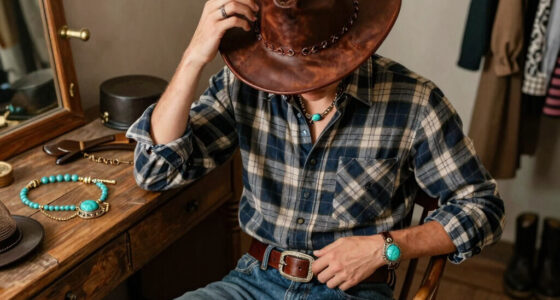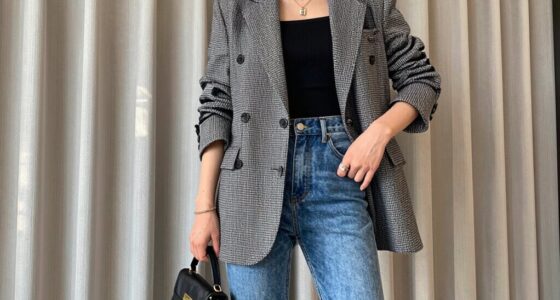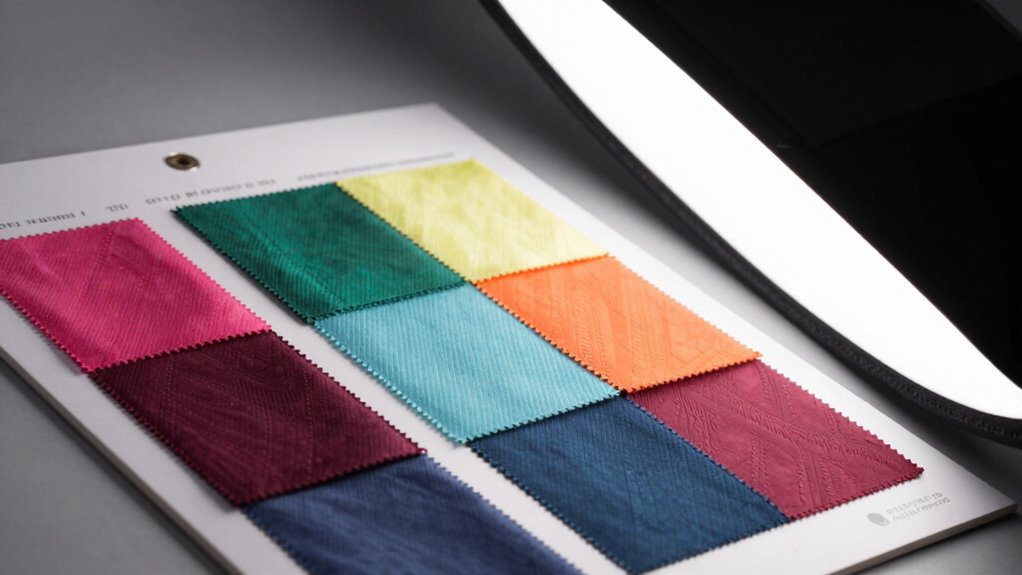

A good fashion studio lighting kit is essential because it helps you achieve true-to-life colors in your photos. It provides consistent, balanced light that prevents color distortions and guarantees fabrics, skin tones, and accessories look accurate. Using quality lights and calibration tools means you’ll spend less time fixing images later and more time producing professional results. If you want to understand how to maximize color accuracy in your work, keep exploring the key factors involved.

Get beauty and skincare favorites delivered free with Prime
- Fast, free delivery on millions of items
- Prime Video, Amazon Music and more included
- Member-only deals all year
Key Takeaways
- They provide consistent, balanced lighting that prevents color distortion in fashion images.
- Proper lighting kits include daylight-balanced bulbs, ensuring true-to-life color reproduction.
- Using quality lighting minimizes the need for extensive post-production color corrections.
- They support accurate color calibration of cameras and monitors for reliable editing.
- Well-designed lighting kits help produce cohesive, professional-looking fashion photos with authentic colors.

In fashion photography, achieving true-to-life colors is essential, and the right studio lighting kit plays a vital role in this process. Your lighting setup influences how colors appear on camera, making it crucial to select equipment that supports accurate color reproduction. When you’re aiming for images that reflect the true hues of fabrics, skin tones, and accessories, understanding how your lighting interacts with your camera’s sensor becomes a priority. This is where proper color calibration and a well-thought-out lighting setup come into play.
Your lighting setup should be designed to produce consistent, balanced light that doesn’t distort colors. If your lights are too warm or too cool, it can throw off the color balance, leading to images that look different from real life. To prevent this, many professionals use daylight-balanced bulbs or LED panels that offer adjustable color temperatures. These allow you to match the lighting conditions to the environment or desired aesthetic, ensuring your colors stay true across different shoots. The goal is to create a controlled environment where every shot can be accurately reproduced, regardless of external lighting conditions.
Color calibration is equally important. Before beginning a shoot, you need to calibrate your camera and monitor to ensure they’re interpreting colors correctly. This involves using calibration tools like color charts or gray cards, which serve as reference points for adjusting your camera settings and monitor profiles. When your camera’s color settings are calibrated properly, the captured images will reflect real-world colors more accurately. Likewise, calibrating your monitor ensures that what you see during editing matches how the images will appear on other screens or in print. Together, these calibration steps eliminate discrepancies and allow you to fine-tune your lighting setup with precision. Additionally, understanding the principles of color fidelity can help you maintain consistency throughout your workflow.
Investing in a quality fashion studio lighting kit that supports proper color calibration can make all the difference. It ensures that your lighting setup complements your calibration efforts and produces consistent results. When your lights are stable and color-accurate, you don’t have to spend extra time correcting colors in post-production, saving you time and effort. Instead, you can focus on capturing the perfect shot, confident that the colors are true to life. Incorporating calibration tools into your workflow enhances your ability to achieve accurate color rendition and ensures your final images meet professional standards. Moreover, understanding how lighting conditions influence color perception can help you make more informed decisions when adjusting your setup.
Achieving consistent lighting conditions is also crucial for color consistency, especially when producing a series of images for a campaign or brand. In the end, the combination of a thoughtful lighting setup and diligent color calibration creates a reliable foundation for high-quality fashion photography. It’s what helps your images stand out, accurately representing the garments and models you’re showcasing. When you prioritize these elements, you’re not just taking pictures—you’re creating images that resonate with authenticity and visual precision.
As an affiliate, we earn on qualifying purchases.
Frequently Asked Questions
How Do Lighting Kits Impact Fabric Texture Visibility?
Lighting kits greatly impact fabric texture visibility by highlighting fabric detail and enhancing texture. When you use the right lighting, it creates shadows and highlights that reveal intricate weave patterns and surface qualities. This makes textures more prominent and true to life, helping your audience appreciate the fabric’s quality. Proper lighting guarantees every detail is visible, allowing your designs to stand out with clarity and depth, making your fashion photography more compelling.
Can Budget Lighting Kits Ensure Perfect Color Accuracy?
Sure, a budget lighting kit might seem tempting for perfect color accuracy, but don’t expect stellar color consistency or top-tier lighting quality. Cheap setups often cause harsh shadows and color shifts, making your fabrics look wildly different on screen. If you’re serious about showcasing true hues, investing in a quality lighting kit is essential. Otherwise, you risk your photos resembling a watercolor gone wrong—charmingly inconsistent.
What Are the Best Lighting Setups for Different Fashion Styles?
For different fashion styles, you should tailor your lighting setups with specific techniques. For high-fashion, use softboxes and diffusers to create sleek, glamorous effects. Casual styles benefit from natural, diffused light that emphasizes comfort. For edgier looks, experiment with colored gels and harder lighting to add drama. Mastering lighting techniques helps highlight textures, colors, and details, ensuring your fashion styling captures the essence of each style effectively.
How Often Should Studio Lighting Be Calibrated for Consistent Results?
You should calibrate your studio lighting at least once every three months to guarantee color calibration and lighting consistency. Regular calibration helps prevent color shifts caused by bulb aging or equipment changes, maintaining accurate color representation in your photos. Keep an eye on your results; if you notice discrepancies, increase calibration frequency. Consistent lighting ensures your fashion shots stay true to the actual colors, enhancing professionalism and client satisfaction.
Do Lighting Kits Affect Digital Color Rendering in Photography?
Yes, lighting kits greatly affect digital color rendering in photography. When you choose kits with adjustable color temperature, you can match the lighting to your subject, ensuring accurate colors. Light diffusion helps soften shadows and reduce color shifts, resulting in more natural-looking images. By controlling both color temperature and diffusion, you enhance your photo’s color fidelity, making your fashion shots appear true to life and professionally polished.
daylight balanced LED lighting for photography
As an affiliate, we earn on qualifying purchases.
As an affiliate, we earn on qualifying purchases.
Conclusion
So, next time you snap that perfect shot, remember—without a proper lighting kit, your stunning outfit might just look like a washed-out ghost. Ironically, your camera’s fancy megapixels can’t save a poorly lit scene, and your viewers might leave thinking you’re better at fashion than photography. Investing in a good lighting kit isn’t just about color accuracy; it’s about making sure your fabulous style shines—literally. Don’t let bad lighting steal your spotlight!
color calibration tools for cameras
As an affiliate, we earn on qualifying purchases.
As an affiliate, we earn on qualifying purchases.
professional photography lighting setup
As an affiliate, we earn on qualifying purchases.
As an affiliate, we earn on qualifying purchases.
Halloween Picks
halloween
As an affiliate, we earn on qualifying purchases.